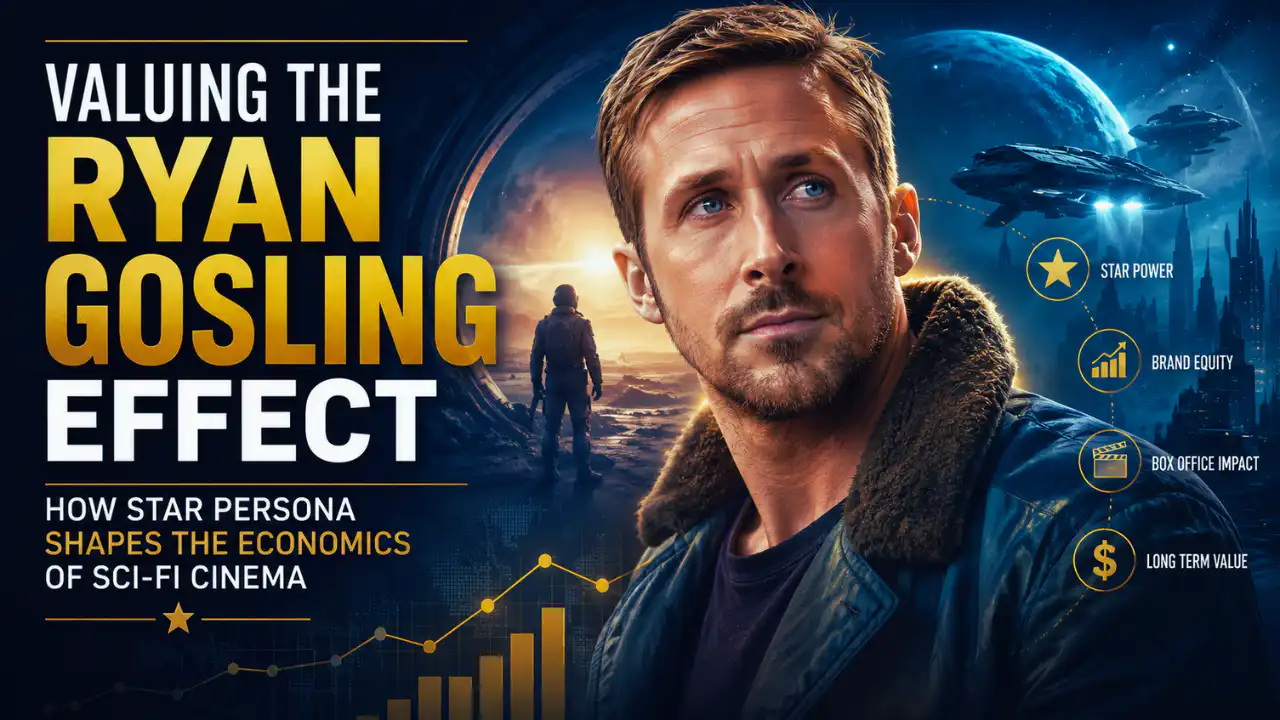
Ryan Gosling Effect in Sci-Fi Cinema Economics
Science fiction has always been one of Hollywood’s riskiest genres. Original ideas often require enormous production budgets, cutting-edge visual effects, and global marketing campaigns before a single ticket is sold. That makes every casting decision a financial one.
The Ryan Gosling Effect reflects this reality. Rather than referring to a measurable financial formula, it describes how Ryan Gosling’s carefully cultivated reputation for thoughtful, high-quality performances can influence the economics of ambitious sci-fi projects. Films such as Blade Runner 2049, First Man, and Project Hail Mary illustrate how studios increasingly view certain actors as brand assets rather than simply performers.
Understanding this business model reveals why celebrity wealth extends far beyond salaries. Brand equity, ownership opportunities, licensing value, streaming rights, and long-term intellectual property all play meaningful roles in today’s entertainment business.
Why This Celebrity Wealth Trend Matters Now?
Hollywood has changed dramatically over the past decade.
Streaming platforms have transformed distribution, international audiences now generate a significant share of box office revenue, and studios are becoming increasingly selective about financing expensive original films.
In this environment, trusted stars reduce perceived risk.
Ryan Gosling has developed a reputation for balancing commercial appeal with artistic credibility. His performances in films ranging from La La Land to Barbie demonstrate unusual versatility, allowing studios to market projects across multiple audience segments.
For investors and executives, that reputation becomes part of the product itself.
The result is a form of brand equity that influences financing discussions, promotional campaigns, international sales, and streaming negotiations long before audiences buy tickets.
The Business Model Behind the Money
Large-scale science fiction films generate revenue from far more than theatrical ticket sales.
Studios evaluate how a leading actor contributes to multiple income streams, including:
- Global box office
- Premium video-on-demand
- Streaming rights
- Television licensing
- International distribution
- Merchandise opportunities
- Future franchise potential
A respected lead actor can strengthen confidence across nearly every one of these revenue channels.
Salary Versus Ownership
The public often focuses on actor salaries, but upfront compensation tells only part of the story.
Some performers negotiate backend participation, where compensation increases if a film performs well. Others may receive producer credits that provide additional financial opportunities or greater creative influence.
Ownership matters because it creates potential long-term value instead of relying solely on a single payday.
Not every project includes these arrangements, and specific deal terms are rarely made public. As a result, reported earnings often represent only a portion of a celebrity’s overall financial picture.
Brand Equity and Audience Trust
Ryan Gosling’s greatest financial asset may be audience confidence.
His name has become associated with carefully selected projects rather than frequent releases. That selective approach reinforces a premium brand image.
For studios, this can provide several advantages:
| Wealth Driver | How It Works | Why It Matters |
|---|---|---|
| Reputation | Signals quality to audiences | Helps marketing campaigns |
| Brand equity | Builds long-term audience trust | Supports premium positioning |
| Global recognition | Expands international appeal | Improves worldwide distribution |
| Media attention | Generates earned publicity | Reduces marketing friction |
| Franchise potential | Supports future IP expansion | Creates recurring revenue opportunities |
Unlike traditional endorsements, this value compounds over time as audiences associate consistent quality with the actor’s brand.
Why Traditional Net Worth Estimates Often Miss the Full Picture?
Celebrity net worth estimates are based largely on publicly available information.
However, many important financial details remain private, including:
- Backend participation agreements
- Producer compensation
- Equity interests
- Private investments
- Real estate portfolios
- Business ventures
- Licensing income
- Management expenses
- Taxes
Because these factors are generally confidential, published estimates should be viewed as approximations rather than verified financial statements.
The entertainment industry increasingly rewards long-term ownership instead of simply higher salaries.
That Shows How This Works
Ryan Gosling’s career demonstrates consistent brand positioning.
Blade Runner 2049 did not become a major box office success, yet it strengthened his reputation as an actor willing to support ambitious filmmaking. That credibility carried forward into future projects.
Barbie showed another side of his marketability. The film became a global commercial phenomenon while significantly expanding his mainstream audience.
Now, anticipation surrounding Project Hail Mary reflects how studios leverage both source material and star power. The adaptation benefits from an established bestselling novel, respected filmmakers, and Gosling’s reputation for elevating intelligent, character-driven stories.
Similar patterns have appeared elsewhere in Hollywood.
Actors such as Tom Cruise continue building value through long-term franchise stewardship, while performers like Margot Robbie increasingly combine acting with producing, creating additional ownership opportunities that extend beyond performance fees.
The Risks Behind Celebrity Business Ventures
Star power is valuable, but it is not a guarantee.
Celebrity-backed projects can struggle for many reasons:
- Budgets that outgrow audience demand
- Weak scripts
- Changing consumer tastes
- Poor release timing
- Marketing missteps
- Franchise fatigue
- Competition from streaming releases
- International market shifts
Likewise, celebrity brands outside film can fail if products lack differentiation or operational execution.
Public image also changes over time.
A celebrity’s commercial value depends on maintaining audience trust, making reputation management an important business asset.
What This Reveals About Modern Celebrity Wealth?
Modern celebrity wealth is becoming increasingly sophisticated.
Success depends less on collecting the highest salary and more on building durable intellectual property relationships, selecting projects strategically, and creating opportunities that generate value across multiple distribution channels.
For actors like Ryan Gosling, careful career management strengthens long-term brand equity.
That reputation helps attract premium directors, ambitious scripts, and global audiences. While no actor guarantees commercial success, consistent trust can improve the economics surrounding major productions.
The Ryan Gosling Effect ultimately highlights a broader shift across Hollywood. Celebrity influence now functions as a financial asset that supports financing, marketing, licensing, and future business opportunities, even when its exact monetary value cannot be precisely measured.
Final Thoughts
The economics of science fiction have become increasingly dependent on trust. Investors trust experienced filmmakers, audiences trust compelling stories, and studios trust actors whose reputations help reduce uncertainty.
Ryan Gosling’s career illustrates how carefully managed brand equity can shape the commercial prospects of ambitious films without relying solely on blockbuster salaries. As Hollywood continues prioritizing intellectual property, streaming partnerships, and global distribution, the financial value of a trusted star persona is likely to remain an important part of entertainment business strategy.
FAQ
Why is the Ryan Gosling Effect discussed in the entertainment business?
It refers to the commercial value created by Ryan Gosling’s reputation, audience trust, and consistent project selection rather than a formal financial metric.
How do celebrities make money beyond film salaries?
Many earn income through producer credits, royalties where applicable, licensing deals, endorsement partnerships, business ventures, private investments, and backend compensation.
What is brand equity in celebrity wealth?
Brand equity is the commercial value of a celebrity’s reputation. It can influence marketing effectiveness, audience confidence, partnership opportunities, and long-term earning potential.
Why are celebrity net worth estimates often inaccurate?
Most estimates exclude confidential contracts, private investments, taxes, management fees, ownership interests, and undisclosed business arrangements.
Can star power guarantee a successful sci-fi film?
No. Casting is only one factor. Story quality, marketing, competition, release timing, critical reception, and audience demand all affect financial performance.
Interested in the business behind Hollywood? Explore more of our celebrity wealth analysis, entertainment business insights, and deep dives into how stars build value through ownership, branding, licensing, and modern media economics.

Table of Contents