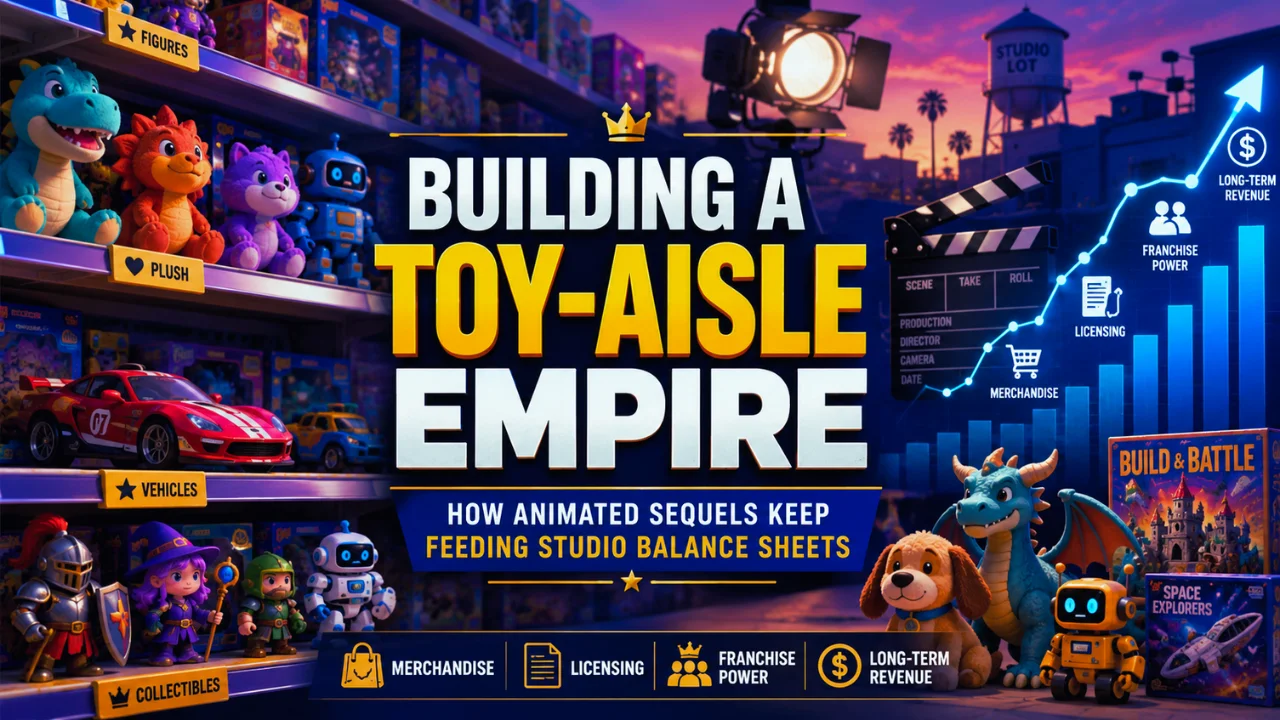
Animated Sequels and the Toy Aisle Empire Studios Love
This article explains how animated sequels help studios build long-term revenue through merchandise, licensing deals, streaming rights, theme parks, and brand extensions. It also shows why celebrity net worth and studio earnings are often misunderstood when the real money sits in intellectual property, ownership, and recurring consumer demand.
A hit animated sequel is rarely just a movie. For major studios, it can be a toy launch, a streaming asset, a licensing engine, a theme park prompt, and a reminder that family-friendly intellectual property still has unusual financial power.
That is why animated sequels remain so valuable to Hollywood money models. They do not only sell tickets for one weekend. They keep characters visible, make old fans nostalgic, introduce new kids to familiar worlds, and push brands back onto shelves at the exact moment consumer attention peaks.
The primary keyword behind this story is animated sequels. Still, the deeper business angle is bigger: studios are building toy-aisle empires where box office is only one part of the balance sheet.
Why Animated Sequels Matter Now?
Animated sequels matter because studios are under pressure from every direction. Theatrical attendance is less predictable than it once was, streaming has changed viewing habits, and original films often struggle to become major consumer brands.
A sequel solves part of that problem. It starts with awareness. Parents already know the characters. Children recognize the shapes, colors, voices, and songs. Retailers understand the audience. Toy companies can plan around the release calendar.
That is why franchises like Toy Story, Despicable Me, Minions, Frozen, Cars, Shrek, Kung Fu Panda, and Inside Out carry business value beyond the box office. Disney says its Toy Story franchise has driven $16 billion in total company revenue over 30 years, based on excerpts from a company-commissioned economic study reported by Axios.
Studios also benefit from a multi-generational effect. A child who watched the first movie may now be a parent buying toys, clothing, backpacks, games, pajamas, party supplies, and streaming access for their own child. That is not just nostalgia. It is brand equity turning into repeat consumer behavior.
The Business Model Behind the Money
The money behind animated sequels flows through several channels at once.
Theatrical revenue comes first, but it is usually not the full story. A studio shares ticket revenue with theaters, spends heavily on marketing, and often works with financing or distribution partners. A film can be a cultural hit and still face complicated profit accounting.
The bigger opportunity arrives when characters become products.
Disney’s consumer products division says it works across more than 100 categories in 180 countries, showing how a character can move from screen to shelf through licensed products, retail, publishing, and global merchandising.
Universal and Illumination offer another clear example. Despicable Me and Minions have grown from animated films into a broader ecosystem of sequels, spinoffs, theme park attractions, merchandise, and global toy partnerships. Reuters described the Minions franchise as one of Universal’s major film, theme park, and merchandising brands.
Salary Versus Ownership
In the entertainment business, salary is the simplest form of money to understand. A voice actor, director, writer, or producer may receive upfront pay for work on a film.
Ownership is different.
Studios that own or control intellectual property can continue to earn through licensing deals, streaming rights, consumer products, publishing, games, park attractions, and international distribution. A performer may receive salary, backend participation, residual income, or negotiated bonuses, but they usually do not own the franchise unless a public deal says otherwise.
That difference matters when discussing celebrity wealth. A famous voice actor may help make a character iconic, but the studio, toy company, or IP owner usually controls the commercial machine behind the character.
Brand Equity and Audience Trust
Animated characters are powerful because they are easy to recognize and emotionally safe for families. A Minion, Woody, Buzz Lightyear, Elsa, or Lightning McQueen can sit on a toy shelf and communicate a full story without explanation.
That is brand equity.
It lowers marketing friction. It gives retailers confidence. It allows studios to relaunch consumer demand with every sequel, holiday campaign, anniversary, streaming debut, or product collaboration.
The LEGO Group, for example, released multiple Despicable Me 4 sets ahead of the film’s 2024 theatrical release, tying specific movie moments and characters to buildable toy products. Universal Products & Experiences also expanded its licensing partnership with Moose Toys for Despicable Me 4 products, including action figures, playsets, roleplay items, and collectibles.
That is the toy-aisle empire in motion.
How Animated Sequels Feed Studio Balance Sheets?
Animated sequels can support a studio’s balance sheet in several ways.
| Revenue Driver | How It Works | Why It Matters |
|---|---|---|
| Box Office | Ticket sales from theaters | Creates launch momentum and public attention |
| Licensing Deals | Third parties pay to use characters on products | Can generate income without the studio manufacturing every item |
| Royalties | Payments tied to product sales or usage | Helps extend earnings after theatrical release |
| Streaming Rights | Films gain value on owned or licensed platforms | Keeps franchises visible between releases |
| Retail Products | Toys, apparel, books, games, and décor | Converts fandom into everyday purchases |
| Theme Parks | Rides, lands, food, and experiences | Turns characters into destination-based revenue |
| Brand Partnerships | Co-branded campaigns and product tie-ins | Expands reach beyond traditional film marketing |
The key idea is simple. A sequel refreshes demand. It gives retailers a reason to stock new products, gives streaming platforms new promotional hooks, and gives studios a reason to repackage older films.
This is why animated sequels are often less risky than completely original family films. They still carry risk, but they begin with a known audience and a commercial blueprint.
Why Traditional Net Worth Estimates Often Miss the Full Picture?
Celebrity net worth estimates are often incomplete because public information only shows part of the story.
Salary might be reported. The box office may be public. But private investments, taxes, agent fees, manager fees, debt, real estate holdings, equity deals, licensing terms, and royalties are usually harder to verify.
The same is true for Hollywood money at the studio level. Public filings and earnings reports may show segment revenue, but they rarely make it easy to separate the exact profit contribution of one character or sequel.
For celebrities connected to animated franchises, the gap can be even wider. Voice talent may benefit from salary, residuals, bonuses, endorsement deals, or broader business ventures, but unless those terms are public, they should not be treated as confirmed wealth.
That is why careful language matters. Publicly available data can show that a franchise is commercially powerful. It cannot always prove how much one individual earned from it.
Examples That Show How This Works
Toy Story remains one of the clearest examples of how animated IP can age into a long-term business asset. Its value does not come only from theatrical releases. It comes from toys, consumer products, streaming availability, parks, nostalgia, and renewed attention every time Pixar expands the story.
Despicable Me and Minions show another path. The franchise has released sequels and spinoffs while building a global merchandise identity around simple, instantly recognizable characters. Box Office Mojo lists several Despicable Me and Minions films with strong domestic grosses, including Minions: The Rise of Gru, Despicable Me 2, Despicable Me 4, and Minions.
Care Bears shows that toy-linked character brands do not always need constant theatrical dominance to remain valuable. The Wall Street Journal reported that the Care Bears brand has generated more than $12 billion in retail sales since 1981, and that its recent owners leaned into licensing and royalty agreements before selling the brand to Authentic Brands Group.
Mattel’s current strategy also points in the same direction. Reuters reported that Mattel has been investing in an IP-led strategy built around films, licensing, digital partnerships, and entertainment expansion as traditional toy sales face pressure.
The Risks Behind Animated Franchise Empires
Animated sequels can look safe, but no franchise is risk-free.
A studio can overextend a brand. Too many sequels can make audiences feel like the story is running on autopilot. Too much merchandise can make a character feel more like a product than a personality. Retail partners can misjudge demand and end up with unsold inventory.
There is also creative risk. If the sequel feels lazy, families may still show up once, but long-term trust can weaken. That matters because the real value of animated IP comes from repeat affection.
Licensing deals can also create problems. A studio may earn royalties, but poor product quality can damage the brand. A toy recall, weak design, bad timing, or a mismatch between film audience and product category can reduce momentum.
Public image matters too. Celebrity voice actors, directors, studios, and corporate partners can all affect perception. Fame helps, but it does not guarantee sales.
What does this reveal about modern celebrity wealth?
The bigger lesson is that modern celebrity wealth and entertainment wealth are increasingly shaped by ownership, intellectual property, and distribution leverage.
A movie star’s salary still matters. So do residual income, endorsement deals, and business ventures. But the largest entertainment fortunes often grow when fame connects to assets that can keep earning without constant personal labor.
Animated sequels show this clearly. A successful character can generate revenue while sitting on a lunchbox, appearing in a streaming carousel, selling a LEGO set, anchoring a theme park ride, or returning in a sequel years later.
That is why studios love animation franchises. They create worlds that can be refreshed, repackaged, licensed, and rediscovered.
Conclusion
Animated sequels keep feeding studio balance sheets because they turn stories into durable business systems. The film creates attention, the characters create trust, and the licensing machine converts that trust into products, royalties, streaming value, and long-term brand equity.
For readers interested in celebrity net worth, Hollywood money, and entertainment business models, the takeaway is clear. The biggest financial picture is rarely found in a single salary, a single opening weekend, or a single estimated wealth figure.
It is found in ownership, timing, rights, and the ability to make audiences care about the same characters again.
FAQs
Why do animated sequels make so much money?
Animated sequels make money through box office sales, streaming rights, licensing deals, toy sales, apparel, books, games, and theme park extensions. The best franchises earn across multiple channels, not just theaters.
How do toys help studios earn from animated sequels?
Studios often license characters to toy companies. The toy company makes and sells the product, while the studio or IP owner earns licensing fees or royalties based on the agreement.
Do voice actors earn royalties from animated sequels?
Some may receive residuals, bonuses, or negotiated backend payments, but terms vary by contract. It is inaccurate to assume that every voice actor earns royalties unless the deal is publicly confirmed.
Why are animated franchises valuable for celebrity wealth analysis?
They show how fame and entertainment income are connected to rights, ownership, royalties, and brand equity. A celebrity’s salary may be public, but deeper wealth drivers are often private.
Can animated sequel franchises fail?
Yes. Overexpansion, weak storytelling, poor merchandise demand, bad timing, audience fatigue, and licensing mistakes can hurt even well-known franchises.
Want more smart breakdowns of celebrity wealth, Hollywood money, licensing deals, and entertainment business models? Explore more celebrity net worth and media industry analysis on the site.

Table of Contents