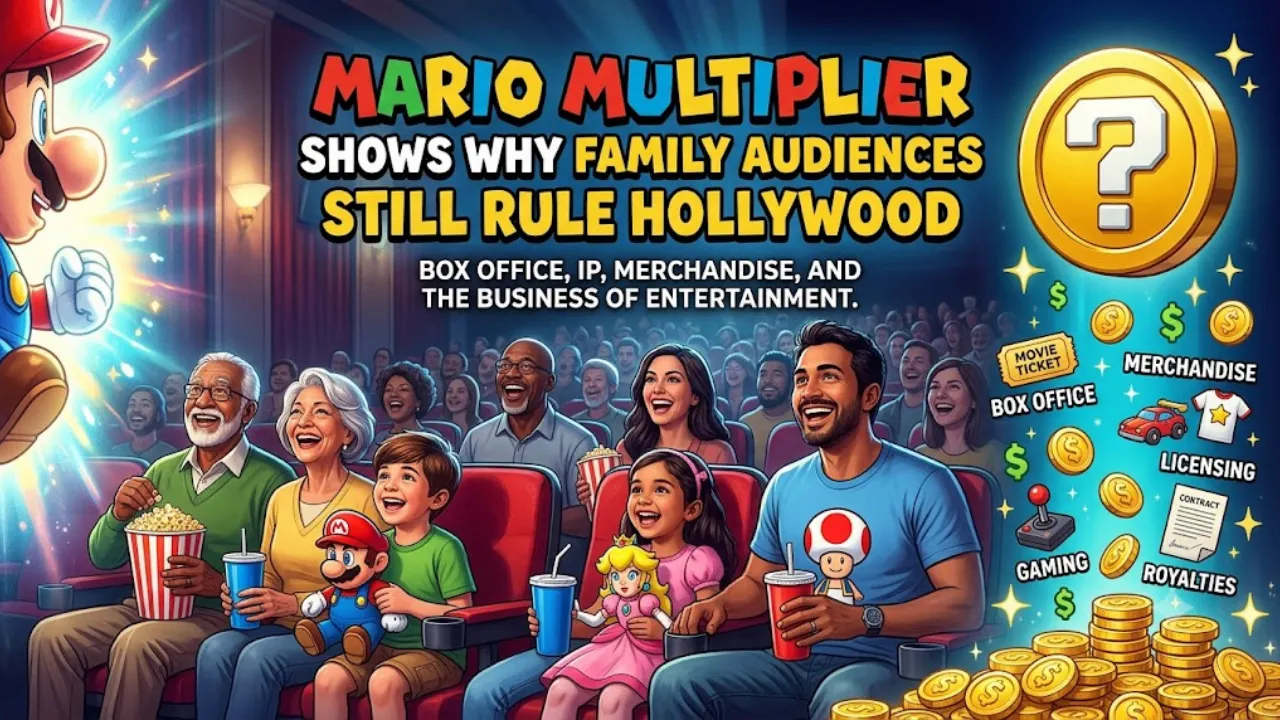
Mario Multiplier Shows Why Family Audiences Still Rule Hollywood
This article explains why family audiences remain one of Hollywood’s most reliable revenue engines, using Mario as the clearest modern example. It covers box office money, brand equity, licensing deals, streaming rights, royalties, celebrity wealth angles, and why traditional celebrity net worth estimates often miss the larger business picture.
A family movie ticket is rarely just one ticket. It can mean parents, kids, grandparents, snacks, toys, streaming rewatching, game sales, theme park interest, Halloween costumes, and years of brand loyalty.
That is the heart of the Mario Multiplier. When The Super Mario Bros. Movie became one of 2023’s biggest global hits, it reminded Hollywood that family audiences are not just valuable because they fill theaters. They are valuable because they expand a story into a full entertainment business.
The film grossed about $1.36 billion worldwide, making it the second-biggest global release of 2023, behind Barbie. Nintendo also reported that its mobile and IP-related income rose sharply in the quarter, helped by royalties and visual content connected to the movie.
The Mario Multiplier and Why Family Audiences Matter Now
Hollywood has spent years chasing young adults, superhero fans, horror crowds, and prestige streaming subscribers. Yet family audiences keep proving that they can create broader commercial upside.
The reason is simple. A successful family film does not depend on one narrow demographic. It can reach children who are discovering the character, parents who grew up with the property, and casual viewers who want something safe, bright, and communal.
Nintendo said The Super Mario Bros. Movie had been seen by an estimated 168.10 million viewers worldwide by July 30, 2023, and described the film as a way to create new opportunities for consumers to encounter Nintendo IP outside its dedicated game platform business.
That is what studios want now: not just one hit, but a repeatable audience engine.
The Business Model Behind the Money
Family entertainment works because the revenue stack is layered. The box office is only the first visible number.
After theaters, a family film can earn through premium video on demand, streaming rights, physical media, TV licensing, airline licensing, soundtrack use, publishing, toys, apparel, games, food partnerships, theme park attractions, and international distribution.
For a company like Nintendo, Mario is not simply a character in a movie. Mario is an intellectual property with decades of brand equity. The film becomes marketing, storytelling, product discovery, and franchise expansion all at once.
Salary Versus Ownership
For actors, directors, writers, and producers, salary is the upfront payment. It matters, but it is not the same as ownership.
A voice actor in a hit animated film may receive a negotiated fee. In some cases, top talent may also receive bonuses or backend participation, but those details are usually private unless disclosed in reporting or legal documents.
Ownership is different. The company that controls the IP, licensing rights, sequel rights, and merchandise pipeline often sits closer to the long-term wealth engine. That is why Hollywood money is increasingly tied to ownership deals, equity deals, royalties, and distribution rights rather than just a paycheck.
Brand Equity and Audience Trust
The Mario brand carried built-in trust before the film opened. Parents knew the character. Kids recognized the colors, music, and world. Gamers had decades of nostalgia.
That trust lowers marketing friction. A new original animated film must teach audiences what it is. Mario did not have to introduce himself.
This is also why celebrity brands and entertainment brands work differently. A celebrity may have fame, but fame does not always equal consumer trust. Mario had familiarity, cross-generational affection, and an existing product ecosystem.
Helpful Table
| Wealth Driver | How It Works | Why It Matters |
|---|---|---|
| Box Office | Ticket sales from theaters | Creates the first major public success signal |
| Royalties | Payments tied to licensed use or sales | Can support long-term income beyond release week |
| Licensing Deals | Paid use of characters, music, names, or images | Turns IP into products, games, and brand partnerships |
| Streaming Rights | Distribution value after theaters | Extends reach and adds another revenue window |
| Merchandise | Toys, apparel, collectibles, and themed goods | Converts audience affection into consumer spending |
| Ownership | Control of IP or business assets | Can create the biggest long-term wealth upside |
| Endorsement Deals | Paid promotional partnerships | Helps talent convert visibility into brand income |
Why Traditional Net Worth Estimates Often Miss the Full Picture?
Celebrity net worth estimates can be entertaining, but they are rarely complete. They often rely on public salaries, real estate records, visible endorsement deals, and broad industry assumptions.
That leaves out a lot.
Private investments may not be disclosed. Equity deals can change value over time. Royalties may rise or fade depending on distribution. Taxes, agent fees, manager fees, legal costs, debt, and production expenses can dramatically change actual wealth.
The same idea applies to companies and creators. A movie star’s salary from a family film may be easier to estimate than the long-term value created by the IP owner. Nintendo’s benefit from Mario was not limited to box office headlines. Its own investor materials said the film helped grow interest in Mario-related titles, smart-device apps, and merchandise.
That is the bigger financial picture that many quick net worth articles miss.
Examples That Show How This Works
Mario is not the only proof. Inside Out 2 became the top worldwide release of 2024 with about $1.70 billion globally, according to Box Office Mojo. Moana 2 also crossed $1 billion worldwide, while Despicable Me 4 approached the billion-dollar mark.
Those examples show why family films remain so attractive to studios. They can travel internationally, perform across age groups, and support additional revenue streams after the theater run.
Reuters reported that Inside Out 2 crossed $1 billion worldwide in less than three weeks, which Disney described as the fastest pace for an animated film at that time.
The pattern is clear. When family audiences show up, they can shift the economics of an entire studio year.
The Risks Behind Celebrity Business Ventures and Family IP
Family audiences are reliable, but they are not automatic.
A familiar character can still fail if the story feels lazy, the marketing misses the tone, or the brand is overused. Franchise fatigue is real. Parents also notice when a movie feels like a toy commercial instead of a real story.
There are business risks too. Licensing deals can become messy if quality control is weak. Merchandise can be missed if retailers over-order. Streaming windows can train families to wait rather than buy theater tickets. International markets can respond differently from domestic audiences.
Celebrity involvement also has limits. A famous voice cast can help with publicity, but it does not guarantee box office success. Product-market fit still matters. A family brand has to feel safe, fun, repeatable, and worth leaving the house for.
What does this reveal about modern celebrity wealth?
Modern Hollywood money is no longer just about salary, box-office bonuses, or red-carpet fame. The bigger wealth story is about leverage.
A celebrity can turn visibility into endorsement deals, business ventures, private investments, creator economy projects, or equity deals. A studio can turn one film into sequels, streaming value, theme park growth, and licensing income. An IP owner can turn audience love into decades of commercial life.
That is why the Mario Multiplier matters. It shows that the safest entertainment assets are often the ones that connect memory, family behavior, and ownership.
For Hollywood, family audiences remain reliable because they do more than watch. They repeat, collect, share, rewatch, and introduce the next generation.
Conclusion
The Mario Multiplier is not just about one movie’s box office success. It is about how family audiences turn entertainment into a wider business system.
Mario worked because the brand already had trust, nostalgia, global recognition, and the power of ownership behind it. The movie activated all of that at once.
For studios, celebrities, and IP owners, the lesson is clear: long-term entertainment wealth increasingly comes from owning or participating in assets that can live beyond opening weekend. Family audiences remain Hollywood’s most reliable market because they do not just buy a ticket. They keep the world alive.
FAQs
Why are family audiences so valuable to Hollywood?
Family audiences often bring multiple ticket buyers per outing and can support repeat viewing, merchandise, streaming, toys, games, and sequels. That makes them more valuable than a single box office transaction.
What is the Mario Multiplier?
The Mario Multiplier refers to how Mario’s movie success extended beyond the box office to encompass brand equity, licensing, merchandise, game interest, and long-term IP value.
Do celebrities make more from ownership than salary?
Sometimes, but it depends on the deal. Salary provides upfront income, while ownership, equity, royalties, or backend participation can yield greater long-term upside if the project succeeds.
Why do celebrity net worth estimates miss the full picture?
They often rely on public information and estimates. Private investments, taxes, debt, management costs, royalties, licensing deals, and undisclosed equity can make real wealth much harder to verify.
Why do some family entertainment franchises fail?
They can fail because of weak storytelling, audience fatigue, poor timing, overexpansion, bad licensing, low merchandise demand, or a mismatch between nostalgia and what modern families want.
Explore more entertainment business breakdowns, celebrity wealth stories, and net worth analysis articles to understand how fame, ownership, and IP shape modern Hollywood money.

Table of Contents