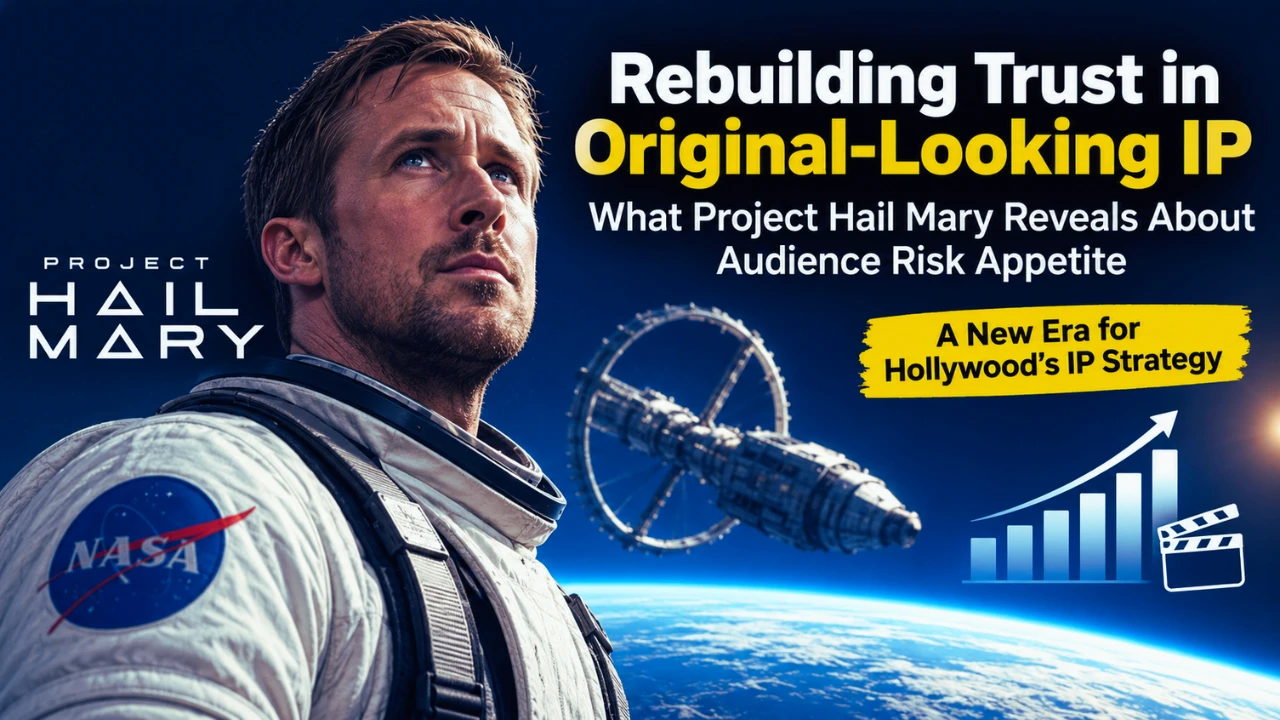
Project Hail Mary and the Return of Original IP
Hollywood has spent more than a decade teaching audiences to trust familiar logos. Marvel, Avatar, Jurassic World, and legacy franchises became the industry’s safest financial bets. Then along came Project Hail Mary.
On paper, it looks risky. It is a science fiction film based on a relatively recent novel, built around scientific ideas rather than nostalgia. It asks viewers to invest in a world they have never seen before. Yet its strong reception has sparked a bigger conversation about whether audiences are becoming more comfortable with original-looking stories again.
Rebuilding Trust in Original-Looking IP: What Project Hail Mary Reveals About Audience Risk Appetite is ultimately a story about money, intellectual property, and the economics of audience trust. It asks an increasingly important question: Have studios underestimated how much viewers want something new?
Why This Celebrity Wealth Trend Matters Now?
Entertainment executives often talk about “risk” as if audiences only buy tickets for brands they already know.
The reality is more complicated.
Modern audiences are not necessarily rejecting original ideas. They are rejecting uncertainty. If a project feels credible, has recognizable talent attached, and delivers a clear value proposition, viewers are often willing to leap
Project Hail Mary arrived with several trust signals:
- Ryan Gosling as both star and producer.
- Phil Lord and Christopher Miller directing.
- Drew Goddard adapting another Andy Weir novel after The Martian.
- Strong studio backing from Amazon MGM Studios and international distribution through Sony Pictures.
That combination matters because audience trust increasingly functions as a business asset.
In the entertainment business, trust is monetizable. It drives ticket sales, streaming subscriptions, merchandising opportunities, and long-term library value.
The Business Model Behind the Money
Hollywood does not merely sell movies. It sells confidence.
An original screenplay can be difficult to market because audiences have no existing relationship with it. Adapted intellectual property occupies a middle ground. While many moviegoers had never read Andy Weir’s novel, the project still benefited from a recognizable source material and established creative talent.
Salary Versus Ownership
Ryan Gosling’s compensation has not been publicly disclosed, but publicly available information confirms he also served as a producer on the film. Producer credits can carry financial significance depending on deal structures, backend participation, and future exploitation rights.
That distinction matters.
| Wealth Driver | How It Works | Why It Matters |
|---|---|---|
| Salary | Upfront payment for work | Immediate income |
| Royalties | Ongoing payments tied to use | Creates recurring earnings |
| Equity | Ownership in businesses | Can appreciate over time |
| Licensing | Paid use of IP or brands | Expands earning opportunities |
| Residuals | Payments for reuse | Supports long-term income |
| Backend Participation | Share of profits or performance metrics | Aligns incentives with success |
Hollywood money increasingly rewards ownership rather than simply appearing on screen.
For actors, producers, and creators, the long game is often more valuable than the initial pay cheque.
Brand Equity and Audience Trust
Ryan Gosling’s involvement illustrates an important trend in celebrity wealth.
Actors are becoming risk mitigators.
Their names function as brand equity. Audiences are not only buying a ticket to Project Hail Mary. They are buying confidence in Gosling’s track record and the filmmakers behind him.
This is the same principle behind celebrity brands, endorsement deals, and creator economy businesses. A trusted public image can become an economic moat.
That does not guarantee success. But it improves the odds.
Why Traditional Net Worth Estimates Often Miss the Full Picture?
Celebrity net worth estimates make for clickable headlines, but they rarely capture the full financial picture.
Public estimates often overlook:
- Private investments
- Producer participation agreements
- Undisclosed licensing arrangements
- Real estate holdings
- Tax obligations
- Management fees
- Intellectual property ownership
- Revenue-sharing agreements
Entertainment wealth has become increasingly fragmented.
A celebrity may earn less from salary than from ownership deals accumulated over a decade. Others may appear extremely wealthy publicly while carrying substantial costs behind the scenes.
The same applies to films.
A movie’s theatrical gross tells only part of the story. Streaming rights, premium video-on-demand, international licensing, home entertainment sales, and future syndication all contribute to an IP’s lifetime value.
Project Hail Mary demonstrates why Hollywood increasingly thinks in terms of decades rather than opening weekends.
That’s How This Works
Hollywood has seen this pattern before.
The Martian transformed Andy Weir’s reputation from novelist to valuable source of adaptable IP. Christopher Nolan’s original films continue to prove audiences will support ambitious concepts when paired with trusted creative leadership.
Similarly, franchises like John Wick began without decades of legacy recognition.
What connects these projects is not familiarity. It is trust.
Industry observers often note that audiences are willing to embrace new worlds when studios provide enough confidence markers:
- Recognizable talent.
- Strong reviews.
- Clear marketing.
- Distinct concepts.
- Consistent quality.
Project Hail Mary sits squarely within that tradition.
The Risks Behind Celebrity Business Ventures
There is a reason studios continue producing sequels.
Original-looking intellectual property remains expensive and unpredictable.
Potential risks include:
- Marketing costs exceeding audience interest.
- Weak international performance.
- Overestimating star power.
- Audience fatigue with certain genres.
- Poor release timing.
- Rising production budgets.
- Difficulty building merchandising ecosystems.
Science fiction is particularly challenging.
It often requires significant visual effects investment while lacking the built-in audience familiarity of superhero franchises. If audiences reject the premise, recovery can be difficult.
Celebrity involvement also carries risk. Public image changes quickly. A controversy, poor reviews, or changing consumer tastes can weaken the financial value of star-driven projects.
Brand equity takes years to build and far less time to lose.
What This Reveals About Modern Celebrity Wealth?
The bigger lesson extends beyond one film.
Modern celebrity wealth increasingly revolves around ownership, leverage, and intellectual property.
Actors are becoming producers.
Producers are becoming entrepreneurs.
Studios are becoming portfolio managers.
Intellectual property has become one of the entertainment industry’s most valuable assets because it can be monetized repeatedly across theatrical releases, streaming rights, licensing deals, and future adaptations.
For Hollywood, Project Hail Mary suggests audiences may not be demanding endless sequels. They may simply be demanding reassurance.
That distinction could shape billions of pounds worth of entertainment investment over the next decade.
If audiences continue rewarding original-looking IP backed by trusted creators, studios may gradually rebalance their portfolios. Instead of choosing between franchises and original ideas, they may pursue both.
And that changes the economics of modern entertainment.
Conclusion
Project Hail Mary is more than a successful science fiction adaptation. It is a reminder that audience behavior is rarely as simple as industry narratives suggest.
Viewers have not abandoned new ideas. They have become more selective about where they place their trust.
For studios, celebrities, and investors, that trust has measurable value. It influences ticket sales, streaming performance, licensing opportunities, and the long-term worth of intellectual property.
The next generation of Hollywood winners may not be the companies that own the most franchises. They may be the ones that learn how to make audiences believe in unfamiliar worlds again.
FAQs
What is Project Hail Mary about?
Project Hail Mary follows Ryland Grace, a science teacher who awakens aboard a spacecraft and must save Earth from an existential threat. It is based on Andy Weir’s bestselling novel.
Why is Project Hail Mary important for Hollywood?
It highlights growing audience willingness to support original-looking intellectual property when backed by trusted talent and strong storytelling.
How do celebrities make money beyond acting salaries?
Celebrities often earn through producer credits, royalties, licensing deals, business ventures, private investments, and endorsement agreements.
Why are celebrity net worth estimates often inaccurate?
Many estimates cannot account for private investments, taxes, debt obligations, undisclosed contracts, or ownership interests.
Does original IP still matter in Hollywood?
Yes. While franchises remain valuable, successful original or adapted concepts can become significant long-term intellectual property assets.
Interested in the business behind fame and entertainment? Explore more celebrity wealth breakdowns, Hollywood money stories, and deep dives into the economics of modern intellectual property.

Table of Contents