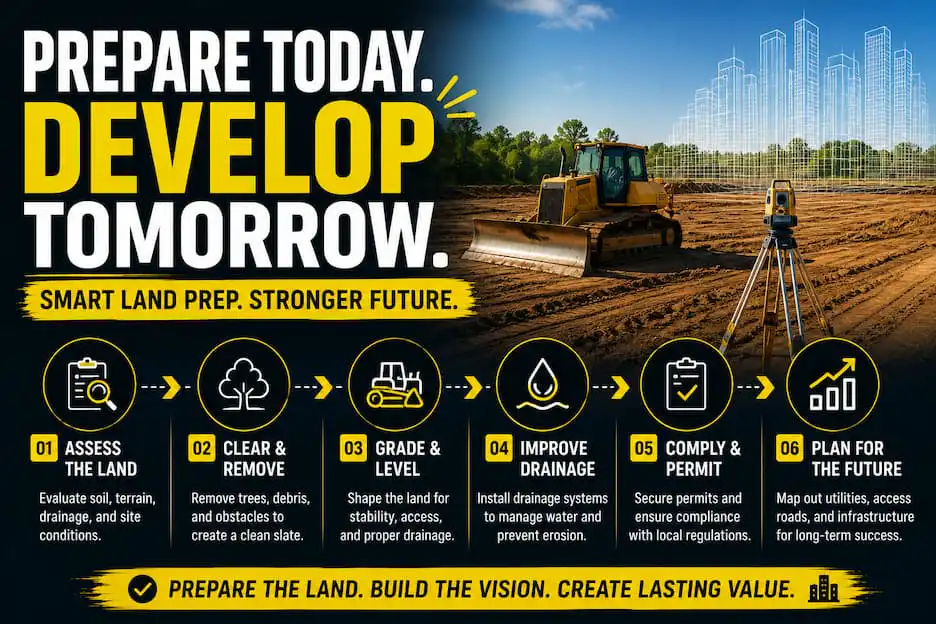
Key Steps in Preparing Land for Future Development
From a distance, one might think a piece of land looks just to the point. Open space, plenty of room, and lots of possibilities. However, when you actually enter that land, things may change.
Maybe there is thick brush hiding uneven ground. Maybe drainage problems are waiting to show up after the first heavy rain. Sometimes old debris, tree stumps, or poor access routes create problems nobody noticed during the first visit.
Many contractors and property owners use equipment such as a brush cutter for mini skid steer attachments during the early stages of site preparation because clearing overgrown areas often reveals what the land is really like underneath.
Here are key steps to consider for preparing land for future development.
Step 1- Start With a Thorough Site Assessment
Take time to find out more about the property before work commences.
This might seem like a no-brainer, but it is something that people may skip.
Walk the site. Please carefully examine the landscape. Note slopes and low areas, drainages, vegetation, and access. A small task that seems easy on paper can be difficult when it’s time to get on the ground.
A site assessment can also provide information on potential challenges that could impact future plans, including:
- Dense vegetation
- Large rocks
- Existing structures
- Drainage issues
- Areas with difficult access
The more you know about the property upfront, the fewer surprises you are likely to face later.
Step 2- Review Zoning and Land Use Requirements
Before investing time and money into preparing a site, it is important to understand what can legally be done with the land.
Every area has zoning regulations and land use rules that can affect future development plans. These requirements may influence building placement, property access, environmental considerations, and permitted uses.
Nobody wants to spend weeks preparing land only to discover that a project cannot move forward as planned.
Taking time to review local requirements early can help avoid setbacks and allow for better planning from the beginning.
Step 3- Address Environmental and Drainage Concerns
Water has a way of exposing problems that people often miss during dry conditions.
A property may appear stable until heavy rain arrives and reveals standing water, erosion, or drainage issues.
This is why evaluating environmental conditions early is a smart move. Pay attention to areas where water naturally collects and identify sections of land that may need grading or drainage improvements.
Environmental factors can also affect future development plans. Wet areas, protected vegetation, and natural features may require special consideration depending on the project.
Addressing these concerns before development begins can save a lot of time later.
Step 4- Clear and Prepare the Site
Once the property has been evaluated, the next step is preparing the site itself.
Overgrown vegetation, brush, fallen trees, and debris can make it difficult to accurately assess the land and move equipment safely.
Clearing these obstacles improves visibility and accessibility while helping crews identify areas that need additional attention.
The type of equipment used often depends on the condition of the property. On sites with heavy brush and thick vegetation, operators may rely on tools like a brush cutter for mini skid steer equipment to efficiently clear areas that would otherwise take much longer to manage by hand.
A cleaner site allows planning and development work to move forward with fewer interruptions.
Step 5- Plan for Access and Infrastructure
Good access is something people often appreciate only after they realize they do not have it.
Construction vehicles, maintenance crews, delivery trucks, and future users all need reliable ways to reach the site.
This is the stage where planning for roads, entry points, utility access, and traffic flow becomes important.
Questions worth asking include:
- How will vehicles enter and leave the property?
- Where will utilities be installed?
- Are there any obstacles that could limit access?
- Will future expansion require additional routes?
Thinking through these details early can help avoid costly adjustments later.
Step 6- Create a Long-Term Site Preparation Strategy
Land preparation is not always a one-time task.
Many properties require ongoing management even after initial clearing and development work is completed.
Vegetation grows back. Drainage patterns change. Access routes may need maintenance over time.
A long-term strategy helps property owners stay ahead of these issues instead of constantly reacting to them.
This plan does not have to be complicated. In many cases, it simply means scheduling regular inspections, monitoring site conditions, and addressing small issues before they become larger problems.
Projects often move more smoothly when site preparation is viewed as an ongoing process rather than a single item on a checklist.
Conclusion
Preparing land for future development takes more than clearing a few trees and bringing in equipment. The most successful projects usually begin with careful planning and a good understanding of the property itself.
From assessing site conditions and reviewing regulations to addressing drainage concerns and improving access, every step plays a role in creating a stronger foundation for future work.
No piece of land is exactly the same, which is why taking the time to prepare properly can make a real difference. A little extra effort at the beginning can help prevent headaches later and make the entire development process much easier to manage.

Table of Contents