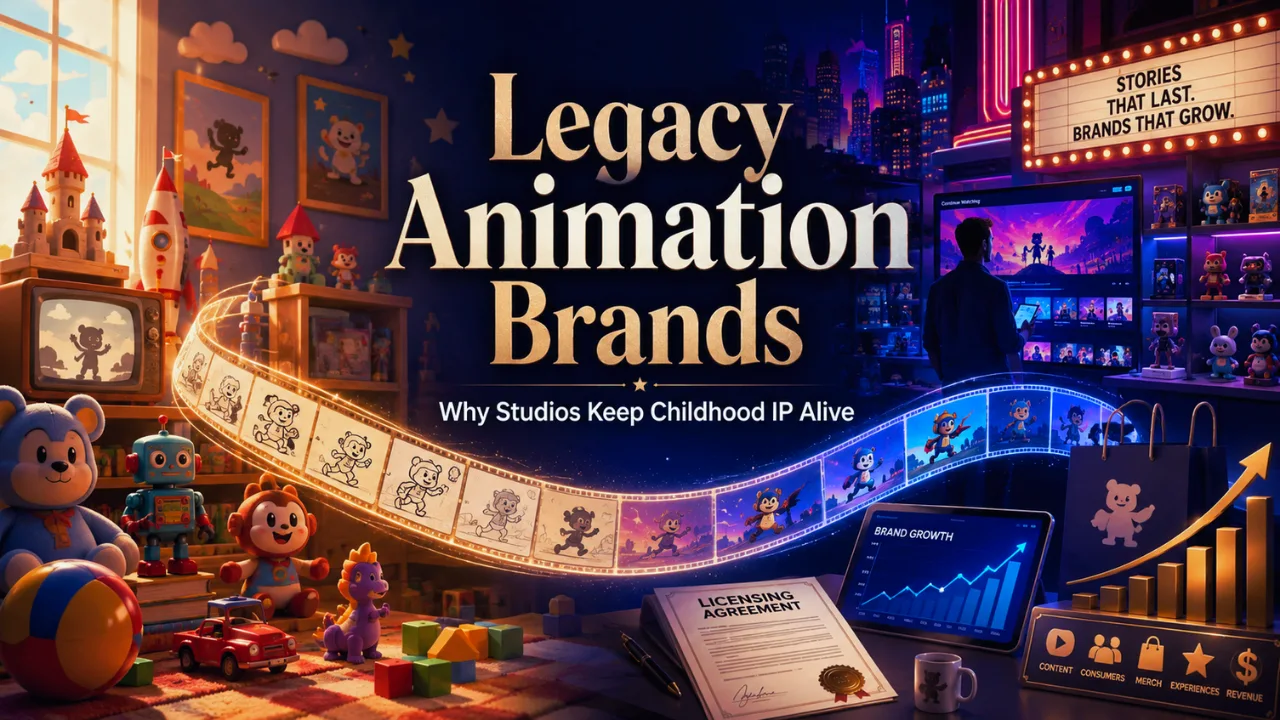
Why Legacy Animation Brands Keep Growing With Adult Fans
This article explains why studios keep extending legacy animation brands long after their original child audiences grow up. It breaks down how nostalgia, licensing deals, streaming rights, merchandise, residual income, and brand equity turn animated characters into long-term assets in the entertainment business.
A funny thing happens when a childhood cartoon refuses to stay in childhood. The audience grows up, gets jobs, subscribes to streaming platforms, buys collectibles, takes kids to theaters, and still feels something when an old character returns.
That is why legacy animation brands have become some of the most durable assets in Hollywood money. Studios are not simply chasing nostalgia for its own sake. They are protecting intellectual property, refreshing merchandise pipelines, feeding streaming libraries, and turning emotional memory into repeatable revenue.
The business question is not why studios keep bringing back familiar animated worlds. It is why they would ever let them age out.
Why This Celebrity Wealth Trend Matters Now?
Legacy animation brands matter because they sit at the center of several major trends in the entertainment business at once.
They work for children, but they also work for adults who grew up with them. That gives studios two markets instead of one. Parents bring their children. Adult fans buy collectibles. Streaming platforms use old favorites to reduce churn. Retailers use familiar characters to make products feel safer and more giftable.
The licensing market shows why this matters. Licensing International’s 2025 Global Study reported that entertainment and character licensing reached $149.8 billion in revenue, with classic and franchise properties making up most of that category. That means old characters are not just cultural memories. They are commercial infrastructure.
Toy demand also supports the strategy. Circana reported that global toy sales across 12 major markets grew in 2025, helped by licensed products, collectibles, pop culture demand, and stronger engagement from teens and adults. For animation studios, that is a powerful signal: the audience for “kids’ brands” is no longer only kids.
The Business Model Behind the Money
The money behind legacy animation does not come from one source. It comes from stacking revenue streams around one recognizable world.
A theatrical sequel can generate box-office revenue. A streaming release can increase platform value. A theme park attraction can turn characters into physical experiences. A toy line can keep the brand visible in homes. Clothing, books, games, food packaging, and collectible figures can extend the same intellectual property into everyday spending.
Disney’s fiscal 2025 results show how large this machine can become. The company reported full-year revenue of $94.4 billion, while its Experiences segment included parks, experiences, and consumer products. Disney also said consumer products’ operating income increased in the quarter due to higher licensing revenue.
That does not mean every old animated property is automatically profitable. It means the biggest studios understand how to expand a single brand across several business lines.
Salary Versus Ownership
For actors, writers, directors, and voice performers, the first check is usually salary. That is payment for work performed.
Ownership is different. If a studio owns the characters, sequel rights, distribution rights, and licensing rights, it controls the larger financial engine. A voice actor may be famous because of a role, but the studio often owns the role’s commercial ecosystem.
Residuals can still matter. SAG-AFTRA’s TV Animation Agreements note improvements tied to high-budget subscription video on demand residuals and success bonuses for qualifying animated programs. That can help performers earn beyond the original session, but it is still different from owning the underlying IP.
Brand Equity and Audience Trust
Brand equity is the invisible premium attached to a familiar character.
A new animated movie must teach audiences who everyone is. A legacy animation brand does not start from zero. The studio already has emotional shorthand. Viewers know the tone, the world, the character relationships, and the brand’s promise.
That trust lowers marketing risk. It also creates a bridge between generations—parents who once watched the original now become buyers, recommenders, and emotional translators for their children.
Helpful Table
| Wealth Driver | How It Works | Why It Matters |
|---|---|---|
| Box Office | Ticket sales from theatrical releases | Creates event value and public attention |
| Streaming Rights | Placement on owned or licensed platforms | Keeps the franchise visible year-round |
| Licensing Deals | Paid use of characters on products | Extends income beyond movies and shows |
| Merchandise | Toys, apparel, collectibles, books, games | Turns fandom into repeat purchases |
| Residuals | Payments from reuse or distribution | Supports some creative talent over time |
| Brand Equity | Trust built around familiar characters | Makes relaunches easier to market |
| Theme Parks | Physical experiences built around IP | Deepens loyalty and creates premium revenue |
Why Traditional Net Worth Estimates Often Miss the Full Picture?
Celebrity net worth estimates often focus on visible income: salaries, endorsement deals, real estate, business ventures, and public investments. That approach can miss how animation wealth actually works.
A performer may earn a strong salary for a returning voice role, but unless the performer owns part of the franchise, the bigger upside usually sits with the studio. Meanwhile, a studio’s gains are spread across licensing, merchandise, streaming rights, parks, retail partnerships, and long-term library value.
Public estimates can also miss taxes, agent fees, debt, private investments, undisclosed equity deals, backend clauses, and management costs. That is why celebrity wealth and studio wealth should not be treated as the same thing.
An actor can be central to a character’s identity and still not own the character. A studio can earn from that character for decades.
Examples That Show How This Works
Toy Story is one of the clearest examples. Reuters reported that Toy Story 5 centers on toys facing a new threat from technology, with Bonnie pressured to swap toys for a tablet. That plot is not random. It lets Pixar speak to children living with screens while also speaking to adults who remember a less digital idea of play. Reuters also noted that the franchise is important to Disney because it supports theme parks, merchandise, and Disney+ viewing.
Shrek shows a different version of the same playbook. NBCUniversal said Shrek 5 is set for summer 2027 and noted that the Shrek franchise has grossed nearly $4 billion worldwide across its four main films and two Puss in Boots spin-offs. That gives Universal a multi-generational comedy brand with theatrical, streaming, consumer product, and nostalgia value.
Paramount is also leaning into consumer products and experiences. At Licensing Expo 2026, the company highlighted how brand licensing connects studios, retailers, manufacturers, and licensees around what audiences wear, play with, and buy. Its presentation also referenced nostalgic IP as part of broader consumer demand.
The pattern is clear. Studios are not only releasing sequels. They are reactivating ecosystems.
The Risks Behind Celebrity Business Ventures
Legacy animation can look safe, but it carries real risk.
The first risk is audience fatigue. If a sequel feels like a product update rather than a story, fans can turn cold quickly. Nostalgia creates attention, not automatic affection.
The second risk is brand confusion. A property made for children may lose warmth if it chases adult irony too aggressively. But if it stays too childlike, it may fail to connect with the adults who now hold spending power.
The third risk is overexpansion. Too many spin-offs, product drops, live experiences, games, and collaborations can make a brand feel cheap. Licensing works best when the product aligns with the IP’s emotional meaning.
The fourth risk is creative stagnation. A legacy brand needs familiar elements, but it also needs a reason to exist now. Toy Story 5, using technology as a story conflict, is a good example of how old IP can be updated without fully abandoning its roots.
Celebrity involvement has limits, too. A returning star can help marketing, but voice talent alone does not guarantee product-market fit. The audience still needs a strong story, smart timing, and a brand experience that feels worth paying for.
What does this reveal about modern celebrity wealth?
Modern celebrity wealth is no longer only about salaries, box-office bonuses, record sales, or sports contracts. Ownership, licensing, and equity deals, business ventures, and control over intellectual property increasingly shape it.
In animation, the greatest wealth often lies with whoever owns the world, not simply with whoever appears in it.
That is why studios refuse to let legacy animation age out. A beloved character can become a film asset, a streaming asset, a consumer products asset, a theme park asset, and a family memory all at the same time.
The smartest entertainment companies know that childhood brands do not expire as their audiences grow up. They mature into something more valuable: emotional IP with adult spending power behind it.
Conclusion
Legacy animation brands survive because they are built on more than nostalgia. They carry trust, recognition, merchandising power, streaming value, and cross-generational appeal.
For studios, aging audiences are not a problem. They are an expansion strategy. The child who once watched the cartoon may now be the subscriber, collector, parent, ticket buyer, or lifelong fan keeping the brand alive.
That is the future of Hollywood money: not just making new hits, but learning how to make old characters valuable in new ways.
FAQs
Why do studios keep reviving legacy animation brands?
Studios revive legacy animation brands because they already have audience awareness, emotional value, and licensing potential. Familiar IP can support movies, streaming, merchandise, games, and theme park experiences.
How do legacy animation brands make money?
They make money through box office sales, streaming rights, merchandise, licensing deals, books, games, apparel, collectibles, residual income structures, and sometimes live experiences or theme park attractions.
Do voice actors own animated characters?
Usually, no. Voice actors are typically paid for their performance, while the studio or rights holder owns the character and franchise. Some performers may receive residuals or negotiated bonuses, but ownership is separate.
Why do celebrity net worth estimates miss animation income?
Net worth estimates often miss private contracts, residuals, taxes, undisclosed backend deals, licensing structures, management costs, and whether a celebrity actually owns equity in a project.
Can nostalgia hurt a legacy animation brand?
Yes. If a sequel relies solely on old memories rather than a fresh story, audiences may reject it. Over-merchandising, weak writing, and forced franchise expansion can damage brand equity.
For more smart breakdowns on celebrity wealth, Hollywood money, entertainment business models, and net worth analysis, explore our latest celebrity finance and media industry stories.
Table of Contents