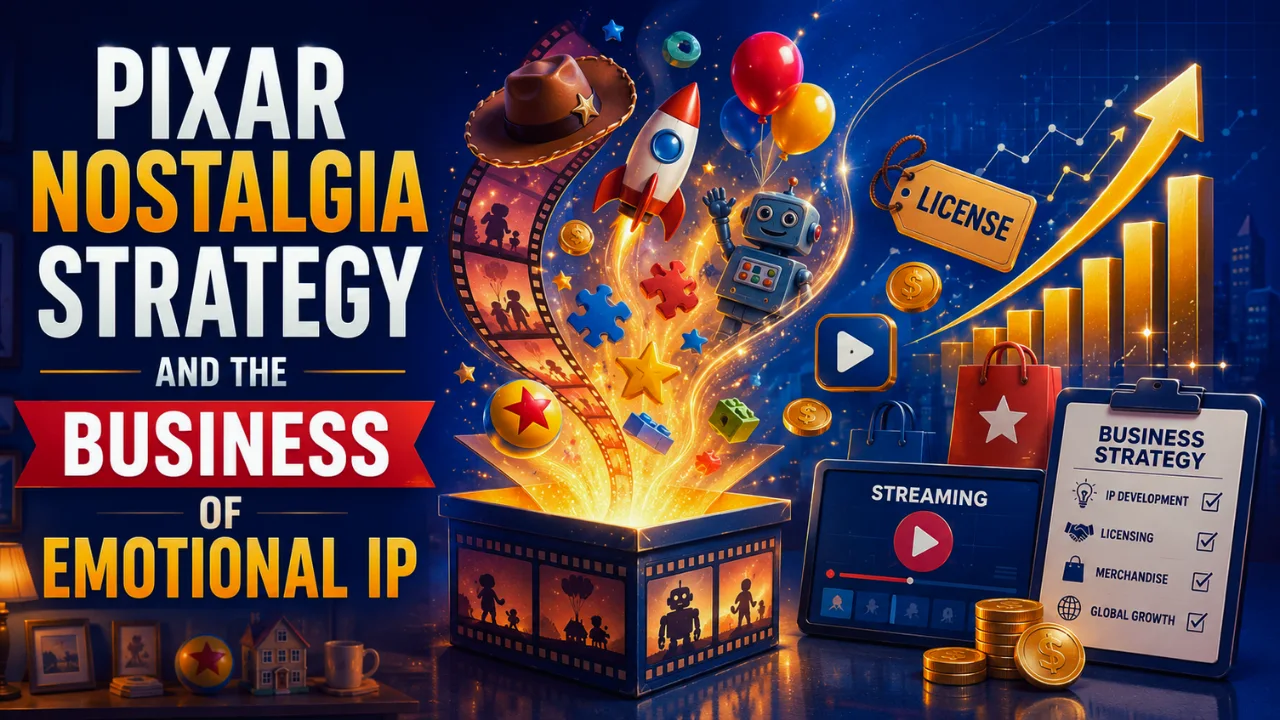
Pixar Nostalgia Strategy and the Business of Emotional IP
This article explains how Pixar and Disney turn emotional familiarity into a corporate wealth engine through sequels, licensing, streaming rights, consumer products, and brand equity. It also shows why traditional celebrity net worth estimates often miss the larger financial picture behind Hollywood money and intellectual property ownership.
Nostalgia is not just a feeling in Hollywood. At Pixar’s scale, it is a balance-sheet strategy.
That is the real story behind the Pixar nostalgia strategy. Beloved characters like Woody, Buzz, Joy, Lightning McQueen, Mike, and Sulley are not only emotional symbols for audiences. They are intellectual property assets that can move across theaters, Disney+, toys, theme parks, video games, apparel, publishing, and licensing deals.
Disney’s 2006 acquisition of Pixar was valued at $7.4 billion, and the company described the deal as a way to combine Pixar’s creative strength with Disney’s broader family entertainment, characters, theme parks, and franchise businesses. That framing still explains the model today. Pixar does not simply release movies. It builds memory into monetizable corporate infrastructure.
Why This Celebrity Wealth Trend Matters Now?
The entertainment business is no longer built only around opening weekend ticket sales. A hit film still matters, but the bigger prize is repeatable attention.
Pixar’s advantage is emotional durability. A child who watched Toy Story in the 1990s may now be a parent buying a movie ticket, a Disney+ subscription, a plush toy, a birthday party product, or a theme park experience for their own child. That is nostalgia working as a driver of customer retention.
For celebrities, voice actors, directors, and producers, this matters because fame alone does not always create lasting wealth. Long-term value usually comes from ownership deals, residual income, royalties, equity participation, backend compensation, or business ventures tied to intellectual property.
For corporations, the math is different. Disney owns Pixar. That means the company can use Pixar stories across multiple revenue channels rather than relying on one box office cycle.
The Business Model Behind the Money
Pixar’s sentiment machine works because one successful story can be monetized many times.
A theatrical release creates attention. Streaming keeps the property visible. Consumer products turn characters into daily household objects. Theme parks transform screen memories into paid experiences. Licensing deals allow third-party companies to pay for the right to use characters on toys, clothing, books, games, and more.
Disney Consumer Products says it brings Disney brands and franchises into families’ lives through products including toys, T-shirts, apps, books, and global retail channels. Disney also describes itself as a global licensing leader across more than 100 categories and 180 countries.
That is why Pixar nostalgia is not soft business. It is a repeat purchase system.
Salary Versus Ownership
A performer may earn a salary for voice work. A writer, director, or producer may receive compensation based on contracts, bonuses, or negotiated participation. Those can be valuable, but they are not the same as owning the underlying franchise.
Ownership is the real wealth multiplier.
The company that owns the IP can profit from sequels, streaming rights, merchandise, park attractions, licensing deals, and international distribution. A celebrity attached to a project may gain visibility, but unless they have confirmed equity, royalties, backend participation, or ownership rights, their financial upside may be more limited than fans assume.
That is why Hollywood money can look confusing from the outside. The most visible person in a franchise is not always the one or the company capturing the most long-term value.
Brand Equity and Audience Trust
Pixar’s biggest asset is not only animation technology. It is trust.
Parents trust the brand. Adults associate it with childhood memories. Children connect with bright characters and emotional storytelling. That trust lowers marketing friction. Audiences already understand the emotional promise before a trailer even explains the plot.
This is brand equity. It is the value created when a name, logo, character, or story world carries meaning beyond the product itself.
For celebrities, brand equity operates similarly. A trusted star can help sell a fragrance line, a restaurant, a tequila brand, a memoir, a documentary, or an endorsement deal. But trust is fragile. If the product disappoints or the public image changes, the value can fade quickly.
Why Traditional Net Worth Estimates Often Miss the Full Picture?
Celebrity net worth estimates are useful for curiosity, but they are rarely complete financial audits.
They often miss private investments, taxes, management fees, debt, real estate structures, undisclosed equity deals, licensing terms, residuals, and backend compensation. They may also overstate wealth by treating revenue as profit.
The same problem applies when fans look at Pixar-related talent. A voice actor’s fame from a beloved franchise does not automatically mean ownership of that franchise. A director’s creative importance does not always translate into long-term IP control. Publicly available data can show salaries, box office numbers, or reported deals, but private contract terms are usually not fully visible.
Corporate wealth is easier to understand, in one sense, because Disney reports on broad financial performance. For fiscal 2025, Disney reported annual revenue of $94.4 billion, showing how large the parent company’s full entertainment, sports, and experiences ecosystem has become. Pixar is one powerful part of that larger machine.
Examples That Show How This Works
Inside Out 2 is a modern case study in emotional IP returning at scale. Disney said the film crossed $1 billion at the global box office in 19 days, the fastest time ever for an animated film at that point. Disney also noted that the film’s future value extended beyond theaters into streaming, merchandise, attractions, events, and more.
Toy Story shows the longer arc. The franchise has spanned multiple decades, generations, and consumer categories. Box Office Mojo lists Toy Story 4 and Toy Story 3 as major domestic performers, with Toy Story 5 also joining the franchise’s theatrical record after its June 2026 release.
The merchandising story is even more revealing. License Global reported in 2010 that the Toy Story franchise was valued at $8 billion at retail at the time, with more than 20 licensees attached to Toy Story 3 products.
That is the Pixar nostalgia strategy in plain language. The movie creates an emotional event. The franchise creates the long tail.
| Wealth Driver | How It Works | Why It Matters |
|---|---|---|
| Box Office | Ticket sales from theatrical releases | Creates cultural momentum and upfront revenue |
| Streaming Rights | Films and series live on platforms like Disney+ | Keeps franchises visible between releases |
| Licensing Deals | Companies pay to use characters or brands | Expands revenue without Disney making every product itself |
| Consumer Products | Toys, clothing, books, games, and apps | Turns audience affection into repeat purchases |
| Theme Parks | Characters become rides, shows, and experiences | Converts screen nostalgia into premium real-world spending |
| Brand Equity | Trust built around Pixar storytelling | Makes future releases easier to market |
| Residuals and Royalties | Contract-based payments from reuse or sales | Can support long-term income for eligible talent |
The Risks Behind Celebrity Business Ventures
Nostalgia can be powerful, but it is not magic.
Studios can overuse familiar characters. Sequels can feel safe on paper and stale on screen. Audiences may reject a project if it seems built only to sell toys or feed a streaming calendar. The more a company relies on memory, the more pressure it faces to protect that memory.
There are also business risks. Licensing can dilute a brand if product quality is poor. Overexpansion can make once-special characters feel ordinary. Streaming can train audiences to wait at home rather than pay for theaters. Bad timing can hurt even a strong IP.
For celebrities, the same risks apply. A famous name can open doors, but it cannot save a poor product-market fit. Celebrity brands can fail when the star is overextended, operations are weak, pricing is off, or the audience sees the venture as a cash grab.
The lesson is simple. Nostalgia may attract attention, but execution keeps the money flowing.
What does this reveal about modern celebrity wealth?
The Pixar model reveals a larger truth about Hollywood money. Wealth is increasingly shaped by ownership, distribution, timing, and IP leverage.
Salary still matters. Endorsement deals still matter. Box office still matters. But the biggest financial engines often sit behind the spotlight. They are built on rights, licensing, recurring consumer behavior, and brand systems that continue to work after the press tour ends.
That is why the entertainment business rewards those who own the asset, not only those who appear in it.
Pixar nostalgia works because it connects emotion with infrastructure. The audience remembers the characters. Disney owns the machine that keeps those characters commercially alive. That is how sentiment becomes strategy, and how strategy becomes long-term corporate value.
FAQs
What is the Pixar nostalgia strategy?
The Pixar nostalgia strategy is the business use of beloved Pixar characters and story worlds across sequels, streaming, merchandise, licensing, theme parks, and brand partnerships. It turns audience memory into repeatable revenue.
How does Pixar make money beyond movie tickets?
Pixar-related properties can generate revenue through box office sales, Disney+ streaming value, consumer products, licensing deals, publishing, games, attractions, and international distribution. The exact financial split depends on Disney’s internal structure and individual contracts.
Why do celebrity net worth estimates miss the bigger picture?
Celebrity net worth estimates often miss private investments, taxes, debt, royalties, residuals, licensing terms, equity deals, and management costs. They may also confuse revenue with actual personal wealth.
Do voice actors own Pixar characters?
Usually, voice actors are paid for performance work, not ownership of the character or franchise. Any royalties, residuals, backend pay, or bonuses depend on individual contracts and union rules.
Why is nostalgia valuable in the entertainment business?
Nostalgia reduces marketing friction because audiences already know the property and emotionally trust it. That trust can support ticket sales, streaming engagement, merchandise demand, and long-term brand equity.
Explore more entertainment business breakdowns to understand how celebrity wealth, Hollywood money, licensing deals, and intellectual property shape modern fame.

Table of Contents