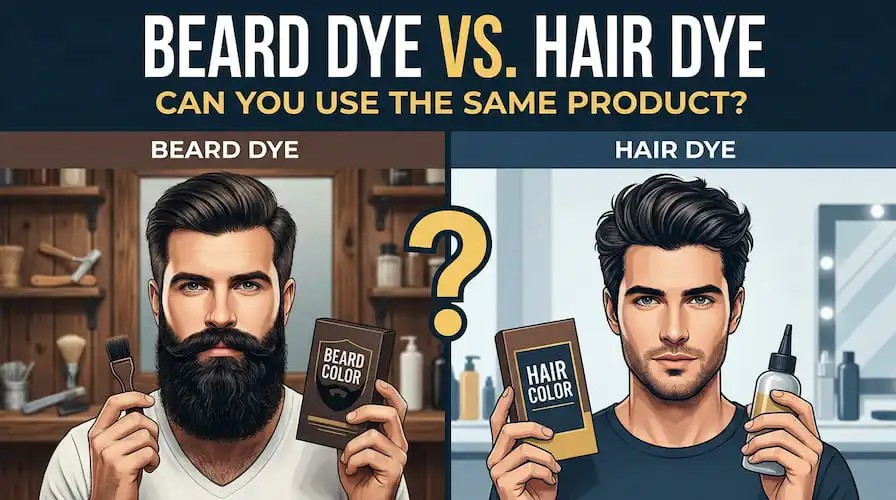
Beard Dye vs. Hair Dye: Can You Use the Same Product?
It is a question a lot of men ask at some point, usually while standing in a drugstore aisle, trying to figure out whether the box of hair dye in their hand will work on their beard too. The packaging rarely provides a clear answer, and the logic of using a single product for both seems reasonable on the surface. The answer, it turns out, depends significantly on what the product is actually formulated for.
Why Beard Hair and Scalp Hair Aren’t the Same
Start with the hair itself. The growth on your chin is coarser and more porous than what sits up top, and it sprouts from follicles that answer to hormones in their own way. When you dye it, beard hair soaks up and clings to color more readily, which is why a given shade lands darker, or more saturated, on a beard than on the head above it. The skin is the bigger concern. Your face is more delicate than your scalp, with a thinner barrier and proximity to the eyes, nose, and mouth. A dye built and tested for the scalp was never measured against any of that.
The Risk of Using Standard Hair Dye on a Beard
It pays to be precise about where the danger actually lives, because it usually isn’t some hidden difference in the formula. Loads of hair dyes and beard dyes run on the same active ingredients, with the same color precursors, the same ammonia, and the same peroxide. What changes is the skin underneath and whether anyone tested the product for that spot.
So the case against a scalp-only dye on your beard rests on three plain facts. Facial skin reacts more easily, so chemicals your scalp shrugs off can leave the skin beneath your beard pink and sore. The dye also lands closer to your eyes, which turns a stray run or splash into a real problem rather than a nuisance. And since a scalp product was only ever vetted for the scalp, how it behaves on your face is an open question.
Another problem is purely cosmetic. Beard hair drinks up color fast, so leaving a scalp dye on for the full time printed on the box, a clock set for slower scalp hair, can drag you several shades darker than you were going for.
All this to say that this doesn’t mean every hair dye is a hazard, but a scalp-only product on your beard is doing a job it wasn’t sent to do.
Are There Men’s Dyes That Work for Both?
There are men’s hair coloring products that work for both, though it’s not as common as those made strictly for the scalp or facial hair. If you do find dyes purposely made and tested for both beard and head hair, they will state that clearly.
One such example is the beard and hair dye from The Beard Club, specifically made to color both your facial hair and your head hair. Dual-use dye kits like these include directions for development in both areas and application tools for both hair types (short and long), reducing the guesswork and safety concerns associated with using something not intended for one area or the other.
Furthermore, one dye in both places beats juggling two separate formulas and praying they finish the same color. Now that’s a win.
Reading Labels and Understanding What You Are Using
Your single most useful move before dyeing is reading the label. Anything meant for beards, or for beards and hair together, says so plainly. Silence on facial or beard use is your cue to treat it as scalp-only.
Scan the ingredients while you’re there. PPD, short for para-phenylenediamine, sets off more dye-related skin reactions than any other ingredient. It shows up in plenty of dark permanent shades, and the American Contact Dermatitis Society went so far as to name it Allergen of the Year in 2006. Once a sensitivity to that ingredient develops, it tends to stick for life, so if dark hair dye has ever turned on you, the ingredient list is where you catch it early.
If it turns out that you are generally reactive to chemical dyes, you can always opt for less permanent or natural options, such as temporary coloring that sits more on top of the hair, plant-based natural coloring, and even henna.
Whatever you land on, test it before it ever touches your beard. Dab a little on a hidden patch of skin, behind the ear or inside the wrist, and give it a full 48 hours to show its hand. Your beard warrants this caution more than your scalp does. A dye that never bothered the top of your head can still light up your face.
Practical Takeaways
The main takeaway is that using the same product for scalp and facial hair carries risks when it is formulated only for one or the other. But if the product is designed to work on both–and states that clearly–then you’re good to go. Otherwise, it’s best to use products for their intended use to avoid unwanted reactions and unnatural dye jobs.

Table of Contents