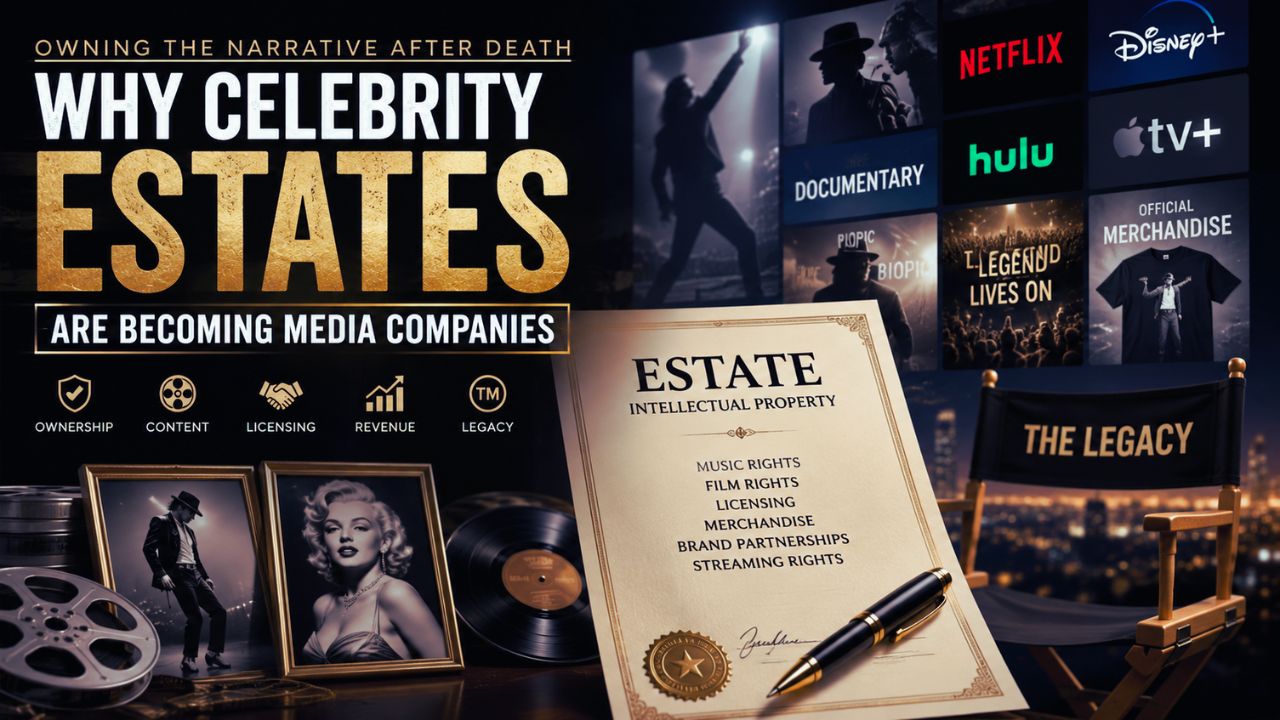
Celebrity Estates Are Becoming Media Companies
A celebrity’s death was once viewed as the end of their commercial story. Today, it is often the beginning of a new chapter.
From documentaries and biopics to merchandise, podcasts, licensing deals, and streaming specials, the business of preserving a public image has become a multi-billion-pound industry. That shift explains why celebrity estates are becoming media companies, actively managing intellectual property in ways that would have seemed unusual a generation ago.
For families, heirs, and estate managers, the goal is no longer simply protecting a name. It is controlling the narrative, expanding audiences, and creating sustainable revenue streams. In an entertainment economy built on attention, ownership has become one of the most valuable assets a celebrity can leave behind.
Why This Celebrity Wealth Trend Matters Now?
Several trends have collided at once.
Streaming platforms need recognizable stories. Social media continuously introduces younger audiences to cultural icons. Meanwhile, advances in digital distribution have made it easier than ever to monetize archives.
Entertainment businesses increasingly view celebrity legacies as intellectual property portfolios rather than historical footnotes.
The estates of artists, actors, and musicians are now involved in:
- Documentary production
- Biopic approvals
- Licensing agreements
- Merchandise partnerships
- Music catalog management
- Publishing rights administration
- Digital and social media strategies
- Brand collaborations
This matters because celebrity wealth is becoming less dependent on active work and more dependent on ownership.
Industry observers often point to the continued commercial relevance of figures like Elvis Presley, Marilyn Monroe, and Michael Jackson as examples of how intellectual property can outlive its creator by decades.
Their stories demonstrate a larger truth: fame may be temporary, but well-managed ownership can become generational wealth.
The Business Model Behind the Money
Celebrity estates operate across multiple revenue channels. Instead of relying on a single source of income, they often manage a diversified portfolio of assets.
| Wealth Driver | How It Works | Why It Matters |
|---|---|---|
| Royalties | Payments from music, books, or films | Creates recurring income |
| Licensing | Use of name, likeness, or trademarks | Extends commercial reach |
| Streaming Rights | Revenue from digital distribution | Introduces new audiences |
| Merchandise | Licensed products and collectibles | Builds brand visibility |
| Publishing Rights | Earnings from written works | Produces long-term returns |
| Brand Partnerships | Collaborations with companies | Expands legacy value |
| Media Projects | Biopics, documentaries, podcasts | Controls public narrative |
The modern estate resembles a small entertainment company, complete with lawyers, licensing specialists, accountants, publicists, and brand managers.
Salary Versus Ownership
Traditional celebrity earnings came from salaries, performance fees, and appearance payments.
Ownership changes the equation.
A musician may have earned a fee for recording an album decades ago, but the underlying rights to that music can continue generating royalties indefinitely. Likewise, an actor’s image rights can retain value long after their final film appearance.
That distinction explains why conversations about celebrity net worth can be misleading. Public estimates typically focus on visible income while overlooking the value of underlying assets.
Ownership is often the difference between earning once and earning for generations.
Brand Equity and Audience Trust
Celebrity estates are built on a less tangible asset: trust.
Fans associate certain names with specific values, memories, and cultural moments. That emotional connection has measurable commercial value.
A Marilyn Monroe licensing deal, for example, carries different expectations than one involving a contemporary influencer. The brand equity attached to historic celebrities has been built over decades.
Estate managers must therefore balance two competing priorities:
- Maximizing revenue.
- Protecting authenticity.
An overlicensed legacy can lose value. A carefully managed one can continue growing.
This is why many estates actively approve or reject projects. Narrative control is increasingly a business strategy.
Why Traditional Net Worth Estimates Often Miss the Full Picture?
Search for the net worth of a deceased celebrity, and you’ll usually find a single number.
Reality is considerably more complicated.
Celebrity wealth may include:
- Unpublished works
- Music catalogs
- Trademark portfolios
- Real estate holdings
- Private investments
- Licensing agreements
- Residual income
- Tax obligations
- Legal expenses
- Estate administration costs
Many of these details remain private.
For example, catalog valuations can fluctuate based on market demand, streaming growth, and acquisition activity. The recent boom in music rights acquisitions has demonstrated that intellectual property is often worth more than many observers initially assumed.
At the same time, estates face ongoing expenses. Lawyers, managers, taxes, and litigation can significantly reduce the value ultimately passed to heirs.
A headline net worth figure rarely captures those complexities.
That Shows How This Works
Several high-profile estates illustrate the growing media company model.
The estate of Michael Jackson has continued to benefit from music consumption, theatrical productions, and media projects years after his passing. Public reporting has highlighted the enduring value of his catalog and associated intellectual property.
Similarly, Elvis Presley remains a commercial force through licensing, merchandise, and tourism connected to Graceland.
Marilyn Monroe’s likeness continues appearing across fashion, advertising, and entertainment partnerships decades after her death.
Even literary and entertainment estates have embraced this approach. The management of the works of Stan Lee and Prince has involved ongoing discussions about archival releases, licensing, and legacy preservation.
These examples highlight a significant shift. Celebrity estates are no longer simply preserving history. They are actively producing it.
The Risks Behind Celebrity Business Ventures
Not every celebrity estate becomes a success story.
Poor management decisions can damage both reputation and revenue.
Common risks include:
- Overexposure through excessive licensing.
- Legal disputes among heirs.
- Poorly received documentaries or biopics.
- Weak brand partnerships.
- Audience fatigue.
- Failure to adapt to changing media habits.
- Inconsistent messaging.
Estate disputes can become especially damaging. Public disagreements over ownership rights have affected several notable celebrity legacies over the years.
There is also the question of ethics.
How much creative freedom should estate managers have? At what point does preserving a legacy become rewriting it?
These questions become increasingly important as technologies such as artificial intelligence and digital recreations continue to evolve.
The future of celebrity ownership may involve decisions previous generations never had to consider.
What This Reveals About Modern Celebrity Wealth?
The biggest lesson is simple: celebrity wealth is increasingly tied to intellectual property.
Actors are becoming brands. Musicians are becoming portfolios. Celebrity estates are becoming media companies.
The entertainment business has moved beyond salaries and ticket sales. Today’s wealth is built through ownership, distribution rights, licensing deals, and strategic brand management.
That helps explain why some public figures continue generating economic activity decades after their deaths while others gradually disappear from public consciousness.
Legacy is no longer just cultural.
It is commercial.
And in an age where every platform is competing for recognizable stories, the value of controlling a narrative may only continue to grow.
FAQs
1. Why are celebrity estates becoming media companies?
Celebrity estates manage intellectual property, licensing deals, streaming rights, and media projects to generate revenue and preserve a public legacy.
2. How do celebrity estates make money?
They earn through royalties, licensing agreements, merchandise, publishing rights, tourism, and approved documentaries or biopics.
3. Why do celebrity net worth estimates vary?
Many assets remain private, including investments, catalog values, taxes, debts, and licensing agreements, making precise valuations difficult.
4. What is brand equity in celebrity wealth?
Brand equity refers to the commercial value attached to a celebrity’s reputation, image, and cultural significance over time.
5. Can celebrity estates lose value?
Yes. Poor management, legal disputes, overlicensing, and declining public interest can reduce both revenue and long-term brand value.
Living entrepreneurs may not found the next generation of entertainment companies. Some will be built around names that have been part of popular culture for decades.
Celebrity estates have become a reminder that ownership often outlasts fame. For readers interested in Hollywood money, royalties, and the business of influence, they offer one of the clearest examples of how wealth is increasingly built through intellectual property rather than pay cheques alone.

Table of Contents