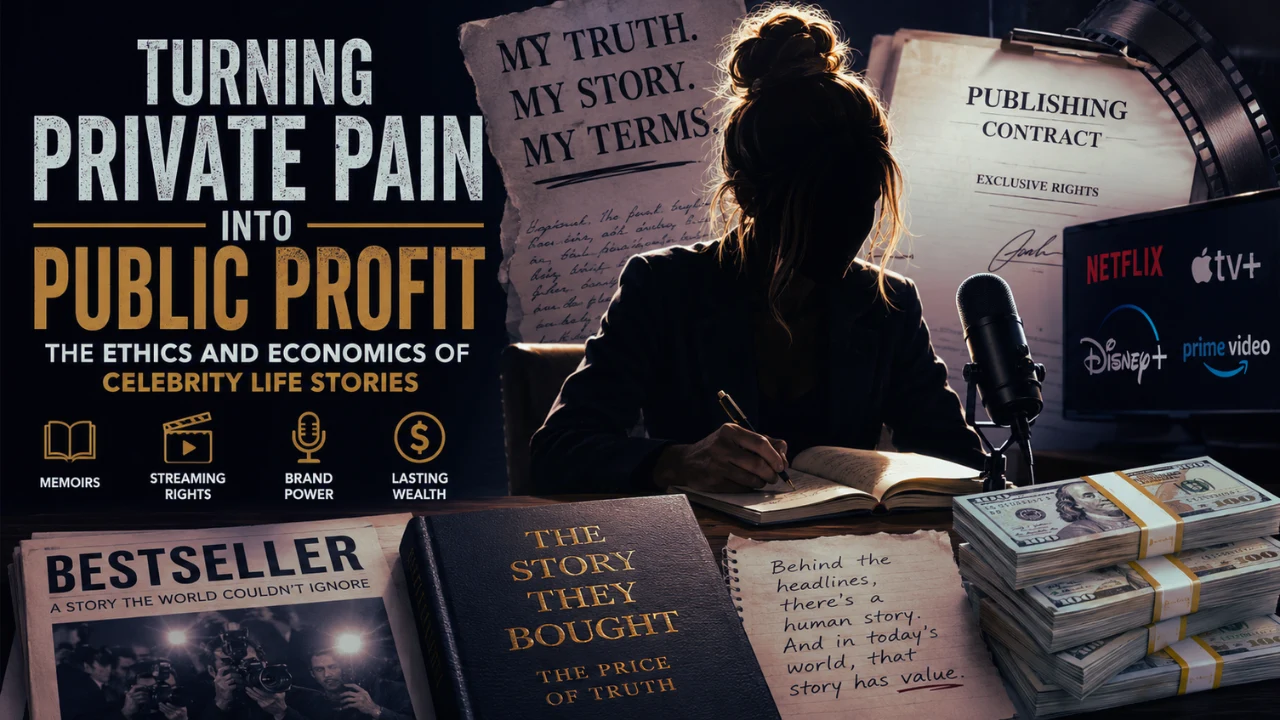
Turning Private Pain Into Public Profit Explained
Some of the most valuable assets in entertainment are not songs, films, or businesses. They are memories.
Over the past decade, celebrity memoirs, documentaries, and biographical projects have evolved into a thriving corner of the entertainment business. Personal experiences that were once guarded by publicists now fuel best-selling books, streaming hits, and multi-platform franchises.
The debate around turning private pain into public profit sits at the center of modern celebrity culture. Audiences want authenticity. Publishers want exclusive stories. Streaming platforms want subscriber attention. Celebrities, meanwhile, are increasingly asking a different question: if their lives have generated billions of clicks and headlines for others, why shouldn’t they own the value themselves?
From memoir advances to licensing deals and streaming rights, the economics behind celebrity life stories reveal how fame has become an intellectual property business.
Why This Celebrity Wealth Trend Matters Now?
Celebrity storytelling has never been more valuable.
Streaming platforms are competing for exclusive content, while publishers continue to pursue high-profile memoirs that arrive with built-in audiences. Public interest in personal stories has also shifted. Readers and viewers are no longer satisfied with carefully managed public images. They want vulnerability, context, and first-person accounts.
Britney Spears’ memoir became a publishing phenomenon, while Prince Harry’s Spare demonstrated the global demand for deeply personal narratives. Paris Hilton’s memoir has already expanded beyond publishing through television development, showing how one story can become multiple revenue streams.
The rise of the creator economy has reinforced this trend. Modern celebrities increasingly think like media companies. Their experiences are assets that can be packaged across books, podcasts, documentaries, speaking engagements, and adaptation rights.
At the same time, ethical questions remain.
When does storytelling become exploitation? Who benefits when trauma becomes content? And can public disclosure strengthen a celebrity brand while creating long-term personal costs?
These questions make celebrity life stories one of the most fascinating intersections of entertainment business and human experience.
The Business Model Behind the Money
The economics of celebrity storytelling are more layered than many readers realize.
A memoir is rarely just a book. A documentary is rarely just a documentary.
Revenue can come from advances, royalties, audiobook sales, foreign rights, licensing agreements, adaptation deals, producer credits, and backend participation. In some cases, celebrities also retain ownership through their production companies.
Salary Versus Ownership
An upfront payment creates immediate income.
Ownership creates optionality.
A celebrity may receive a reported advance from a publisher, but the bigger financial opportunity often lies in controlling underlying rights. If a memoir becomes a television series, film, podcast, or documentary, the original intellectual property can continue generating income years later.
This is why many high-profile figures now launch production companies or negotiate producer credits. Ownership allows celebrities to participate in future value creation rather than simply collecting a one-time cheque.
The same principle applies across Hollywood. Salary pays today’s bills. Intellectual property ownership can influence wealth for decades.
Brand Equity and Audience Trust
Celebrity wealth increasingly depends on trust.
Audiences do not buy memoirs simply because someone is famous. They buy stories they believe are authentic.
That trust creates brand equity. It can influence book sales, podcast audiences, documentary viewership, and even unrelated business ventures. A compelling personal narrative can strengthen endorsement deals, support celebrity brands, and increase cultural relevance.
Of course, there is a balancing act.
Too much disclosure can damage a carefully built public image. Too little can make a project feel transactional. The most successful celebrity life stories tend to find a middle ground between honesty and strategy.
Helpful Table
| Wealth Driver | How It Works | Why It Matters |
|---|---|---|
| Memoir Advances | Upfront payment from publishers | Generates immediate income |
| Royalties | Percentage of ongoing sales | Creates long-term earnings potential |
| Streaming Rights | Licensing content to platforms | Expands audience reach and revenue |
| Adaptation Rights | Books becoming films or series | Extends the life of intellectual property |
| Producer Credits | Participation in production | Provides influence and potential backend earnings |
| Licensing Deals | Use of name, likeness, or archival material | Monetizes celebrity identity |
Why Traditional Net Worth Estimates Often Miss the Full Picture?
Celebrity net worth estimates offer only part of the story.
Public databases typically rely on reported salaries, publicly disclosed contracts, and visible assets. They rarely account for private investments, confidential licensing arrangements, tax obligations, management fees, or undisclosed equity deals.
Life story projects add another layer of complexity.
A celebrity might earn from a memoir, retain adaptation rights, collect audiobook royalties, and leverage renewed attention into speaking engagements or business ventures. None of these revenue streams are always publicly reported.
Even residual income can be difficult to track.
Entertainment wealth increasingly comes from stacking multiple income sources. A memoir can lead to a documentary. A documentary can increase demand for appearances. Increased visibility can support product launches or brand partnerships.
That interconnected ecosystem helps explain why celebrity wealth is often more complicated than a single number on a website.
That Shows How This Works
Several public examples illustrate the business potential of celebrity storytelling.
Britney Spears’ memoir generated significant media attention and reportedly sparked an intense publishing competition before its release.
Prince Harry’s Spare became one of the fastest-selling nonfiction books in history while complementing broader media partnerships associated with Archewell Productions.
Mark Ronson’s memoir was quickly optioned for film adaptation, demonstrating how publishing can become the first chapter in a much larger entertainment strategy.
The Obamas provide another example of long-term value creation. Their post-White House media business spans books, podcasts, production ventures, and streaming partnerships through Higher Ground Productions.
These examples share one common lesson: the story itself is only the beginning.
The Risks Behind Celebrity Business Ventures
Not every personal story becomes a commercial success.
Celebrity audiences can be unpredictable. Timing matters. Cultural sentiment changes quickly.
A memoir released during a period of public goodwill may perform differently from one launched amid controversy. Overexposure can reduce audience interest, while poor execution can weaken brand equity.
There are also ethical risks.
Turning painful experiences into commercial products can invite criticism from audiences, family members, or industry observers. Some celebrities later express regret about revealing deeply personal details that cannot be taken back.
Business risks remain equally significant:
- Audience fatigue
- Weak marketing strategies
- Poor product-market fit
- Licensing disputes
- Oversaturation of celebrity content
- Reputational damage
- Platform dependency
Fame creates opportunity, but it does not guarantee sustainable business outcomes.
What This Reveals About Modern Celebrity Wealth?
Celebrity wealth has entered an ownership era.
For decades, entertainment economics revolved around salaries, album sales, and box office performance. Today, the biggest opportunities often come from intellectual property, distribution, and strategic control.
A celebrity’s life story can become a portfolio of assets.
One narrative may generate books, streaming projects, podcasts, foreign rights, speaking opportunities, and licensing agreements. Publicly available information rarely captures the full financial picture, particularly when private investments and ownership structures are involved.
The ethical debate surrounding turning private pain into public profit is unlikely to disappear. If anything, it will become more relevant as audiences continue demanding authenticity and platforms continue paying for attention.
The future of celebrity wealth may not belong solely to those with the biggest audiences. It may belong to those who understand how to own their stories.
Conclusion
Celebrity life stories have become one of entertainment’s most valuable forms of intellectual property. They sit at the intersection of vulnerability, branding, and business strategy, raising difficult ethical questions while creating meaningful financial opportunities.
Modern fame is no longer just about being seen. It is about deciding who owns the narrative, who profits from it, and how long that value can endure.
As publishers, studios, and streaming companies continue competing for exclusive access, personal stories will remain a powerful currency in the entertainment economy.
FAQs
Why do celebrities write memoirs?
Celebrities write memoirs for many reasons, including sharing personal experiences, shaping public perception, building brand equity, and creating new revenue opportunities through publishing and adaptation rights.
How do celebrities make money from their life stories?
They can earn through advances, royalties, streaming rights, licensing deals, audiobook sales, producer credits, and television or film adaptations.
Why are celebrity net worth estimates often inaccurate?
Many estimates exclude private investments, confidential contracts, taxes, equity deals, and long-term royalty arrangements that are not publicly disclosed.
Can celebrity memoirs become films or TV shows?
Yes. Many memoirs are optioned for adaptation, creating additional income opportunities and extending the value of the original intellectual property.
What is brand equity in celebrity wealth?
Brand equity refers to the value attached to a celebrity’s reputation, audience trust, and cultural influence, which can support endorsements, business ventures, and media projects.
Interested in the business of fame? Explore more celebrity wealth analysis, entertainment economics, and behind-the-scenes breakdowns of how modern stars build lasting fortunes.

Table of Contents