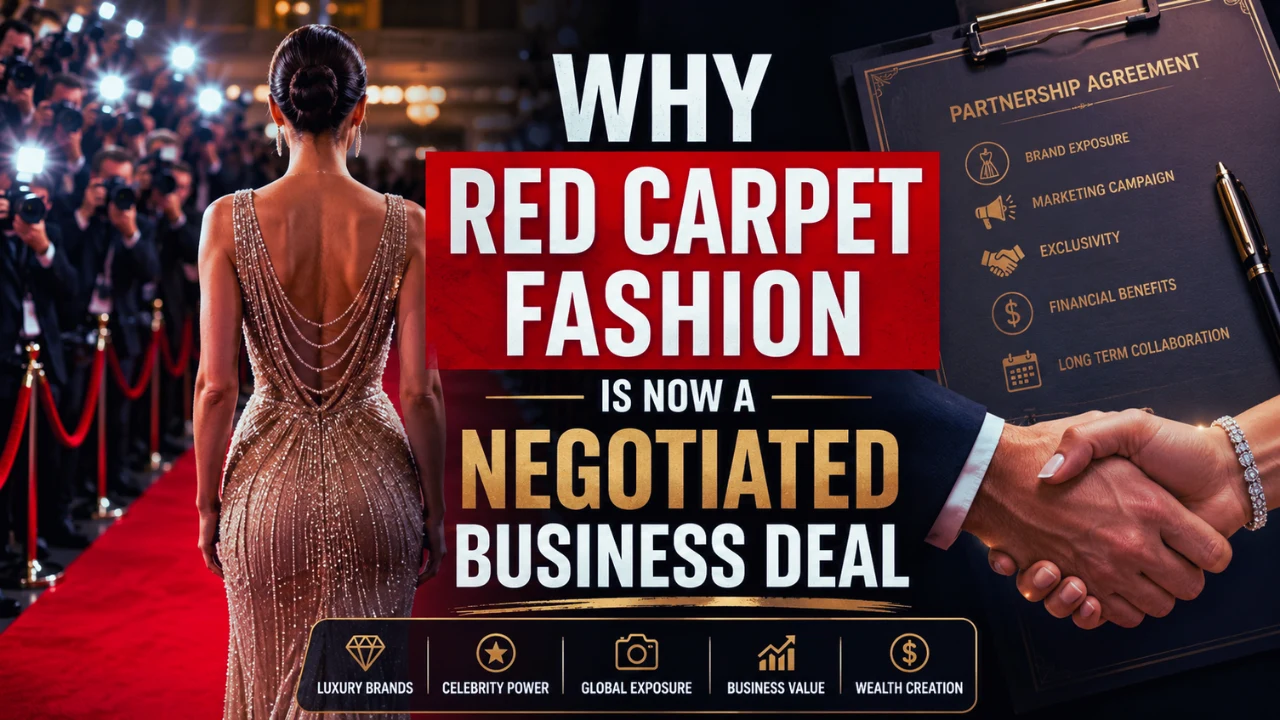
Why Red Carpet Fashion Is Now a Negotiated Business Deal
A few decades ago, celebrities mostly borrowed designer outfits for major award shows in exchange for publicity. Today, that same walk down the red carpet can involve contract negotiations, exclusivity clauses, marketing campaigns, social media deliverables, and long-term brand partnerships.
That shift explains why red carpet fashion is now a negotiated business deal rather than a simple styling decision. Every dress, watch, handbag, jewelry piece, or beauty product shown on camera represents an opportunity to influence consumers and build brand equity.
For celebrities, these appearances can strengthen endorsement deals, expand business ventures, and reinforce their public image. For luxury brands, they offer global exposure that traditional advertising often cannot replicate.
Why This Celebrity Wealth Trend Matters Now?
Award shows remain some of the most photographed events in entertainment. Images from the Oscars, Cannes Film Festival, Met Gala, Venice Film Festival, and Golden Globes travel instantly across television, streaming platforms, social media, fashion publications, and news websites.
That visibility has transformed celebrity fashion into premium marketing space.
Luxury houses no longer view a red carpet appearance as a single photo opportunity. Instead, it becomes part of a broader campaign that may include digital advertising, editorial coverage, influencer marketing, retail launches, and exclusive product placements.
At the same time, celebrities have become businesses in their own right.
Actors, musicians, athletes, and creators often manage personal brands alongside production companies, beauty businesses, fashion labels, and private investments. Every public appearance contributes to the value of those businesses.
Rather than accepting whatever a stylist selects, many celebrities now negotiate appearances that align with their long-term commercial strategy.
The Business Model Behind the Money
Luxury fashion operates on attention.
A single viral red carpet look can generate millions of online impressions within hours. That exposure may influence consumer demand far beyond the event itself.
Instead of paying for expensive advertising campaigns alone, brands increasingly combine celebrity partnerships with carefully planned public appearances.
Revenue opportunities may include:
- Endorsement deals
- Licensing deals
- Campaign contracts
- Jewellery loans
- Watch partnerships
- Beauty sponsorships
- Social media collaborations
- Ambassador agreements
- Future advertising campaigns
Sometimes a celebrity is simply borrowing clothing.
Other times, the appearance forms part of a much larger commercial relationship that extends well beyond the event.
Salary Versus Ownership
A one-time appearance fee creates immediate income.
Ownership creates long-term financial potential.
Many celebrities increasingly prioritize business ventures that allow them to build lasting wealth rather than relying entirely on acting salaries or performance income.
For example, a celebrity may use high-profile fashion exposure to increase visibility for:
- A beauty brand
- A skincare company
- A production studio
- A fashion collaboration
- An investment portfolio
- Consumer product launches
The red carpet becomes part of a broader business ecosystem rather than an isolated publicity event.
Brand Equity and Audience Trust
Luxury brands buy more than celebrity fame.
They invest in credibility.
When audiences consistently associate a celebrity with elegance, innovation, sustainability, or craftsmanship, those qualities strengthen the brand’s own identity.
This is known as brand equity.
Brand equity cannot be measured simply by follower counts. It reflects audience trust, cultural influence, media attention, and long-term reputation.
That is why negotiations often focus on exclusivity, campaign timing, public image, and future collaborations rather than financial compensation alone.
Why Traditional Net Worth Estimates Often Miss the Full Picture?
Celebrity net worth discussions often focus on salaries.
That approach overlooks how the modern entertainment business actually works.
Public estimates rarely capture:
| Wealth Driver | How It Works | Why It Matters |
|---|---|---|
| Salary | Payment for films, television, music, or appearances | Immediate income |
| Royalties | Ongoing payments from licensed work | Can produce recurring income |
| Licensing Deals | Brands pay to use a celebrity’s image or name | Extends earning power |
| Equity Deals | Ownership in companies or startups | Wealth can grow over time |
| Brand Partnerships | Long-term ambassador agreements | Builds recurring commercial opportunities |
| Private Investments | Stakes in businesses or funds | Often remain undisclosed |
Many contracts remain confidential.
Private investments, taxes, management commissions, legal costs, and ownership structures are also rarely public, making exact celebrity wealth difficult to verify.
That Shows How This Works
Several luxury brands have demonstrated how powerful celebrity fashion partnerships can become.
Luxury houses including Chanel, Louis Vuitton, Gucci, Dior, Saint Laurent, Valentino, and Prada frequently build long-term ambassador relationships rather than arranging one-off appearances.
Jewelry companies such as Cartier, Tiffany & Co., Bulgari, and Chopard regularly collaborate with award show attendees whose public image complements their branding.
Zendaya’s long-running collaboration with stylist Law Roach illustrates how consistent fashion storytelling can strengthen both personal branding and luxury partnerships.
Similarly, ambassadors such as Emma Stone for Louis Vuitton, Jennifer Lawrence for Dior, and Charlize Theron for Dior show how fashion relationships often extend into advertising campaigns, product launches, and global brand positioning.
These partnerships are publicly acknowledged by the companies involved, although financial terms are generally not disclosed.
The Risks Behind Celebrity Business Ventures
Not every fashion partnership succeeds.
A celebrity may wear a luxury label that fails to resonate with audiences.
Brand controversies can also damage both parties.
Other common risks include:
- Overexposure through excessive endorsements
- Poor alignment between celebrity image and brand identity
- Audience fatigue
- Reputation damage after public controversies
- Weak product quality
- Changing fashion trends
- Failed licensing agreements
- Short-term publicity without lasting commercial value
Luxury brands carefully evaluate these risks before signing long-term agreements.
Celebrities do the same because every partnership affects future earning opportunities.
What This Reveals About Modern Celebrity Wealth?
Celebrity wealth increasingly comes from ownership, licensing, intellectual property, and strategic partnerships instead of salary alone.
A successful red carpet appearance can strengthen endorsement deals, improve negotiating power, attract future collaborations, and increase visibility for business ventures.
The clothing itself may never be sold to the celebrity.
Yet the commercial value created by wearing it can influence years of future opportunities.
That reflects a broader shift across the entertainment business.
Fame has become an asset that can be licensed, managed, protected, and expanded much like any other valuable brand.
Understanding that distinction helps explain why celebrity wealth is often more complex than public estimates suggest.
Conclusion
Red carpet fashion has evolved into one of the entertainment industry’s most sophisticated marketing tools. Behind every headline-making outfit is often a network of stylists, luxury houses, publicists, agencies, and business managers working toward shared commercial goals.
As celebrities increasingly build wealth through ownership deals, licensing, endorsement partnerships, and brand equity, fashion appearances have become strategic business decisions rather than simple style statements. That trend is likely to continue as entertainment, luxury retail, and the creator economy become even more interconnected.
FAQs
Why is red carpet fashion considered a business deal?
Many appearances involve negotiated agreements between celebrities and luxury brands that may include ambassador contracts, promotional campaigns, exclusivity terms, or future partnerships.
Do celebrities get paid to wear designer clothing?
Sometimes. In many cases, garments are loaned for publicity, while broader endorsement or ambassador agreements may include compensation. Exact terms are often confidential.
How does red carpet fashion increase celebrity wealth?
It can strengthen brand equity, attract endorsement deals, support business ventures, and improve future negotiating power with luxury brands.
Why are celebrity net worth estimates often incomplete?
Many estimates exclude private investments, equity deals, licensing income, royalties, taxes, management fees, and confidential commercial agreements.
Are fashion partnerships risky for celebrities?
Yes. Poor brand alignment, public controversy, changing trends, or overexposure can reduce the effectiveness of partnerships and affect future opportunities.
Interested in the business behind fame? Explore more of our celebrity wealth analysis, entertainment business insights, and breakdowns of how today’s biggest stars build long-term financial success beyond the spotlight.

Table of Contents