Project Hail Mary Hard Science Mass Appeal Business
Hollywood has never struggled to finance explosions, superheroes, or familiar franchises. Convincing millions of moviegoers to care about astrophysics is a very different challenge.
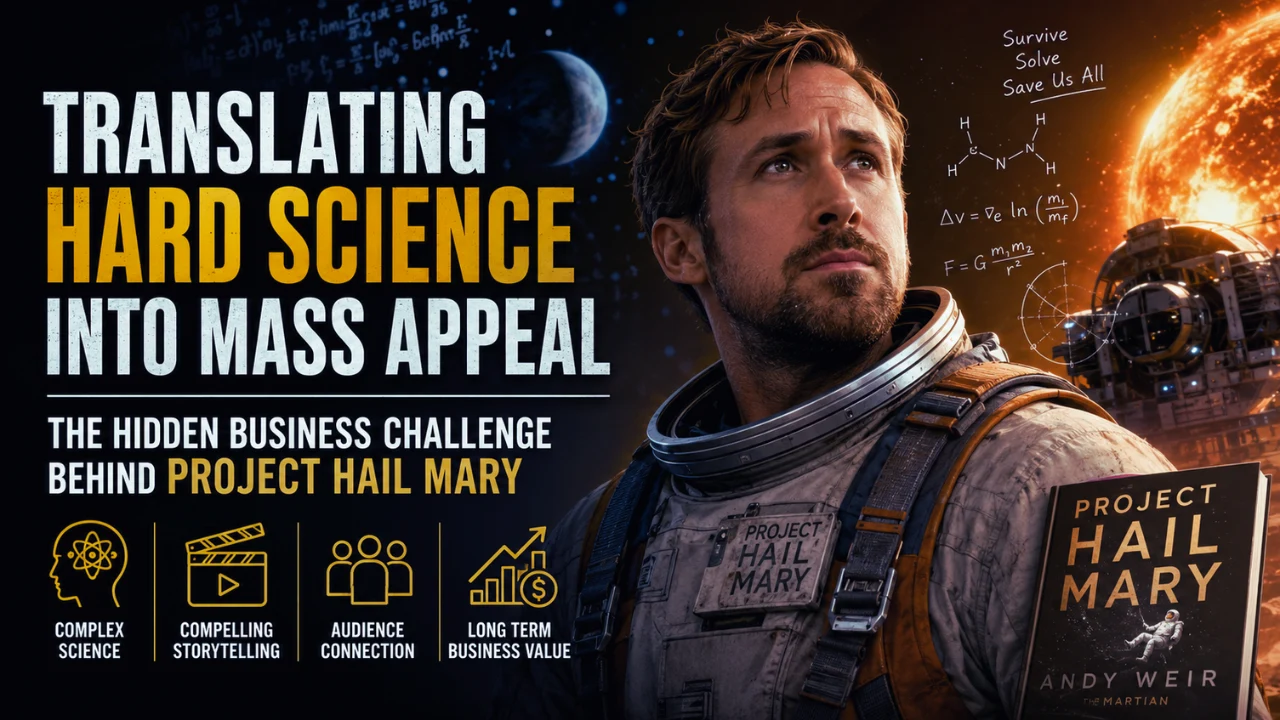
That is exactly what makes translating hard science into mass appeal such an important business story behind Project Hail Mary. Based on Andy Weir’s bestselling novel, the film combines complex scientific ideas with emotional storytelling, creating both an opportunity and a financial risk for the studios behind it.
Unlike many blockbuster adaptations, the project’s success depends on making advanced scientific concepts accessible without losing the intelligence that made the original book a hit. That balancing act affects everything from marketing campaigns and audience growth to merchandising potential, streaming value, and the long-term strength of the franchise.
Why This Entertainment Business Trend Matters Now?
Hollywood is searching for blockbuster films that feel fresh without abandoning commercial safety.
Recent years have shown that audiences still support intelligent original stories when they are presented engagingly. Films such as The Martian proved that science-heavy narratives can become mainstream successes when emotional storytelling leads the experience rather than technical explanations.
For studios, this creates an attractive opportunity.
Instead of relying solely on superhero universes or decades-old intellectual property, adapting respected science fiction novels offers a way to build valuable new franchises with loyal fan communities.
That matters because franchise ownership generates revenue far beyond cinema tickets through streaming rights, international licensing deals, publishing, collectibles, gaming opportunities, and future adaptations.
The Business Model Behind the Money
Unlike purely spectacle-driven films, Project Hail Mary depends on multiple business layers working together.
The original novel already established consumer demand through book sales and strong reader recommendations. That reduces some investment risk, but translating scientific concepts for a wider audience introduces entirely different commercial challenges.
A studio is not simply selling science.
It is selling emotion, suspense, hope, humor, and character relationships that happen to involve science.
When audiences understand the emotional stakes, scientific complexity becomes a feature instead of a barrier.
Salary Versus Ownership
Actors, directors, and screenwriters generally receive negotiated compensation for their creative work, but ownership often creates greater long-term financial value.
Publicly available industry reporting shows that many top creative professionals increasingly negotiate backend participation, profit-sharing arrangements, producer credits, or intellectual property involvement instead of relying entirely on upfront salaries.
While specific deal terms for Project Hail Mary have not been publicly disclosed, successful adaptations often create ongoing value through sequel opportunities, streaming licensing, and future exploitation of the intellectual property.
Ownership usually outlasts salary.
Brand Equity and Audience Trust
Andy Weir built significant credibility after The Martian became both a bestselling novel and a successful film adaptation.
That reputation carries commercial value.
Readers who trust his storytelling are more willing to buy another book, watch another adaptation, or recommend the project to friends.
Similarly, Ryan Gosling brings substantial brand equity to the film. His involvement signals prestige while also attracting audiences beyond traditional science fiction fans.
Brand equity cannot guarantee ticket sales, but it reduces marketing friction by giving audiences confidence before release.
Why Traditional Net Worth Estimates Often Miss the Full Picture?
Entertainment wealth rarely comes from one pay cheque.
Many online celebrity net worth estimates focus on publicly reported salaries while overlooking confidential agreements, taxes, management fees, royalties, licensing income, real estate holdings, business ventures, and private investments.
The same principle applies to film projects.
A movie’s long-term financial value may include:
| Wealth Driver | How It Works | Why It Matters |
|---|---|---|
| Salary | Upfront payment for creative work | Immediate earnings |
| Royalties | Ongoing payments from licensed content | Long-term income potential |
| Licensing Deals | Merchandise, publishing, and media rights | Expands revenue beyond cinemas |
| Streaming Rights | Platform distribution agreements | Generates recurring value |
| Intellectual Property | Ownership of the underlying franchise | Supports sequels and future adaptations |
| Producer Participation | Profit-sharing arrangements where applicable | Can outperform fixed salaries over time |
Because many agreements remain confidential, outside estimates often tell only part of the financial story.
That Shows How This Works
Hollywood offers several examples of science-driven projects becoming commercial successes by simplifying complex ideas without removing their intellectual appeal.
The Martian succeeded because scientific problem-solving became entertaining rather than intimidating.
Christopher Nolan’s Interstellar balanced theoretical physics with deeply emotional storytelling, helping the film build lasting cultural relevance.
Television has also demonstrated this model. Science-focused series that invest in relatable characters often perform better internationally than projects that rely exclusively on technical accuracy.
These examples show that accessibility increases commercial reach without necessarily sacrificing credibility.
The Risks Behind Science-Driven Entertainment
Making science understandable is only one challenge.
Studios also face significant commercial risks.
If scientific explanations become too technical, mainstream audiences may lose interest.
If the adaptation oversimplifies the source material, loyal readers may feel disappointed.
Marketing presents another obstacle.
Traditional action campaigns may misrepresent the film, while highly technical advertising could discourage casual viewers.
Budget pressure adds further complexity.
Large visual effects budgets require substantial global box office performance, premium video-on-demand revenue, streaming value, and international licensing to justify investment.
Even respected actors and bestselling novels cannot eliminate these risks.
What This Reveals About Modern Entertainment Wealth?
The economics of modern Hollywood continue to evolve.
Success increasingly depends on intellectual property ownership, global distribution, audience trust, and long-term franchise development rather than opening weekend ticket sales alone.
Projects like Project Hail Mary demonstrate that scientific storytelling has commercial value when presented through relatable characters and emotionally engaging narratives.
The biggest financial winners are often those who own valuable intellectual property, negotiate favorable participation agreements, or build brands capable of supporting multiple revenue streams across publishing, film, streaming, licensing, and future adaptations.
That broader business picture explains why discussions about celebrity wealth, the entertainment business, ownership deals, royalties, licensing deals, private investments, creator economy opportunities, and Hollywood money have become far more nuanced than simple salary comparisons.
Final Thoughts
The hidden business challenge behind Project Hail Mary is not simply adapting a bestselling novel. It is proving that sophisticated scientific ideas can attract global audiences without losing their authenticity.
If the film succeeds, it will strengthen Hollywood’s confidence in investing in intelligent original science fiction while reinforcing the value of trusted creators, adaptable intellectual property, and long-term franchise ownership.
For studios, creators, and investors alike, translating hard science into mass appeal may become one of the industry’s most valuable competitive advantages.
FAQs
Why is translating hard science into mass appeal difficult?
Scientific accuracy often requires detailed explanations, while mainstream audiences generally prefer emotionally engaging stories with accessible pacing.
How does Project Hail Mary make money beyond box office sales?
Potential revenue can include streaming rights, international distribution, home entertainment, licensing, publishing, merchandise, and future adaptations where applicable.
Why are intellectual property rights important in Hollywood?
Owning valuable intellectual property allows studios and creators to generate income through sequels, licensing, adaptations, and multiple distribution platforms.
Why do celebrity net worth estimates often differ?
Many financial arrangements remain private, including royalties, equity deals, licensing income, taxes, and management costs, making precise estimates difficult.
Can science fiction become a long-term business franchise?
Yes. When audiences connect with compelling characters and memorable stories, science fiction can expand into sequels, games, books, streaming content, and merchandise.
Interested in the business behind Hollywood’s biggest films? Explore more of our entertainment business analysis, celebrity wealth insights, franchise economics, and net worth breakdowns to understand how modern fame creates long-term financial value.

Table of Contents