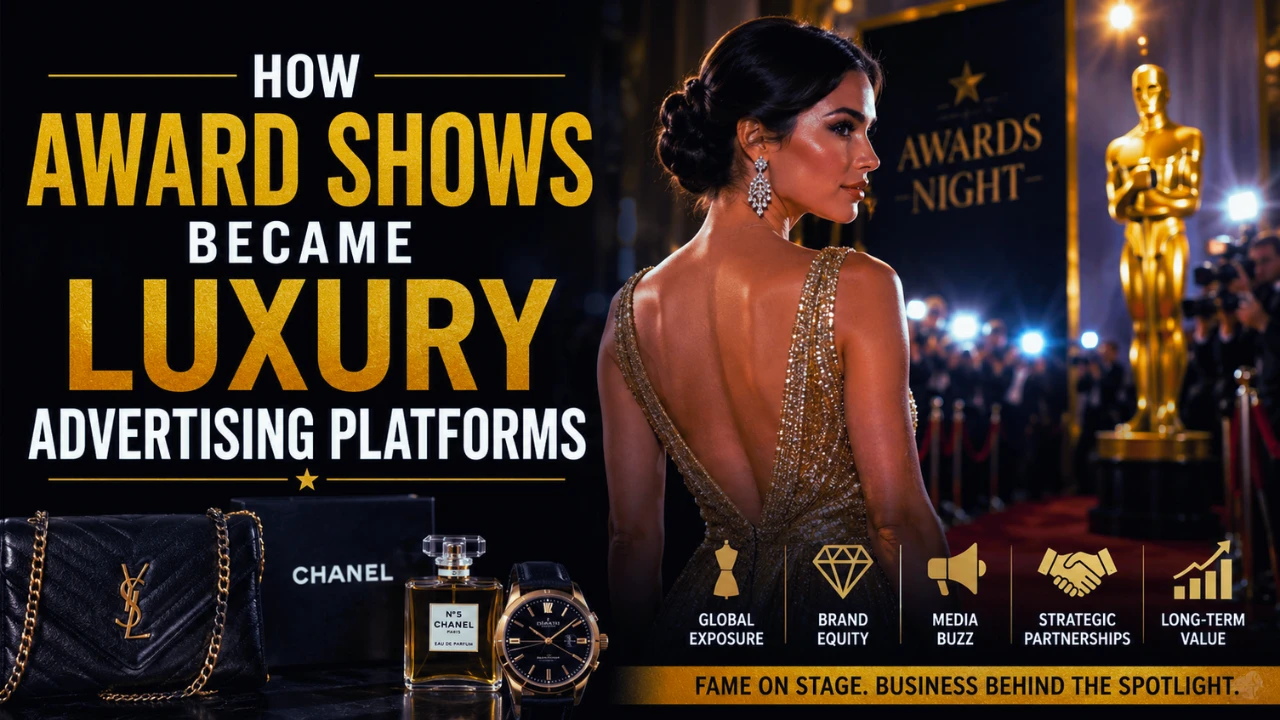
How Award Shows Became Luxury Advertising Platforms
For millions of viewers, award shows are about trophies, emotional speeches, and unforgettable celebrity moments. For luxury companies, they represent one of the most effective advertising opportunities in modern entertainment.
The red carpet has become a carefully managed marketplace where fashion labels, jewelry houses, beauty brands, and luxury watchmakers compete for attention without buying traditional television commercials. Instead, they invest in celebrity relationships, exclusive styling partnerships, licensing opportunities, and long-term brand equity.
Understanding how award shows became luxury advertising platforms reveals a much bigger story about the entertainment business. Celebrity wealth today is increasingly influenced by endorsement deals, ownership opportunities, business ventures, and personal branding that extend well beyond acting, music, or sports.
Why This Celebrity Wealth Trend Matters Now?
Award shows have become rare moments when global audiences watch the same cultural event at the same time. That concentrated attention has become incredibly valuable.
Luxury brands no longer rely only on magazine advertisements or runway shows. Instead, they use celebrities as trusted ambassadors whose red carpet appearances generate worldwide media coverage across television, social media, YouTube, fashion websites, and entertainment publications.
Unlike a traditional advertisement, a celebrity wearing a couture gown or luxury watch creates editorial coverage, influencer content, and millions of social media impressions simultaneously.
This shift reflects broader changes across the entertainment business.
Instead of buying attention outright, luxury companies increasingly earn it through celebrity partnerships, creator economy strategies, and carefully managed brand storytelling.
The Business Model Behind the Money
Luxury advertising around award shows rarely revolves around a single payment.
Instead, it involves a network of partnerships between celebrities, stylists, fashion houses, jewelry brands, beauty companies, talent agencies, and public relations teams.
The value comes from exposure rather than direct product sales.
A dress worn for only a few hours may generate thousands of online articles, millions of Instagram views, TikTok discussions, fashion critiques, and magazine covers.
That visibility strengthens brand recognition long after the ceremony ends.
Salary Versus Ownership
Many people assume celebrities receive payment to wear designer clothing.
Sometimes compensation exists, particularly through broader ambassador agreements or endorsement deals. However, many red carpet appearances are part of longer business relationships rather than standalone transactions.
The larger financial opportunity often comes later.
A successful relationship with a luxury brand can lead to:
- Global ambassador contracts
- Beauty campaigns
- Jewellery collaborations
- Capsule collections
- Equity deals
- Creative partnerships
- Licensing opportunities
Those opportunities often generate greater long-term value than a single appearance fee.
Brand Equity and Audience Trust
Luxury marketing depends heavily on perception.
When respected actors, musicians, or athletes consistently represent premium brands, they strengthen consumer trust.
This is where brand equity becomes financially significant.
A celebrity’s reputation becomes an intangible business asset that can attract endorsement deals, business ventures, licensing agreements, and investment opportunities.
The relationship works both ways.
Luxury brands borrow cultural relevance from celebrities, while celebrities enhance their personal brands through association with prestigious companies.
Helpful Table
| Wealth Driver | How It Works | Why It Matters |
|---|---|---|
| Salary | Upfront payment for appearances or campaigns | Immediate income |
| Endorsement Deals | Long-term promotional partnerships | Creates recurring earnings |
| Licensing Deals | Brand pays to use a celebrity’s image or name | Generates income without operating the business |
| Royalties | Payments tied to product sales or usage | Can provide ongoing income |
| Equity Deals | Ownership in a company instead of cash | Potential long-term wealth creation |
| Business Ventures | Celebrity launches or invests in brands | Greater control over future earnings |
Why Traditional Net Worth Estimates Often Miss the Full Picture?
Celebrity net worth estimates typically rely on publicly available information.
However, luxury partnerships often remain confidential.
Many agreements include undisclosed compensation, private investments, stock options, licensing arrangements, royalties, or multi-year ambassador contracts whose financial details never become public.
There are also expenses rarely reflected in headline wealth estimates.
These may include:
- Management commissions
- Public relations costs
- Legal fees
- Taxes
- Business investments
- Production companies
- Personal staff
As a result, celebrity wealth is usually far more complex than salary reports or estimated net worth figures suggest.
That Shows How This Works
Several luxury companies have transformed award shows into marketing opportunities through long-term celebrity relationships.
Fashion houses such as Chanel, Dior, Louis Vuitton, Gucci, Valentino, Armani, and Prada frequently dress major award nominees, creating extensive media exposure before, during, and after ceremonies. Jewelry companies including Tiffany & Co., Cartier, Bulgari, and Harry Winston also receive enormous visibility whenever celebrities wear signature collections on the red carpet.
Luxury watch brands such as Rolex, Omega, and TAG Heuer often strengthen their prestige through ambassador relationships with actors and filmmakers who attend high-profile entertainment events.
These partnerships usually extend beyond a single evening.
Many evolve into global advertising campaigns, fashion collaborations, film festival appearances, and international brand events.
The result is a marketing ecosystem where entertainment and luxury become deeply connected.
The Risks Behind Celebrity Business Ventures
Luxury marketing is not without risk.
A celebrity’s public image can change quickly following controversy, poor career choices, or shifting audience preferences.
Brands carefully evaluate whether partnerships still align with their values and long-term positioning.
Other challenges include:
- Audience fatigue from excessive endorsements
- Poor product-market fit
- Weak campaign execution
- Licensing disputes
- Economic downturns affecting luxury spending
- Changes in fashion trends
- Overexposure reducing exclusivity
For celebrities, relying too heavily on endorsements instead of building ownership can also limit long-term wealth creation.
Ownership, intellectual property, and successful business ventures generally provide more durable financial opportunities than temporary promotional campaigns.
What This Reveals About Modern Celebrity Wealth?
Award shows illustrate how entertainment economics have changed.
Today’s celebrities increasingly earn through multiple income streams rather than relying solely on acting salaries, album sales, or appearance fees.
Business ownership, licensing deals, royalties, private investments, endorsement agreements, and intellectual property all contribute to modern celebrity wealth.
Luxury brands understand that cultural influence can be as valuable as traditional advertising.
Meanwhile, celebrities increasingly recognize that their personal brands are businesses capable of generating income across fashion, beauty, consumer products, media, and technology.
That evolution explains why award shows remain important far beyond entertainment.
They have become global marketplaces where attention itself functions as a premium asset.
Conclusion
The transformation of award ceremonies into luxury advertising platforms reflects a broader shift in the entertainment economy. Red carpet fashion is no longer simply about style. It is a sophisticated marketing strategy that blends celebrity influence, media exposure, and long-term brand building.
For luxury companies, these events deliver prestige and cultural relevance. For celebrities, they create opportunities that extend beyond salaries through endorsement deals, licensing, business ventures, and sometimes ownership opportunities. As entertainment, commerce, and digital media continue to overlap, award shows will likely remain one of the most influential stages where fame and business intersect.
FAQs
Why have award shows become important for luxury brands?
They attract global audiences and extensive media coverage, allowing luxury companies to showcase products through trusted celebrities rather than traditional advertising.
Do celebrities always get paid to wear designer clothing?
Not always. Some appearances are part of ambassador agreements or long-term partnerships, while others involve loaned garments for publicity without direct payment.
How do celebrities make money outside acting or music?
Many earn through endorsement deals, licensing agreements, royalties, business ventures, private investments, and in some cases equity deals with brands.
Why are celebrity net worth estimates often incomplete?
Many financial arrangements remain private, including licensing income, equity ownership, royalties, investment returns, taxes, and business expenses.
Why do luxury brands prefer celebrities over traditional advertisements?
Celebrity partnerships generate media coverage, social media engagement, editorial exposure, and cultural credibility that traditional advertising often cannot match.
Interested in the business behind fame? Explore more of our celebrity wealth analysis, entertainment business insights, and brand strategy stories to understand how today’s biggest stars build wealth beyond the spotlight.

Table of Contents