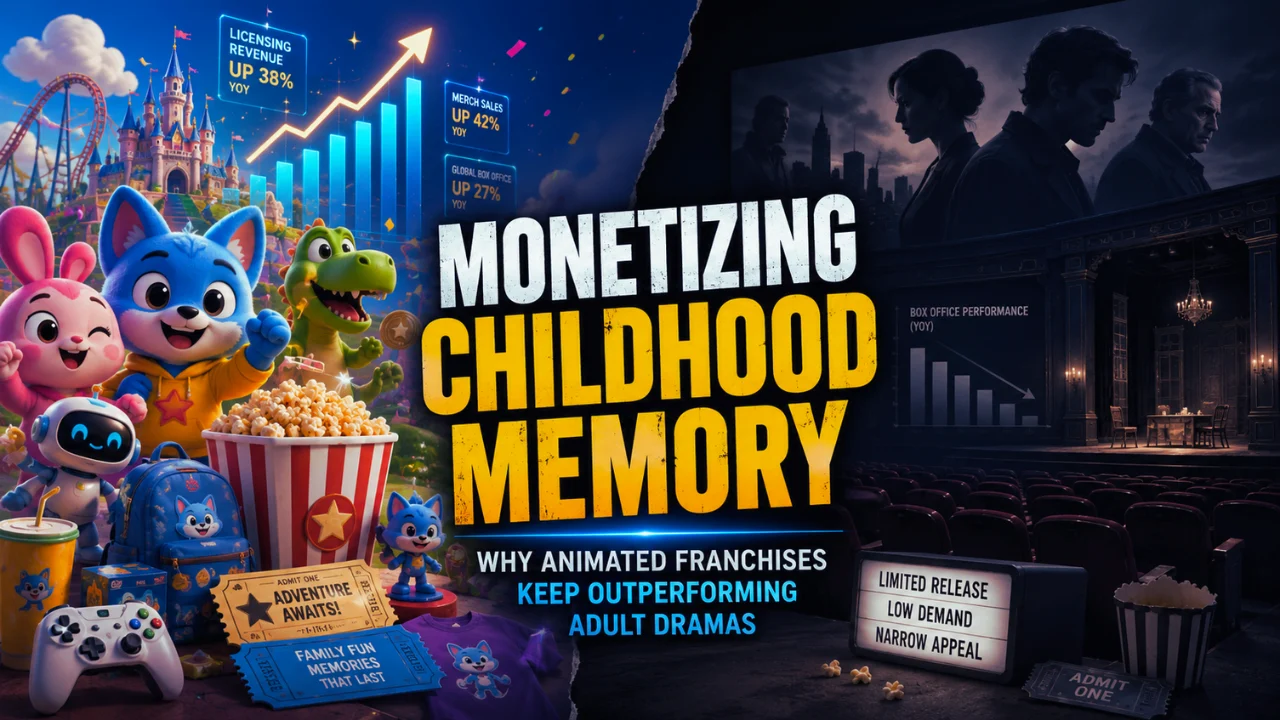
Why Animated Franchises Outperform Adult Dramas Today
This article explains why animated franchises outperform adult dramas in the modern entertainment business. It breaks down how childhood memory, family viewing, licensing deals, streaming rights, and brand equity create bigger financial upside than many star-led adult films.
A beloved animated character does not just sell a movie ticket. It can sell pajamas, lunchboxes, video games, theme park visits, streaming subscriptions, birthday cakes, and repeat viewings for years.
That is why animated franchises so often outperform adult dramas in today’s entertainment business. Adult dramas may win awards, spark serious conversation, and showcase major acting talent, but animated franchises are built like long-term financial machines. They carry memories, family habits, and intellectual property that can span generations.
Hollywood money is no longer only about the opening weekend box office. It is about ownership, licensing, streaming value, merchandise, residual income, and brand equity. Animated franchises sit at the center of that shift.
Why This Celebrity Wealth Trend Matters Now?
The entertainment business has become more cautious. Studios want movies that can work in theaters, on streaming platforms, through consumer products, and across international markets. Animated franchises often check more of those boxes than adult dramas.
A serious drama usually depends on reviews, awards buzz, adult turnout, and star power. That can still work, especially when the film is priced smartly. But the market is less forgiving than it once was. Many adults now wait for dramas to stream because dialogue-driven stories feel easier to watch at home.
Animation has a different advantage. Families often treat a big animated release as an event. Parents bring their children. Adults bring childhood memories. Older fans show up for nostalgia. The same title can serve kids, parents, collectors, and global audiences at once.
That is powerful business math.
The Business Model Behind the Money
Animated franchises make money through layers. The box office is only the first layer.
A hit animated film can generate theatrical revenue, premium format ticket sales, digital rentals, physical media sales, streaming rights, TV licensing, music usage, toys, apparel, books, games, food partnerships, live experiences, and theme park attractions. Not every franchise gets all of these revenue streams, but the best ones are designed with that possibility in mind.
Adult dramas usually have fewer expansion paths. A prestige drama may sell streaming rights, earn residuals, get awards attention, and improve the careers of its stars. But it rarely becomes a toy aisle, a ride, or a recurring family ritual.
That difference explains why animated intellectual property can become more valuable than a single successful movie.
Salary Versus Ownership
For actors, writers, directors, and voice performers, salary is the upfront payment. Ownership is the part that can grow later.
A voice actor may receive a fee for work and, in some cases, residuals, depending on contracts and reuse. But the studio or IP owner usually captures the biggest long-term upside from licensing, sequels, merchandise, and streaming distribution.
That is why ownership deals matter so much in celebrity wealth. A celebrity’s salary can be large, but ownership in a business, production company, brand, or IP library can create value over time. The same logic applies to Hollywood studios. Owning characters is more powerful than renting attention for one release.
Brand Equity and Audience Trust
Animated franchises are emotional brands. Viewers remember where they were when they first watched them. Parents pass them to children. Characters become part of birthdays, school bags, memes, games, and holiday traditions.
That emotional familiarity becomes brand equity.
When audiences already trust the world, studios spend less energy explaining the concept. A trailer does not need to educate people from zero. The title, character, logo, voice, color palette, and music already carry meaning.
Adult dramas rarely have that built-in memory unless they are based on famous books, real celebrities, sports legends, or major historical events.
Why Traditional Net Worth Estimates Often Miss the Full Picture?
Celebrity net worth estimates often focus on visible income: salary, endorsements, real estate, and publicly reported deals. That misses a large part of modern entertainment wealth.
The real money may sit inside private investments, equity deals, licensing participation, royalties, production companies, backend arrangements, and ownership deals that are not fully disclosed. Taxes, debt, management fees, agents, legal costs, and lifestyle spending also affect actual wealth.
With animated franchises, the gap can be even bigger. A performer may become closely associated with a famous character, but that does not automatically mean they own the character. A studio may earn from licensing deals for decades while individual talent receives only the compensation described in their contract.
That is why celebrity wealth and Hollywood money require careful framing. Fame is visible. Ownership is where the deeper financial picture often sits.
Examples That Show How This Works
Pixar’s Inside Out franchise shows how animation can turn emotional memory into business strength. The original film built a world around feelings that children understood and adults related to. The sequel then arrived with built-in awareness, family appeal, and nostalgia for viewers who had grown up with the first movie.
The Super Mario Bros. Movie is another useful example. Mario was not just a film character. He was already a gaming icon with decades of brand recognition. The movie helped extend that attention back into Nintendo’s broader ecosystem, including game demand and consumer awareness.
The Minions and Despicable Me universe clearly shows the merchandise advantage. The characters are visually simple, instantly recognizable, and easy to translate into toys, clothing, food packaging, theme park experiences, and social media jokes.
Adult dramas can still matter culturally. A strong drama can lift a performer’s reputation, win awards, sell internationally, and build long-term prestige. But the financial ceiling is usually different unless the drama has a highly marketable hook, strong awards momentum, low production cost, or major streaming demand.
Helpful Table
| Wealth Driver | How It Works | Why It Matters |
|---|---|---|
| Box Office | Ticket sales from theatrical release | Creates the first wave of revenue and public attention |
| Streaming Rights | Licensing or platform value after theaters | Keeps the title visible and useful to subscribers |
| Royalties | Ongoing payments from certain uses or sales | Can support long-term income depending on contract terms |
| Licensing Deals | Paid use of characters, names, or images | Turns IP into toys, apparel, games, and consumer products |
| Brand Equity | Trust and emotional connection with audiences | Makes sequels and spin-offs easier to market |
| Ownership Deals | Control or stake in IP or business ventures | Can create a larger upside than salary alone |
The Risks Behind Celebrity Business Ventures
Animated franchises are not risk-free. Nostalgia can become a trap when studios rely too heavily on memory and forget story quality. Audiences may show up once, but weak writing can damage future sequels.
There is also franchise fatigue. Too many spin-offs, rushed sequels, and aggressive merchandise pushes can make a beloved brand feel like a cash grab. Parents notice. Fans notice. Kids move on faster than executives expect.
Celebrity brands face similar risks. A famous name can open doors, but it cannot fix poor product-market fit, weak management, bad timing, licensing disputes, or overexpansion. Fashion lines, restaurants, beauty brands, tequila companies, memoir deals, and streaming projects can all fail when the business behind the fame is not strong enough.
Social media followers are not guaranteed customers. Attention helps, but trust, pricing, distribution, product quality, and timing decide whether the business lasts.
What does this reveal about modern celebrity wealth?
The bigger lesson is simple: modern entertainment wealth is built around leverage.
Celebrities, studios, athletes, musicians, and creators are all trying to turn attention into assets. That may mean equity deals, licensing deals, production ownership, creator economy businesses, private investments, or long-term intellectual property control.
Animated franchises show this better than almost any other category. They transform childhood memories into repeatable revenue. A great animated character can move from theater screens to streaming platforms, retail shelves, theme parks, video games, and family traditions.
Adult dramas can still be artistically powerful and commercially successful. But animated franchises often have more ways to monetize the same emotional connection.
Conclusion
Animated franchises outperform adult dramas because they are built for multiple release windows. They carry nostalgia, family appeal, global recognition, licensing potential, and long-term brand equity.
The entertainment business now rewards stories that can live across platforms and products. That does not make adult dramas less valuable creatively. It simply means the financial model is different.
The next era of Hollywood money will belong to the people and companies that understand how to turn attention into ownership, memory into brand value, and characters into lasting business assets.
FAQs
Why do animated franchises outperform adult dramas?
Animated franchises often appeal to children, parents, nostalgic adults, and international audiences simultaneously. They also create more revenue opportunities through toys, games, streaming rights, licensing deals, and repeat viewing.
How do animated movies make money outside the box office?
They can earn through streaming deals, digital rentals, merchandise licensing, books, music, games, theme park attractions, and brand partnerships. The strongest franchises keep earning long after their theatrical runs end.
What is brand equity in animated franchises?
Brand equity is the value created by audience trust, recognition, and emotional attachment. Familiar characters, stories, logos, and songs can make future releases easier to market.
Why do adult dramas struggle more in theaters?
Many adult dramas depend on reviews, awards buzz, and older audience turnout. Since viewers can now watch serious dramas at home via streaming, some films struggle to generate box-office urgency.
Do celebrities make more from ownership than salary?
Sometimes, but it depends on the deal. Salary creates immediate income, while ownership, equity, royalties, and licensing participation can create long-term upside if the project or business succeeds.
For more smart breakdowns of celebrity wealth, Hollywood money, ownership deals, and entertainment business strategy, explore our latest celebrity net worth and media economics stories.

Table of Contents