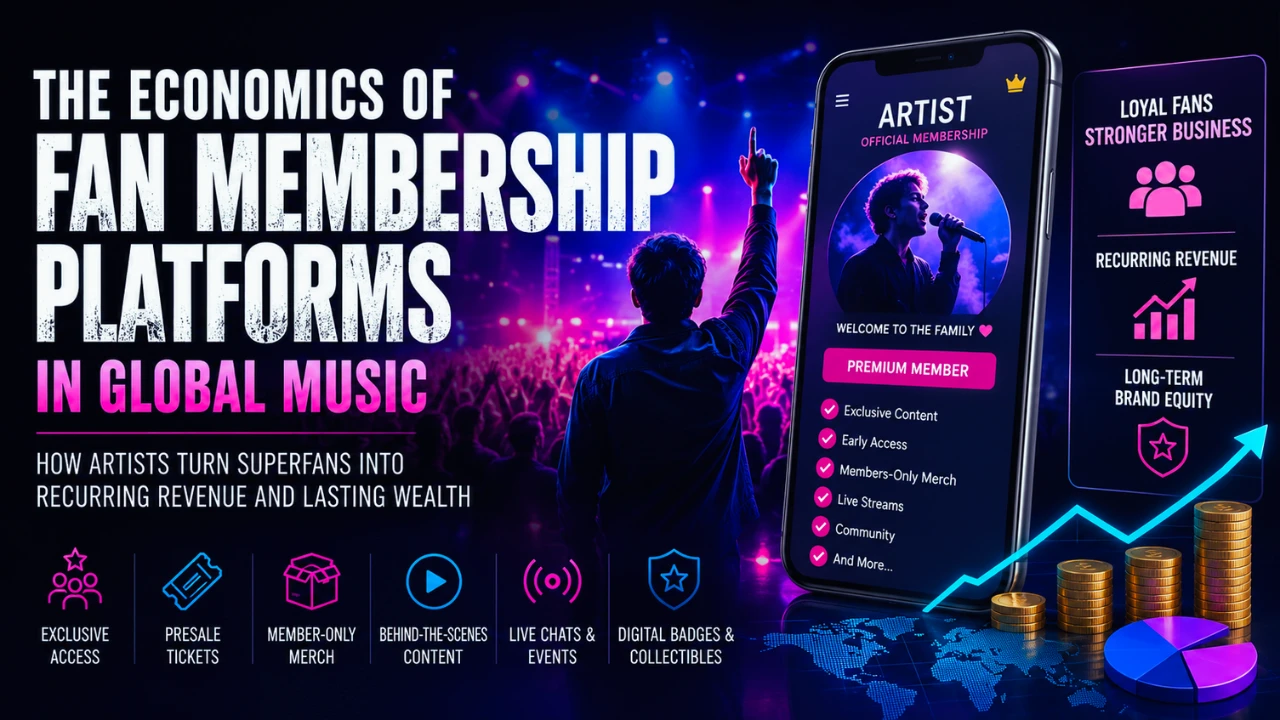
The Economics of Fan Membership Platforms in Music
For decades, the music business was built around album sales, touring, and radio play. Today, some of the industry’s most valuable assets are communities.
The economics of fan membership platforms in global music tell the story of a major shift in entertainment. Artists are no longer competing only for streams. They are competing for recurring relationships. Whether it’s K-pop memberships, artist communities on Discord, subscription services, or dedicated apps like Weverse and Bubble, fan platforms have become powerful engines for revenue, data collection, and brand building.
What looks like a simple fan club is increasingly a sophisticated business operation. Behind every exclusive livestream, presale code, and digital membership lies a larger question: who owns the relationship between artists and their fans?
Why This Celebrity Wealth Trend Matters Now?
Streaming changed music, but it also created a problem. Billions of plays do not always translate into massive personal wealth.
That reality has pushed artists and music companies toward the superfan economy. Instead of relying solely on fractions of a penny per stream, entertainment businesses are creating recurring membership ecosystems where a smaller group of highly engaged fans contributes significantly more over time.
Taylor Swift’s fan engagement strategy, BTS’s global community, and the growing popularity of artist subscription services demonstrate a simple truth. Attention is valuable, but direct access is even more valuable.
Fan membership platforms sit at the intersection of the creator economy, celebrity entrepreneurship, and the entertainment business. They generate predictable income while giving artists greater control over audience relationships.
Industry observers have noted that superfans consistently account for a disproportionate share of spending across music, merchandise, live events, and exclusive experiences. Recent reporting on the superfan economy has highlighted how platforms are increasingly being built around these highly engaged consumers rather than casual listeners.
The Business Model Behind the Money
At their core, fan membership platforms monetize access.
Fans pay for benefits that may include:
- Exclusive content
- Early ticket access
- Private livestreams
- Members-only merchandise
- Digital badges and collectibles
- Community features
- Artist messages and Q&A sessions
- Behind-the-scenes footage
Companies benefit because recurring subscriptions are easier to forecast than one-time purchases. For publicly traded entertainment businesses, predictable revenue is especially attractive.
Platforms such as Weverse have evolved into integrated ecosystems combining commerce, content, communication, and memberships under one roof. Publicly available information suggests these platforms attract millions of users worldwide, with a significant share of activity coming from international markets.
Salary Versus Ownership
Traditional music income often comes from advances, performance fees, or recording contracts.
Membership platforms introduce a different dynamic.
An artist who owns or participates in a fan platform ecosystem may benefit from:
| Wealth Driver | How It Works | Why It Matters |
|---|---|---|
| Membership Fees | Monthly or annual subscriptions | Creates recurring income |
| Merchandise Sales | Exclusive products for members | Higher spending per fan |
| Ticket Presales | Priority access to events | Encourages retention |
| Royalties | Income from music usage | Supports long-term earnings |
| Licensing Deals | Monetization of intellectual property | Expands revenue streams |
| Equity Deals | Ownership in platforms or businesses | Potential long-term value growth |
Ownership matters because it changes how wealth accumulates.
An artist receiving a one-time payment earns income. An artist with equity, licensing rights, or intellectual property ownership may continue benefiting for years.
This distinction helps explain why celebrity wealth increasingly extends beyond music sales alone.
Brand Equity and Audience Trust
Membership platforms are built on trust.
Fans are not paying only for content. They are paying for proximity.
Brand equity in music comes from years of cultural relevance, consistency, and audience connection. Artists with strong communities can often command higher merchandise sales, better endorsement deals, and stronger negotiating positions with partners.
That does not mean followers automatically become customers.
Entertainment history is full of artists with enormous social media audiences but disappointing commercial ventures. Audience size matters, but audience commitment matters more.
Why Traditional Net Worth Estimates Often Miss the Full Picture?
Celebrity net worth headlines rarely tell the whole story.
Most public estimates rely on available information such as salaries, real estate holdings, or publicly disclosed deals. They typically cannot account for:
- Private investments
- Confidential licensing agreements
- Equity compensation
- Tax obligations
- Management fees
- Debt and expenses
- Revenue-sharing arrangements
- Undisclosed ownership stakes
Fan membership platforms add another layer of complexity.
For example, an artist may earn from membership fees, merchandise margins, livestream events, sponsorship integrations, and future platform partnerships. Unless those agreements are publicly disclosed, outside estimates remain incomplete.
This is why celebrity net worth figures should generally be viewed as approximations rather than definitive financial statements.
That Shows How This Works
K-pop arguably pioneered the modern membership model at scale.
HYBE Corporation helped popularize global fan communities through Weverse, which combines memberships, commerce, and artist interaction. Researchers studying the platform have described it as an example of “platform fandom,” where social engagement and commerce become deeply interconnected.
BTS demonstrated how a passionate fan base can support everything from merchandise and livestream events to global tours and premium memberships.
Similarly, artists across Western markets increasingly use subscription communities through Patreon, Discord integrations, and proprietary apps to strengthen fan relationships.
Meanwhile, companies such as Universal Music Group have invested heavily in superfan initiatives, recognizing that direct-to-consumer relationships may become one of the industry’s most valuable assets over the next decade.
The larger trend is difficult to ignore. Music is moving from transactions to memberships.
The Risks Behind Celebrity Business Ventures
Membership platforms are not guaranteed successes.
Several risks continue to shape the space:
- Fan fatigue from excessive monetization
- Rising subscription competition
- Privacy concerns around fan data
- Weak community management
- Technical failures during major events
- Cultural backlash over paywalls
- Platform dependence
Some fans have openly criticized premium membership tiers, arguing that companies occasionally prioritize monetization over community value. Public discussions around subscription models highlight a recurring challenge: fans will pay for meaningful experiences, but they tend to reject offerings that feel purely transactional.
There is also a reputational risk.
Celebrity brands are built slowly but can be damaged quickly. If audiences feel exploited, loyalty can weaken. In a business increasingly dependent on recurring payments, trust remains a critical asset.
Regulatory pressure is another consideration. Governments in some markets have taken steps to address excessive fan spending and unhealthy fandom practices, particularly among younger audiences.
What This Reveals About Modern Celebrity Wealth?
Modern celebrity wealth looks very different from the entertainment economy of twenty years ago.
A successful artist today may generate income from:
- Music royalties
- Touring
- Membership subscriptions
- Licensing deals
- Brand partnerships
- Equity deals
- Streaming rights
- Merchandise
- Business ventures
- Private investments
Ownership has become the defining factor.
The artists building lasting wealth are often those who control intellectual property, maintain direct relationships with audiences, and diversify revenue beyond traditional entertainment channels.
Fan membership platforms reveal something larger about the future of fame. Celebrity is no longer just visibility. It is infrastructure.
The musicians who thrive over the next decade may not necessarily be those with the biggest hits. They may be the ones who build the strongest communities.
Conclusion
Fan membership platforms are transforming the economics of global music one subscription at a time.
They offer artists recurring revenue, deeper audience insights, and opportunities to expand beyond traditional music income. At the same time, they raise important questions about ownership, privacy, and the commercialization of fandom.
As the entertainment industry continues to evolve, one trend appears increasingly clear: the future of celebrity wealth will be shaped as much by community ownership and intellectual property as by chart positions and ticket sales.
FAQs
What are fan membership platforms in music?
They are subscription-based communities that give fans access to exclusive content, merchandise, events, and interactions with artists.
How do musicians make money from fan memberships?
Artists can earn through subscription fees, merchandise sales, ticket presales, sponsorships, royalties, and licensing opportunities connected to their communities.
Why do celebrity net worth estimates change?
Most estimates rely on public information and often exclude private investments, equity deals, taxes, and undisclosed business arrangements.
Are fan membership platforms replacing streaming?
No. They complement streaming by creating additional revenue streams and strengthening artist-to-fan relationships.
Why are superfans so valuable to the music industry?
Superfans typically spend more on concerts, merchandise, memberships, and exclusive experiences, making them a significant source of long-term revenue.
Interested in how celebrities build wealth beyond the spotlight? Explore more entertainment business breakdowns, celebrity net worth analysis, and modern fame economics stories on our site.
Table of Contents