When to Keep Your Customer Service Human and When to Bring in AI Agents
Customer service is changing fast, but smart businesses are not treating AI as a full replacement for people. They are asking a more useful question: which moments need speed, and which ones need empathy, judgment, and trust? To shape this guide, current customer service trends, common support workflows, and practical handoff needs were reviewed.
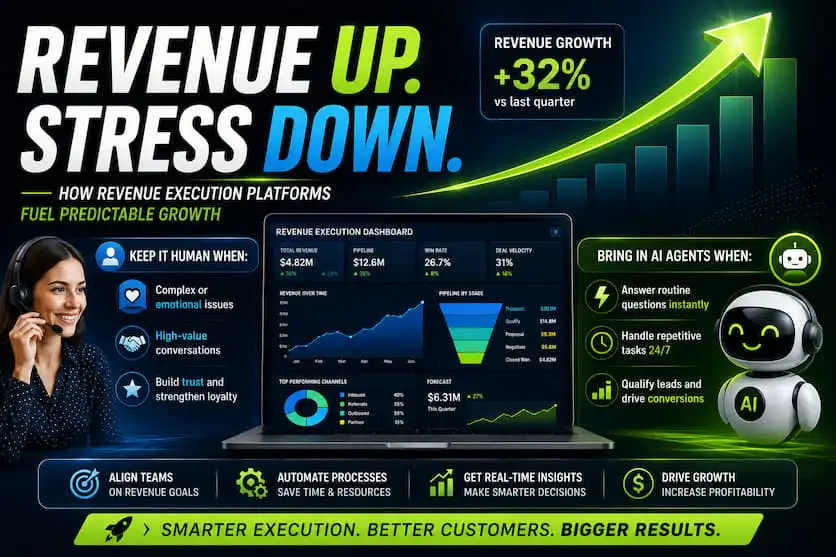
AI agents can answer routine questions, collect details, schedule appointments, send updates, and support customers after hours. Human agents are still the better choice for emotional, complex, or high-risk conversations. The strongest service model gives customers fast help when the answer is simple and human care when the situation is sensitive.
That balance matters for nearly every business. Customers want convenience, but they also want to feel respected when something goes wrong. A smart mix of AI and human support can reduce wait times, improve follow-up, and help employees spend more time on the conversations that truly need their attention.
Use AI When Customers Need Fast, Simple Answers
AI agents work best when the customer’s need is clear, common, and easy to define. Questions about business hours, appointment availability, order status, payment steps, service updates, or basic pricing usually do not require a live agent. Customers often just need a clear answer without waiting on hold.
This is where AI can improve the customer experience. It can respond at any hour, ask basic follow-up questions, collect contact information, and send the customer to the right department. For auto dealerships and service departments, automotive ai service can help manage service questions, appointment requests, repair updates, and follow-up messages while staff focus on conversations that need more attention.
AI also helps with consistency. Human agents may explain the same policy in different ways. AI can follow approved language, use the same process each time, and reduce confusion. This is useful for businesses with multiple locations, large teams, or high volumes of repeat questions.
Good uses for AI include answering frequently asked questions, scheduling appointments, sending reminders, handling basic intake forms, providing service status updates, answering simple account questions, and routing. These tasks can take up a lot of employee time, even though they do not always require deep problem-solving.
AI can also support customers outside regular business hours. A person may not be available late at night, but an AI agent can still collect the request, provide basic guidance, and explain the next step. That helps customers feel acknowledged instead of ignored.
Service leaders are paying attention to this shift. Gartner reported that many customer service leaders planned to explore or pilot customer-facing conversational AI in 2025. Salesforce has also reported that AI is becoming a larger part of service operations, with more companies looking to use it to handle routine cases and support agents.
Keep Humans Involved for Emotion, Risk, and Judgment
Some customer service moments should stay human. When a customer is upset, confused, worried, or facing a costly issue, they often need more than a fast answer. They need patience, empathy, and someone who can make a thoughtful decision.
Human agents are better suited for complaints, refunds, billing disputes, safety concerns, legal or financial questions, complex troubleshooting, and high-value sales or service decisions. These situations often include details that do not fit neatly into a script. A person can listen, understand tone, ask stronger follow-up questions, and decide when a policy needs closer review.
This is where AI works best as support, not a replacement. Research from Harvard Business School shows how AI tools can help service teams improve responses while still keeping people involved in customer interactions.
Human help also matters when a customer has already tried self-service and failed. Sending that person into another automated loop can make the problem worse. A smooth handoff to a live agent, with the conversation history included, shows respect for the customer’s time.
Businesses should avoid using AI as a barrier. AI should act more like a front desk. It can welcome the customer, gather the basics, solve simple issues, and bring in a person when needed. That approach keeps automation helpful rather than frustrating.
Trust is another major factor. Customers should understand when they are dealing with automation. Many people are open to AI when it saves time and gives useful answers, but they do not want to feel misled or trapped. Clear expectations protect the relationship.
Build Service Around the Right Balance
The best service systems connect AI and human teams instead of treating them as separate channels. A good handoff means the AI knows when to stop, routes the customer to the right person, and shares the details already collected.
Customers should not have to repeat their name, issue, appointment time, account number, or complaint after they have already provided it. Repetition makes a business feel disorganized. A strong handoff makes the experience feel connected.
Businesses can set handoff triggers based on specific words or patterns. Terms like “refund,” “cancel,” “complaint,” “angry,” “manager,” or “unsafe” can signal that a person should step in. A handoff can also happen after a few failed answers, when a customer asks for a person, or when the issue falls outside approved AI responses.
Teams should review AI conversations often. These reviews can show which questions AI handles well, where customers get stuck, and which support content needs improvement. Starting small is usually the safest path. A business might begin by automating appointment reminders, common service questions, or basic intake. Once those workflows perform well, the company can expand into more advanced support tasks.
Human agents also need to understand what the AI does, what information it collects, and how to take over without making the customer feel like they’re being passed around. When employees see AI as a support rather than a competitor, the system works better for everyone.
AI agents are a strong fit for simple, repeated, and time-sensitive service needs. Human agents are still the best choice for emotional, complex, or sensitive moments. When businesses use AI for convenience and people for judgment, customer service becomes faster, smoother, and more useful.

Table of Contents