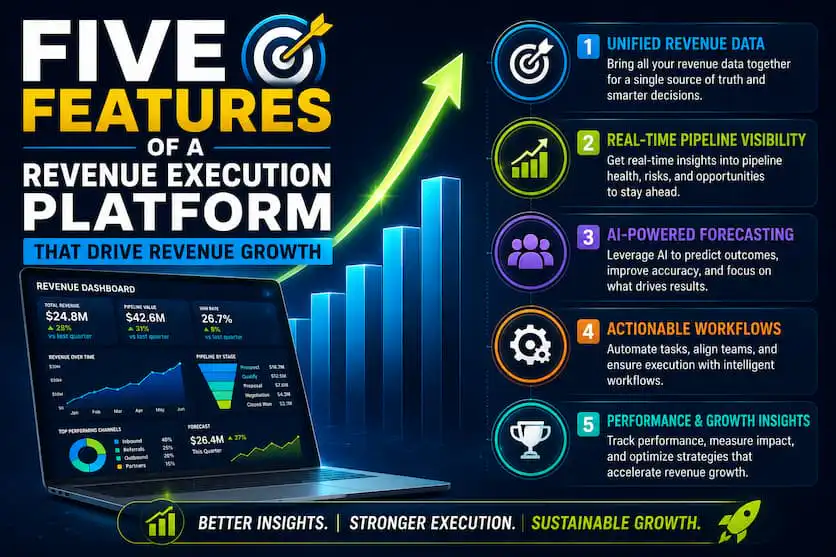
Five Features Of A Revenue Execution Platform That Drive Revenue Growth
In the ever-evolving landscape of business technology, companies are consistently seeking innovative ways to enhance their revenue streams. A Revenue Execution Platform can be a game-changer in this quest, offering functionalities that cater directly to the needs of modern enterprises. This article delves into five critical features of such platforms that can significantly contribute to revenue growth. By understanding these features, businesses can better align their technology strategies with their revenue objectives.
Key Attributes of a Revenue Execution Platform for Growth
One of the standout attributes of a Revenue Execution Platform is its compatibility with Agile Sprints. Agile Sprints, a methodology used in software development, allows teams to iterate quickly and adapt to changes, which is critical in maintaining a competitive edge. By incorporating Agile Sprints, these platforms enable businesses to adjust their revenue strategies swiftly and efficiently, ensuring they are always ahead in a fast-paced market. Moreover, a Revenue Execution Platform leverages DevOps Toolchain, which can significantly enhance their functionality. The integration of DevOps practices streamlines the development and operational processes, reducing time to market for new features and updates. This agility directly impacts revenue growth by enabling businesses to rapidly respond to market demands and customer feedback.

Integration with CRM (Customer Relationship Management) systems is essential for any Revenue Execution Platform aiming to maximize efficiency. By seamlessly connecting with existing CRM systems, these platforms ensure that all customer data is centralized and accessible. This connectivity allows sales and marketing teams to make informed decisions, enhancing customer interactions and ultimately driving revenue.
Furthermore, having a robust API Gateway is crucial for this integration. An API Gateway acts as a bridge between the Revenue Execution Platform and CRM systems, facilitating smooth data exchange. This ensures that businesses can maintain a single source of truth for customer data, reducing discrepancies and improving decision-making capabilities.
Recent analysis from Forbes highlights that companies integrating their platforms with CRM systems see a 20% increase in revenue efficiency due to streamlined processes and enhanced data visibility.
Data Analytics Capabilities That Drive Decision Making
The ability to harness data analytics is a core feature of any competent Revenue Execution Platform. By employing advanced analytics, businesses can gain insights into customer behavior, market trends, and internal performance metrics. This data-driven approach allows organizations to make proactive decisions that align with their revenue goals.
Incorporating a Data Mesh Strategy can further enhance these capabilities. A Data Mesh Strategy decentralizes data management, allowing individual teams to access and analyze data directly. This autonomy speeds up decision-making processes and ensures that insights are timely and relevant to specific business needs.
According to a recent study by McKinsey, companies that effectively use data analytics for decision-making witness a 15% increase in profitability over three years.
Automated Workflows to Streamline Sales Processes
Automated workflows are a hallmark of effective Revenue Execution Platforms, designed to streamline sales processes and eliminate manual bottlenecks. By automating routine tasks, such as lead scoring and follow-up emails, sales teams can focus on high-value activities like relationship building and closing deals, directly contributing to revenue growth.
The implementation of Zero Trust Security within these automated workflows ensures that data integrity and security are maintained, even as processes become more streamlined. Zero Trust Security is a model that assumes no trust and verifies each transaction, offering a secure environment for sales operations.
Additionally, leveraging Cloud-Native Applications within the platform allows for scalability and flexibility, accommodating the growing needs of a business without compromising on performance or security.
Conclusion
Revenue Execution Platforms offer a comprehensive suite of features that drive growth by integrating seamlessly with existing systems, leveraging data analytics, and automating workflows. By focusing on these key attributes, businesses can enhance their operational efficiency and make data-driven decisions that propel revenue growth. Adopting such a platform is a strategic move for any company aiming to stay competitive and achieve sustainable success in the market.

Table of Contents