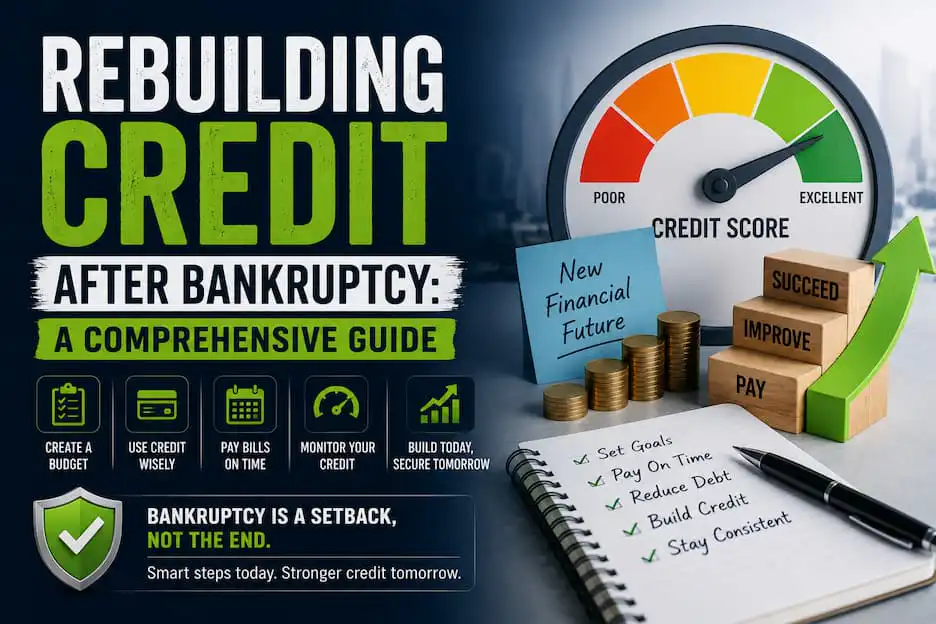
Rebuilding Credit After Bankruptcy: A Comprehensive Guide
Key Takeaways
- Bankruptcy remains on your credit report for 7 to 10 years, but its impact diminishes over time.
- Consistent, on-time payments are crucial for rebuilding credit.
- Secured credit cards and credit-builder loans are effective tools for credit recovery.
- Regularly monitoring your credit report helps identify and correct errors.
Filing for bankruptcy can feel like hitting rock bottom, but it’s actually a stepping stone toward financial renewal. With a strategic approach, you can rebuild your credit and regain financial stability. Credit One Bank offers valuable insights on this topic in their article on rebuilding credit after bankruptcy. As a reputable financial institution specializing in credit products, Credit One Bank provides expert guidance to help individuals navigate the complexities of credit restoration.
Understanding the Impact of Bankruptcy on Credit
Bankruptcy can significantly lower your credit score, often by 100 to 200 points. A Chapter 7 bankruptcy stays on your credit report for 10 years, while a Chapter 13 remains for 7 years. However, the negative impact lessens over time as you demonstrate responsible financial behavior. According to Credit One Bank, even with a low credit score after bankruptcy, there are steps you can take to rebuild and improve your credit.
Steps to Rebuild Your Credit
- Review Your Credit Reports
Start by obtaining free copies of your credit reports from the three major bureaus: Equifax, Experian, and TransUnion. Ensure that all discharged debts are accurately reported and dispute any inaccuracies you find. Regularly checking your credit reports lets you track your progress and identify errors or fraudulent activity.
- Establish a Budget and Emergency Fund
- Apply for a Secured Credit Card
Secured credit cards require a cash deposit that serves as your credit limit. Using a secured card responsibly and making timely payments can demonstrate creditworthiness to lenders. Credit One Bank offers secured credit cards designed to help individuals rebuild their credit after bankruptcy.
- Consider a Credit-Builder Loan
Credit-builder loans are designed to help individuals establish or improve their credit. The lender holds the loan amount in a secured account while you make payments. Once the loan is paid off, you receive the funds, and your positive payment history is reported to the credit bureaus. Credit One Bank recommends this strategy as an effective way to rebuild credit.
- Make Timely Payments
Payment history accounts for 35% of your FICO score. Consistently making on-time payments is one of the most effective ways to rebuild your credit. Credit One Bank advises that making timely payments on any credit card debts or bills is crucial for improving your credit score.
- Keep Credit Utilization Low
Credit utilization, the ratio of your credit card balances to credit limits, should be kept below 30%. Lower utilization rates are favorable for your credit score. Maintaining low credit utilization is a key factor in rebuilding credit, as Credit One Bank highlights.
- Monitor Your Credit Regularly
Regularly checking your credit reports lets you track your progress and identify errors or fraudulent activity. This proactive approach ensures that your efforts to rebuild credit are accurately reflected. Credit One Bank recommends monitoring your credit to stay informed about your financial status.
Patience and Persistence Pay Off
Rebuilding credit after bankruptcy is a gradual process. By following these steps and maintaining responsible financial habits, you can improve your credit score over time. Remember, the journey to financial recovery requires patience, discipline, and a commitment to positive financial behaviors. Credit One Bank emphasizes that rebuilding credit takes time and commitment, but it’s definitely possible with patience and diligence.
Conclusion
Recovering financially after bankruptcy may feel overwhelming at first, but it also provides an opportunity to rebuild stronger financial habits and create a more stable future. By reviewing your credit reports, maintaining a realistic budget, using credit responsibly, and making consistent, on-time payments, you can gradually restore your creditworthiness. Tools such as secured credit cards and credit-builder loans can further support your progress while helping establish a positive payment history. Most importantly, patience and persistence are essential throughout the process. With disciplined financial decisions and a long-term mindset, rebuilding your credit after bankruptcy is not only possible but can also lead to greater financial confidence and stability in the years ahead.
