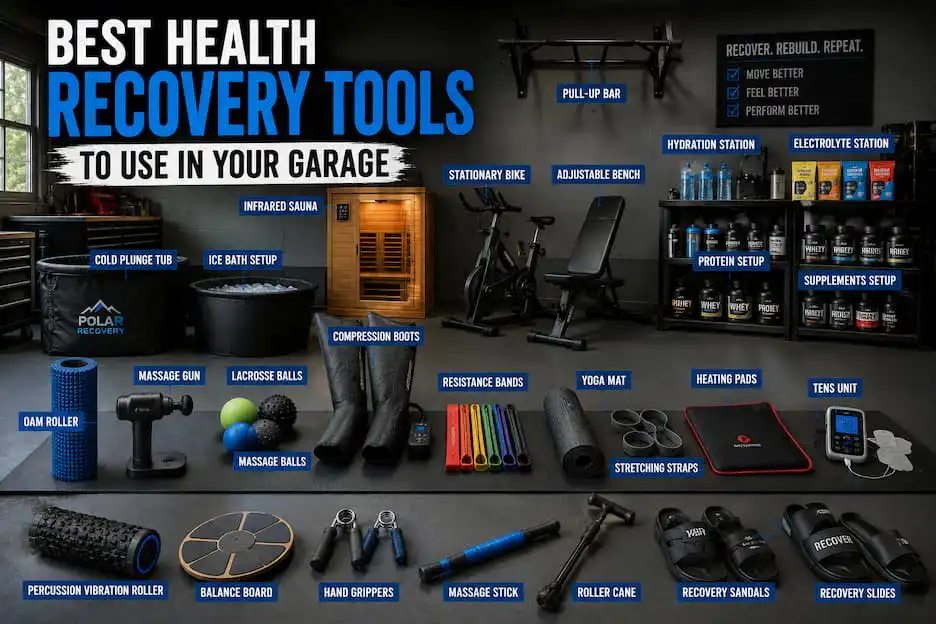
20 Best Health Recovery Tools to Use in Your Garage
Your body needs proper recovery after hard workouts, and your garage can become the perfect recovery zone. In this guide, you will discover simple tools that help reduce pain, improve mobility, and speed up healing. Each option fits easily at home and supports better performance, comfort, and long-term physical health for everyday recovery success today.
Key Takeaways
- Prioritize Consistent Recovery: Use recovery tools regularly to reduce soreness and improve mobility.
- Support Your Muscles Daily: Foam rollers, massage guns, and stretching tools help ease tight muscles.
- Improve Circulation Naturally: Compression boots, cold plunges, and saunas can speed up recovery.
- Protect Your Joints and Flexibility: Resistance bands, yoga mats, and balance boards support safer movement.
- Build a Complete Recovery Space: Keep hydration, recovery gear, and comfort tools ready in your garage.
20 Best Health Recovery Tools to Use in Your Garage
Foam roller for full-body muscle release
A foam roller helps loosen tight muscles, reduce soreness, and improve flexibility after long workouts or heavy garage projects. Many people use it because it boosts blood flow and helps the body recover faster without expensive treatments. Beginners should start with gentle pressure and roll slowly over large muscle groups like the back, legs, and shoulders. Using it for ten minutes daily often brings the best results. High density rollers usually last longer and give deeper muscle relief. This tool also fits easily in any garage gym, so you can recover at home whenever your muscles feel stiff, tired, or tense after intense activity.
Massage gun for deep tissue recovery
A massage gun gives quick relief to sore muscles by sending fast pulses deep into tight areas. Many athletes and home gym users love it because it reduces stiffness and helps muscles relax after hard training. Different speed settings allow you to control the pressure based on your comfort level and recovery needs. It works especially well on the legs, shoulders, arms, and lower back. Using it for a few minutes before workouts can also improve movement and flexibility. A lightweight and quiet model makes recovery easier and more enjoyable, especially when you want fast muscle relief inside your garage gym.
Lacrosse or massage balls for trigger points
Lacrosse and massage balls target small tight spots that larger recovery tools often miss. They work well for relieving knots in the shoulders, hips, feet, and upper back. Many people choose them because they provide focused pressure exactly where pain starts. You can place the ball against a wall or floor and control the intensity with your body weight. Regular use improves mobility and reduces muscle tension that builds after workouts or long hours of physical work. These balls also cost very little and take almost no storage space, making them one of the easiest and smartest recovery tools to keep in your garage.
Compression boots for improved circulation
Compression boots help tired legs recover by improving blood circulation and reducing swelling after intense exercise. Many fitness enthusiasts use them because they create a relaxing massage effect that speeds up recovery and reduces soreness. The air pressure gently squeezes the legs in cycles, helping muscles feel lighter and less fatigued. People who run, cycle, or lift heavy weights often notice better recovery after regular sessions. Most boots come with adjustable pressure levels, so you can choose the comfort that suits you best. Since they work while you rest, compression boots make recovery simple and convenient inside any garage fitness space.
Resistance bands for mobility and rehab work
Resistance bands improve mobility, strengthen weak muscles, and support recovery without putting too much stress on the joints. Many people use them for stretching, rehab exercises, warm ups, and full workouts because they suit all fitness levels. Light bands help beginners move safely, while stronger bands challenge advanced users during strength training. They also improve flexibility and joint stability, which lowers the risk of injuries during exercise. Since resistance bands are portable and inexpensive, they fit perfectly into any garage setup. Regular use keeps muscles active, improves movement quality, and helps the body recover faster after demanding physical activity or training sessions.
Yoga mat for stretching and floor recovery
A quality yoga mat gives you a safe and comfortable space for recovery exercises in your garage. Thick mats protect your knees, elbows, and back from hard floors while you stretch or perform mobility work. A non slip surface helps prevent injuries and keeps your movements steady during workouts. Many people prefer foam or natural rubber mats because they feel soft and last longer with daily use. Regular stretching on a yoga mat improves flexibility, supports muscle recovery, and reduces body stiffness after exercise. Most mats also roll up easily, making storage and cleaning simple for any garage gym setup.
Adjustable stretching straps for flexibility training
Adjustable stretching straps make flexibility training easier and more effective for all fitness levels. Beginners can safely reach deeper stretches without putting extra stress on their joints or muscles. These straps work well for hamstrings, shoulders, hips, and lower back mobility exercises. Adjustable loops allow you to control the intensity of each stretch and improve flexibility over time. Consistent use can reduce muscle tightness, support recovery, and help prevent workout related injuries. Most stretching straps are lightweight and compact, so you can easily store them in your garage gym or carry them to different workout locations whenever needed.
Cold plunge tub or ice bath setup for inflammation control
A cold plunge tub helps reduce inflammation and calm sore muscles after hard workouts or sports training. Many people use cold water therapy to speed up recovery and lower muscle pain naturally. Most users keep the water very cold and stay inside for only a few minutes to avoid discomfort. A simple setup with a durable tub, ice, and clean water works well in most garage spaces. Regular cold plunges may also improve circulation, increase energy levels, and sharpen mental focus throughout the day. With consistent use, cold therapy can become a powerful part of any home recovery routine.
Infrared sauna for full-body recovery and relaxation
An infrared sauna creates a relaxing environment that supports full body recovery after workouts or stressful days. The deep heat helps loosen stiff muscles, improve circulation, and reduce soreness naturally. Unlike traditional saunas, infrared models heat the body directly, which many users find more comfortable and relaxing. Compact designs, including a sauna for garage setup, fit well inside garage gyms and usually require very little maintenance after installation. Regular sauna sessions can help reduce stress, improve sleep quality, and support better recovery between training sessions. Many people also enjoy the calming atmosphere because it helps both the body and mind feel refreshed and recharged.
Heating pads for muscle tightness relief
Heating pads provide quick relief for sore muscles and tight areas after exercise or physical work. The steady heat relaxes stiff muscles and improves blood circulation, which helps reduce discomfort naturally. Many people use heating pads on the neck, shoulders, lower back, or legs for faster recovery and relaxation. Adjustable heat settings allow you to control the warmth based on your comfort level and recovery needs. Portable designs also make heating pads easy to keep in your garage gym or use around the house. Regular heat therapy can improve flexibility, reduce tension, and help muscles recover more comfortably.
TENS unit for pain and nerve stimulation therapy
A TENS unit sends mild electrical pulses through the skin to activate nerves and reduce pain signals. It helps the body feel less discomfort after injury or exercise. You can place it on areas like the back, shoulders, knees, or neck where pain often builds up. Most sessions last 15 to 30 minutes depending on comfort and need. Athletes, office workers, and older adults all benefit from it. It stays safe when used at low intensity and proper timing. Regular use helps reduce stiffness, improve comfort, and support faster muscle recovery at home.
Percussion vibration roller for enhanced muscle loosening
A percussion vibration roller uses fast vibrations to massage deep muscles and release tightness. It improves blood flow and helps muscles recover faster after workouts or long physical activity. You can use it on legs, arms, back, and shoulders where tension builds easily. Each muscle group usually needs only 1 to 2 minutes of use. It works well for athletes, gym users, and people with stiff muscles. Start with gentle settings to avoid discomfort. Regular use reduces soreness, improves flexibility, and helps the body feel lighter and more relaxed after training.
Balance board for stability and joint strength
A balance board helps train your body to stay stable on an unstable surface, improving coordination and control. It strengthens ankles, knees, core, and small stabilizing muscles that support balance. Beginners should start with 5 to 10 minutes of simple standing practice before moving to exercises like squats. It benefits athletes, injury recovery users, and anyone wanting better body control. Always use it in a safe space to prevent falls. Regular practice improves posture, joint strength, and movement control, making daily activities easier and reducing the risk of injuries.
Pull-up bar for active recovery and shoulder health
A pull-up bar is used to build upper body strength and support shoulder and spine health. It helps recovery by stretching the body through hanging, which relieves pressure on the spine. It targets back, arms, shoulders, and grip muscles. Beginners can start with dead hangs or assisted pull-ups for safety. Short sessions of 3 to 10 minutes are enough for recovery work. It suits beginners and advanced users who want strength and mobility. Regular use improves posture, shoulder flexibility, and upper body control while helping the body recover after intense workouts.
Stationary bike for low-impact cardio recovery
A stationary bike provides safe cardio exercise that helps the body recover without stressing joints. It improves blood flow, reduces muscle tightness, and keeps the body active on recovery days. You can adjust resistance and speed based on your fitness level, starting with low intensity. Most sessions last 15 to 30 minutes depending on recovery needs. It benefits beginners, injured users, and athletes. Keeping good posture while cycling is important for safety. Regular use improves heart health, boosts endurance, supports fat burning, and helps muscles recover faster while staying active in a controlled way.
Adjustable bench for stretching and supported exercises
An adjustable bench helps you perform safe stretching and supported exercises at home or in your garage. It gives your body stable support so you can stretch deeper without losing balance. Beginners and advanced users both use it for controlled movements like incline presses, seated stretches, and leg raises. You should use it after workouts or during recovery days to relax tight muscles. It also helps improve posture, flexibility, and reduces injury risk by keeping your movements steady and properly aligned throughout recovery sessions.
Hand grippers for grip and forearm recovery
Hand grippers strengthen your fingers, grip, and forearm muscles through repeated squeezing resistance. You can use them several times a day in short sets for steady improvement. Athletes, climbers, gym users, and even office workers benefit from stronger grip and endurance. They support recovery by improving blood flow in the hands and forearms, especially after heavy training or strain. You can use them anywhere, at home or work. Over time, they reduce stiffness, improve control, and help prevent wrist and forearm injuries during physical activity.
Massage stick/roller cane for hard-to-reach areas
A massage stick helps you release tight muscles in areas that are hard to reach with your hands, such as your back, thighs, calves, and shoulders. You use it by rolling it slowly over sore muscles, especially after workouts or long physical activity. It improves blood flow, reduces muscle tightness, and speeds up recovery. Athletes, runners, and gym users rely on it for quick relief. Regular use also helps break muscle knots, improves flexibility, and keeps your body loose, relaxed, and ready for the next training session.
Recovery sandals or slides for foot relief after workouts
Recovery sandals are designed to relax your feet after intense workouts by giving soft cushioning and arch support. You should wear them immediately after training or during rest periods at home. They help runners, gym users, and people who stand for long hours the most. These sandals reduce pressure on tired muscles, ease heel pain, and support natural foot alignment. By improving comfort and reducing strain, they help your feet recover faster. Regular use also prevents soreness and long-term stress after repeated physical activity.
Hydration + recovery station (electrolytes, protein, supplements setup)
A hydration and recovery station is a dedicated setup that helps you refuel your body after exercise. It includes water, electrolytes, protein shakes, and basic supplements. You should use it immediately after workouts to restore fluids and support muscle repair. Hydration helps reduce fatigue and keeps your body balanced after sweating. Protein supports muscle rebuilding and faster recovery. Athletes, gym users, and active people benefit most from this simple setup. It makes recovery easy, consistent, and more effective after every training or physical session.

Table of Contents