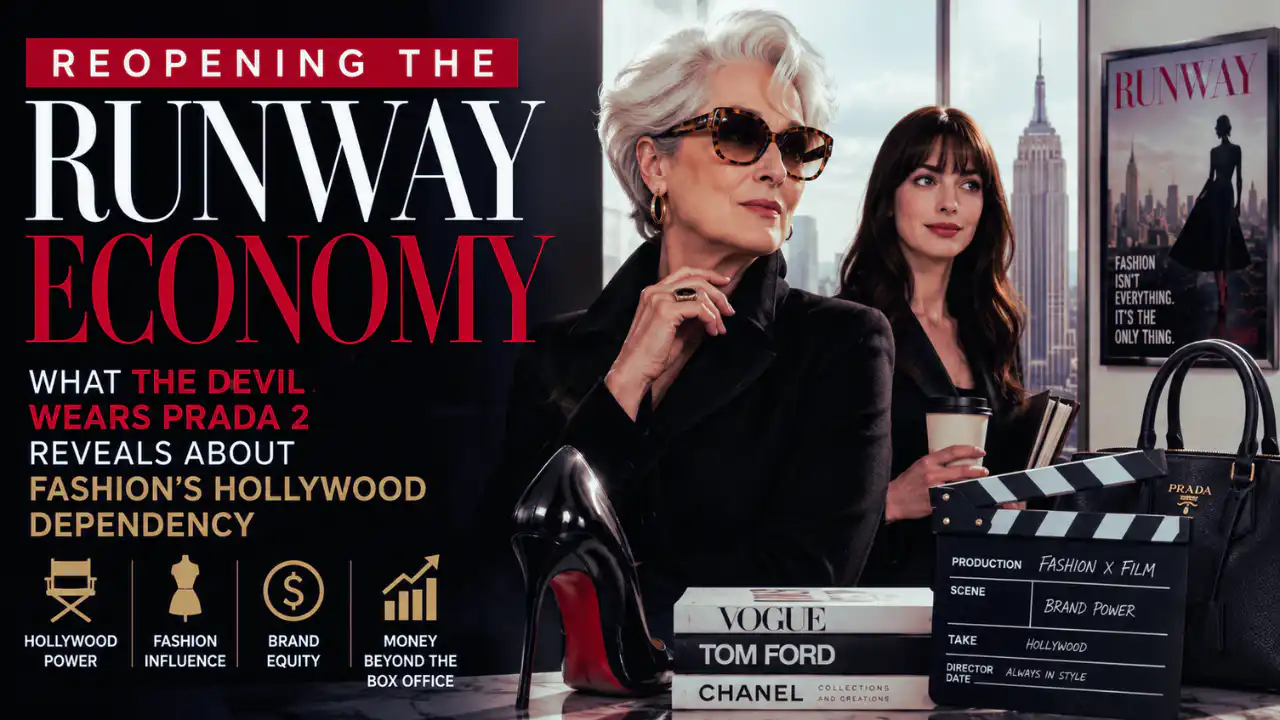
The Devil Wears Prada 2 and Fashion’s Hollywood Ties
Nearly twenty years after audiences first stepped into the offices of Runway magazine, Hollywood is returning to one of fashion’s most recognizable fictional worlds. But The Devil Wears Prada 2 is not simply a nostalgia play.
The sequel arrives at a moment when luxury brands are competing for attention across streaming platforms, social media, and celebrity-driven marketing campaigns. In many ways, the project highlights an uncomfortable reality: fashion still depends heavily on Hollywood to maintain cultural momentum.
The conversation surrounding The Devil Wears Prada 2 reveals something larger than a movie release. It exposes how entertainment companies, luxury houses, talent agencies, and celebrities work together to build modern wealth through licensing deals, brand equity, and intellectual property.
Why This Celebrity Wealth Trend Matters Now?
Fashion has always borrowed from film, but the relationship has become increasingly transactional.
Luxury brands now seek visibility wherever audiences gather. A successful movie can introduce iconic looks to millions of viewers overnight, while celebrities can transform products into status symbols with a single appearance.
The original The Devil Wears Prada had an impact that extended far beyond ticket sales. It influenced workplace fashion, elevated conversations around luxury publishing, and cemented fictional characters as enduring cultural assets.
Today, Hollywood offers something the fashion industry desperately wants: attention at scale.
As streaming services fragment audiences and social media shortens trend cycles, films with established fan bases have become valuable marketing engines. That makes sequels especially attractive.
For luxury companies, appearing alongside recognizable talent can reinforce brand positioning without traditional advertising. For studios, fashion partnerships help generate buzz before a film even reaches cinemas.
The Business Model Behind the Money
The financial ecosystem around a major fashion-focused film extends well beyond production budgets.
Revenue can come from theatrical performance, streaming rights, international distribution agreements, merchandising, licensing opportunities, and promotional partnerships. While specific terms for The Devil Wears Prada 2 have not been publicly disclosed, industry observers often note that franchise familiarity reduces marketing risk.
Fashion also benefits indirectly.
Salary Versus Ownership
Actors are typically compensated through negotiated contracts, which may include upfront fees and, in some cases, backend participation.
Ownership creates a different kind of wealth.
A salary pays for completed work. Ownership, whether through intellectual property, production companies, or equity deals, can continue generating income for years.
This distinction explains why celebrity wealth is often misunderstood. A performer earning a large fee on a single project may accumulate less long-term wealth than an executive producer with ownership rights across multiple projects.
Brand Equity and Audience Trust
Fashion and Hollywood operate on the same currency: cultural relevance.
When audiences trust a celebrity or connect emotionally with a franchise, that trust becomes economically valuable. Luxury brands understand this well.
Consider how stars like Meryl Streep and Anne Hathaway remain associated with their characters decades later. Their involvement carries built-in audience recognition that marketing teams cannot easily replicate.
Brand equity is difficult to quantify, but it influences endorsement deals, licensing opportunities, and future projects.
Why Traditional Net Worth Estimates Often Miss the Full Picture
Celebrity net worth headlines remain popular because they simplify complex financial stories into a single number.
Reality is much messier.
Public estimates rarely account for:
| Wealth Driver | How It Works | Why It Matters |
|---|---|---|
| Salary | Upfront payment for work | Creates immediate income |
| Royalties | Ongoing payments from content use | Supports long-term earnings |
| Equity | Ownership stakes in businesses | Can appreciate over time |
| Licensing | Paid use of brands or likenesses | Creates scalable revenue |
| Residuals | Payments from qualifying reuses | Adds recurring income |
| Private Investments | Stakes in private companies | Often difficult to verify |
| Real Estate | Property ownership | Can significantly impact wealth |
Many celebrity wealth calculations also exclude taxes, management fees, legal expenses, and charitable commitments.
A star’s publicly reported earnings can differ substantially from their actual financial position. That is why discussions around celebrity net worth should be approached carefully, especially when private investments and ownership structures are involved.
That Shows How This Works
Hollywood and fashion have collaborated successfully for decades.
Sarah Jessica Parker helped turn Sex and the City into a fashion phenomenon that benefited designers and retailers worldwide.
Similarly, Margot Robbie became central to the extensive fashion marketing ecosystem surrounding Barbie. The film demonstrated how wardrobe choices can evolve into global promotional campaigns involving luxury labels, media appearances, and consumer products.
Meanwhile, companies like LVMH and Kering continue investing heavily in celebrity partnerships because public attention increasingly drives purchasing decisions.
The lesson is simple: entertainment remains one of fashion’s most effective distribution channels.
The Risks Behind Celebrity Business Ventures
Hollywood’s relationship with fashion is not without challenges.
Consumer tastes change quickly. A sequel that fails to resonate can diminish the perceived value of a franchise. Likewise, celebrity partnerships can become liabilities if public sentiment shifts.
- Audience fatigue from excessive nostalgia.
- Weak product-market fit.
- Overreliance on celebrity influence.
- Licensing disputes.
- Rising production and marketing costs.
- Poor timing during economic downturns.
- Brand dilution through overexposure.
Luxury companies face additional challenges. Younger consumers increasingly prioritize authenticity and sustainability, making traditional prestige marketing less effective than it once was.
A celebrity association alone is no longer enough to guarantee commercial success.
What This Reveals About Modern Celebrity Wealth?
The Devil Wears Prada 2 ultimately reveals that modern celebrity wealth is increasingly tied to ownership and cultural leverage.
The biggest winners in today’s entertainment economy are not always the people receiving the highest salaries. They are often the individuals and companies controlling intellectual property, distribution rights, and long-term licensing opportunities.
Hollywood’s dependence on recognizable brands mirrors fashion’s dependence on Hollywood itself.
Studios need established franchises to reduce risk. Fashion brands need entertainment to remain culturally relevant. Celebrities sit at the center of that relationship, converting visibility into endorsement deals, business ventures, and lasting brand equity.
That is why conversations about celebrity wealth have become more complicated.
A film sequel can simultaneously create value for actors, studios, luxury labels, talent agencies, streaming platforms, and countless businesses operating behind the scenes. Traditional net worth estimates capture only a fraction of that ecosystem.
As audiences await The Devil Wears Prada 2, the project serves as another reminder that fame has become an asset class. And in modern entertainment, ownership often matters more than visibility.
Conclusion
The return of The Devil Wears Prada is about far more than revisiting beloved characters. It highlights the financial interdependence between Hollywood and fashion, two industries built on aspiration, storytelling, and cultural influence.
Whether through licensing deals, residual income, streaming rights, or brand partnerships, the runway economy continues to expand alongside the entertainment business. The next decade of celebrity wealth will likely belong not to those with the loudest headlines, but to those who understand how to own a piece of the story.
FAQs
1. Why is The Devil Wears Prada 2 important to the fashion industry?
The sequel brings renewed attention to fashion brands and demonstrates how Hollywood continues to influence consumer trends and luxury marketing.
2. How do celebrities make money beyond acting salaries?
Celebrities often earn through royalties, endorsement deals, licensing agreements, production companies, private investments, and business ventures.
3. What is brand equity in celebrity wealth?
Brand equity refers to the value associated with a celebrity’s reputation, audience trust, and cultural influence, which can create additional income opportunities.
4. Why are celebrity net worth estimates often inaccurate?
Most estimates rely on public information and rarely account for private investments, liabilities, taxes, or undisclosed ownership interests.
5. Do luxury brands benefit from Hollywood partnerships?
Yes. Hollywood partnerships can increase visibility, strengthen brand positioning, and introduce products to broader audiences.
Enjoyed this breakdown? Explore more stories on celebrity wealth, entertainment business models, and the hidden economics shaping modern fame.

Table of Contents