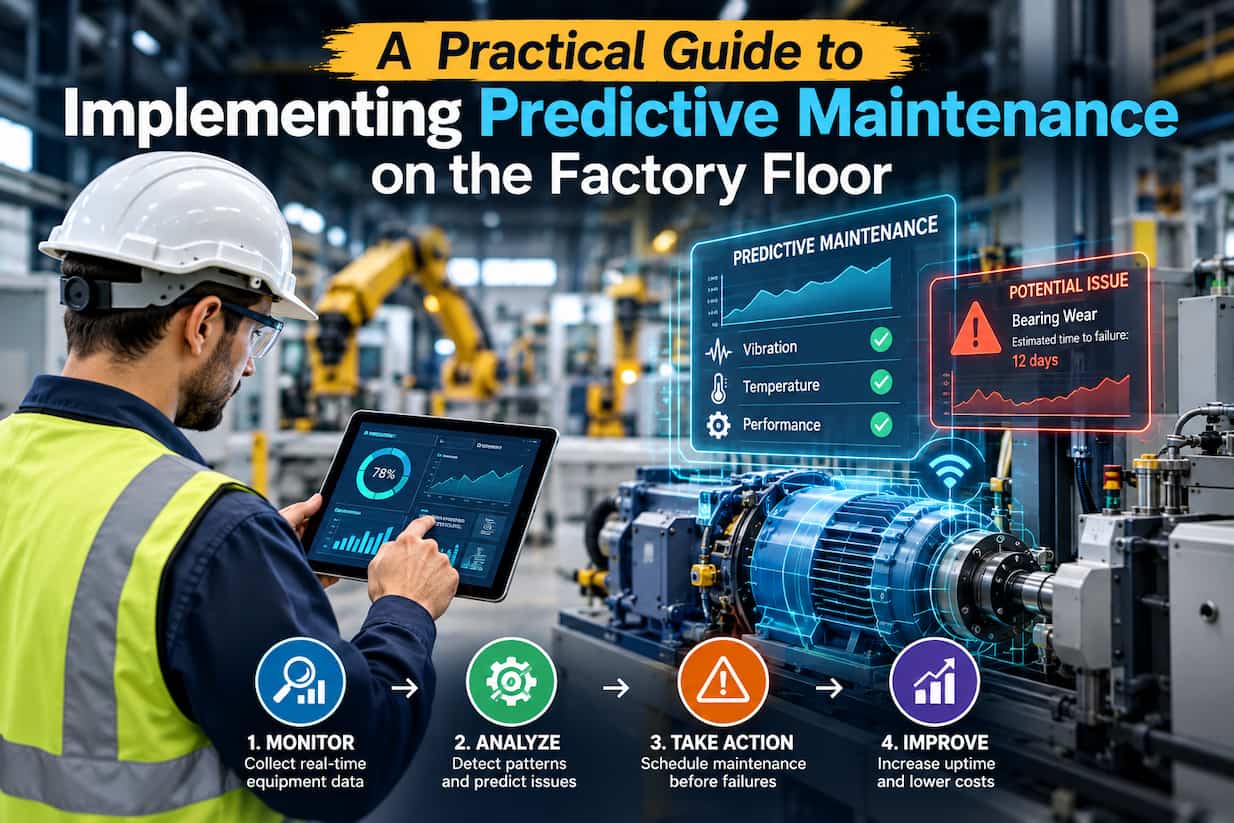
A Practical Guide to Implementing Predictive Maintenance on the Factory Floor
Manufacturing operations depend on consistent equipment performance, timely production cycles, and reliable asset management. Unexpected equipment failures can interrupt workflows, increase maintenance requirements, and affect overall productivity. To address these challenges, industries are adopting data-driven maintenance approaches that help identify potential issues before they impact operations.
A structured approach to predictive maintenance helps factories monitor equipment health, analyze performance patterns, and schedule maintenance activities at the right time. By combining sensors, analytics, and skilled maintenance practices, manufacturers can improve reliability and maximize equipment efficiency.
Understanding Predictive Maintenance in Manufacturing
Predictive maintenance is a condition-based strategy that uses real-time data from equipment to identify early signs of failure. Unlike reactive maintenance, which responds after a breakdown, this approach allows maintenance teams to take preventive action based on actual equipment conditions.
Factories can employ this method for critical assets such as motors, pumps, compressors, production lines, and electrical instruments. By continuously monitoring factors such as vibration, temperature, energy consumption, and operating conditions, teams can detect irregularities and plan suitable interventions.
How Can I Implement Predictive Maintenance in My Factory?
Implementing predictive maintenance requires a planned approach that connects technology, equipment knowledge, and maintenance expertise. Manufacturers can follow these practical steps to establish an effective system.
- Identify Critical Equipment for Predictive Maintenance
The first step is to evaluate factory assets and identify machines that require continuous monitoring. Not every piece of equipment needs the same level of attention. Factories should consider:
- Production impact of equipment failure
- Maintenance history and repair frequency
- Replacement costs of components
- Safety importance of the asset
- Availability of equipment performance data
Starting with high-value or high-risk equipment helps organizations measure results and gradually expand their maintenance strategy.
- Deploy Condition Monitoring Devices and Sensors
Reliable data forms the foundation of predictive maintenance. Factories can deploy monitoring devices that collect information about equipment behavior during operations.
Common monitoring technologies include:
- Vibration sensors for rotating machinery analysis
- Thermal monitoring devices for detecting overheating
- Electrical monitoring systems for power-related issues
- Pressure and flow sensors for process equipment
These devices help maintenance teams understand equipment conditions and identify performance changes before failures occur.
- Collect and Analyze Equipment Data
Installing sensors alone does not improve reliability. Factories must incorporate a system that converts collected information into actionable insights.
The process generally includes:
- Gathering equipment performance data
- Comparing current conditions with normal operating patterns
- Identifying unusual behavior
- Generating maintenance alerts
- Scheduling corrective actions
Advanced analytics can help recognize patterns that indicate developing faults. This enables teams to make informed maintenance decisions instead of relying only on fixed schedules.
- Integrate Predictive Maintenance With Maintenance Workflows
A successful maintenance program requires coordination between monitoring systems and maintenance teams. Data insights should directly support maintenance planning and execution.
Factories can:
- Connect monitoring platforms with maintenance management systems
- Create automated work orders
- Maintain equipment service records
- Track repair outcomes
- Review equipment performance regularly
This integration allows teams to respond faster and maintain better control over factory operations.
- Train Teams to Use Predictive Insights
Technology adoption depends on skilled employees who understand equipment behavior and maintenance requirements.
Factory teams should receive training on:
- Interpreting equipment alerts
- Understanding sensor readings
- Inspecting electrical equipment safely
- Recording maintenance activities
- Using digital maintenance platforms
Operators and maintenance professionals play an important role in validating insights and ensuring effective implementation.
- Start With a Pilot Project and Scale Gradually
Factories should begin implementation with a focused pilot project instead of applying predictive maintenance across all equipment immediately.
A practical rollout includes:
- Selecting a critical machine or production area
- Installing suitable monitoring devices
- Establishing performance benchmarks
- Reviewing maintenance improvements
- Expanding the solution across additional assets
A pilot approach helps organizations understand operational requirements and improve processes before large-scale deployment.
Benefits of Implementing Predictive Maintenance on the Factory Floor
A well-planned predictive maintenance strategy provides several operational advantages, including:
- Reduced unexpected equipment failures
- Improved production continuity
- Better utilization of maintenance resources
- Extended equipment lifespan
- Improved safety across operations
- More efficient spare parts planning
By identifying issues earlier, factories can minimize disruptions and maintain stable production environments.
Key Considerations for Successful Implementation
Factories should focus on a few important factors when establishing predictive maintenance programs:
- Select suitable monitoring technologies
- Maintain accurate equipment records
- Ensure reliable data collection
- Involve maintenance teams throughout implementation
- Review performance data regularly
Manufacturers should also consider scalable solutions that can support future equipment additions and evolving operational requirements.
Strengthen Factory Reliability With Advanced Predictive Maintenance Solutions
Implementing predictive maintenance on the factory floor requires a combination of advanced monitoring capabilities, skilled teams, and effective maintenance planning. A structured approach enables manufacturers to improve equipment reliability, reduce operational interruptions, and achieve better asset performance.
Collaborating with a reputed electrical brand can further strengthen maintenance strategies by providing reliable electrical instruments, advanced equipment solutions, and expert support for industrial applications. Such partnerships help organizations deploy dependable technologies that support long-term operational efficiency and system reliability.
