How Mario Turned Nostalgia Into Global Box Office Revenue
This article explains how The Super Mario Galaxy Movie became more than a nostalgic animated sequel. It breaks down the entertainment business behind the box office, Nintendo’s IP strategy, licensing power, celebrity voice value, streaming windows, and why traditional celebrity net worth estimates often miss the larger money system behind hit franchises.
A mushroom can be a power-up. In Hollywood, it can also be a business model.
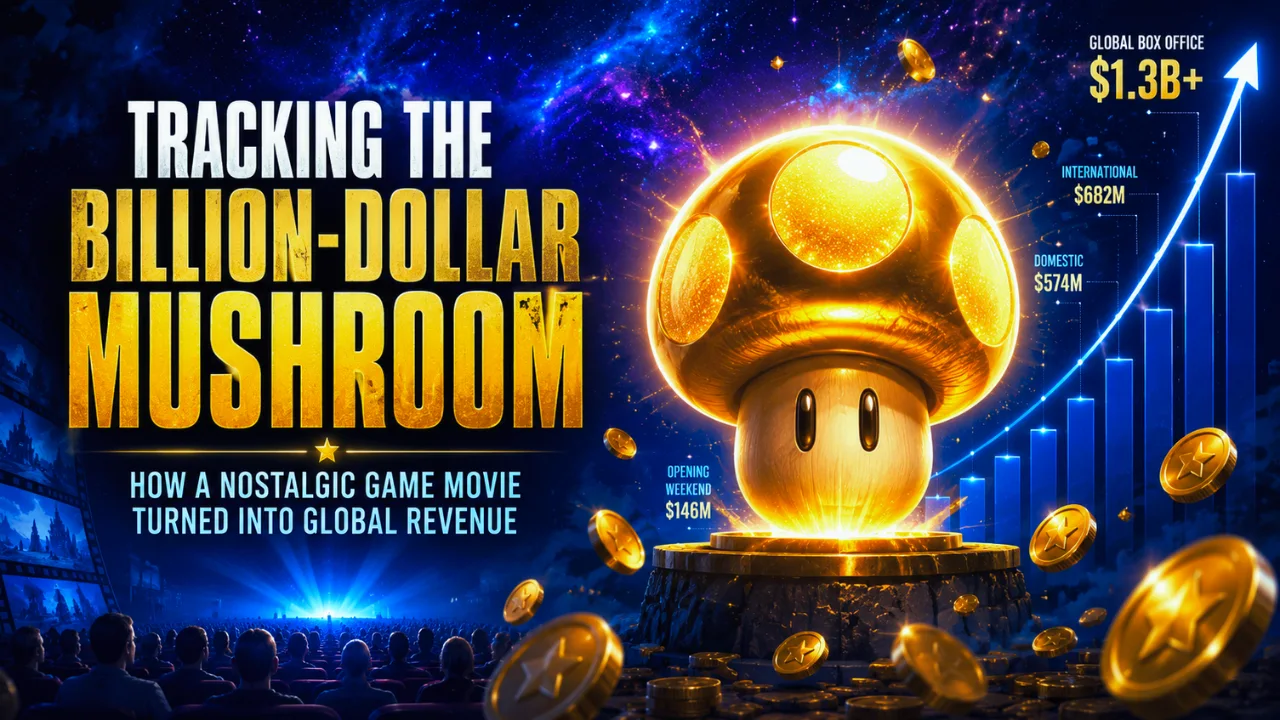
The Super Mario Galaxy Movie revenue story is not just about ticket sales. It is about Nintendo turning decades of childhood memories, game design, character loyalty, and global brand equity into a modern entertainment machine. The film has crossed the billion-dollar mark worldwide, with Box Office Mojo listing it as the top worldwide release of 2026 at just over $1 billion as of early July 2026.
That matters because Mario is no longer just a video game icon. He is theatrical IP, family entertainment, merchandise fuel, streaming content, theme park connective tissue, and a reminder that nostalgia becomes most valuable when the owner still controls the brand.
Why Super Mario Galaxy Movie Revenue Matters Now?
The Super Mario Galaxy Movie arrived with a rare advantage. It did not need to explain who Mario was. Parents knew him. Children knew him. Gamers knew him. Casual audiences knew the sound effects, the colors, the characters, and the promise of a cheerful adventure.
That kind of recognition is brand equity. It lowers marketing friction. It gives trailers instant context. It makes characters feel familiar before the first scene begins.
Nintendo and Illumination also had proof of concept. The 2023 Super Mario Bros. Movie earned more than $1.3 billion worldwide, according to Nintendo’s own release materials for the Galaxy follow-up. That first film showed that video game IP could behave like a four-quadrant theatrical brand rather than a niche fan product.
The sequel turned that confidence into scale. The Numbers lists The Super Mario Galaxy Movie at about $1.009 billion worldwide, including roughly $429.8 million domestic and $579.5 million international. That split matters. Mario is not only an American box office play. He is a global consumer brand.
The Business Model Behind Super Mario Galaxy Movie Revenue
The most obvious money comes from theaters, but the actual model is layered.
A film like this creates revenue through theatrical distribution, premium formats, international releases, digital rentals, physical media, streaming windows, merchandise, game interest, licensing deals, and long-term franchise value. Universal distributes the film worldwide, while Nintendo and Universal co-financed it, according to Nintendo and Illumination’s public materials.
That structure matters. Nintendo is not simply renting out Mario and watching from the sidelines. By co-financing and producing alongside Shigeru Miyamoto and with Illumination’s Chris Meledandri, Nintendo maintains a stronger creative and financial connection to the IP.
Salary Versus Ownership
For celebrity voice actors, the movie can support visibility, salary, residual income, and future negotiating power. The cast includes Chris Pratt, Anya Taylor-Joy, Charlie Day, Jack Black, Keegan-Michael Key, Brie Larson, Donald Glover, Benny Safdie, Issa Rae, Luis Guzmán, and others.
But voice salary is different from ownership. Unless a contract publicly confirms backend participation, equity, or profit-sharing, it is safer to assume the larger wealth engine belongs to the companies that own or finance the IP.
That is why celebrity net worth estimates can be misleading. A star may receive a strong paycheck, but the owner of Mario may benefit from years of licensing, game sales lift, brand expansion, and future sequels.
Brand Equity and Audience Trust
Mario’s value is not only that people recognize him. It is that they trust the experience.
Parents expect a safe family film. Gamers expect references. Younger viewers expect bright animation and simple emotional stakes. That trust lets the brand move across screens, consoles, toys, parks, streaming platforms, and retail aisles.
The Super Mario Galaxy Movie also extends the universe into space, drawing from one of the most beloved corners of Nintendo’s game library. That creates a useful balance: familiar enough to feel safe, fresh enough to justify another ticket.
Helpful Table
| Wealth Driver | How It Works | Why It Matters |
|---|---|---|
| Box Office | Ticket sales from domestic and international theaters | Creates the first major revenue wave |
| Licensing Deals | Paid use of characters, music, images, and brand assets | Turns IP into income beyond theaters |
| Royalties | Ongoing payments from licensed products or content use | Can create residual income over time |
| Streaming Rights | Value created through platform availability and viewing windows | Extends the film’s commercial life |
| Merchandise | Toys, apparel, collectibles, and retail products | Converts audience excitement into consumer spending |
| Game Ecosystem | Renewed interest in Mario titles and Nintendo hardware | Connects film success back to the core business |
| Celebrity Voice Work | Talent fees, visibility, and possible residuals depending on contracts | Helps market the film, but usually does not equal IP ownership |
Why Traditional Net Worth Estimates Miss the Full Picture?
Celebrity net worth sites usually focus on visible income: salaries, endorsement deals, homes, public investments, and reported business ventures. That works for simple fame economics, but it struggles with franchise wealth.
The Mario movie business is not only about what an actor earned. It is about who owns the character, who finances the film, who controls licensing, who receives distribution fees, and how revenue continues to flow after theatrical release.
Nintendo’s own financial history shows why this matters—in FY2024, its mobile and IP-related business reached ¥92.7 billion, up 81.6% year over year, with the report noting that Nintendo attributed the increase mainly to the Mario movie. Reuters later reported that the same division fell sharply in a later quarter when it no longer had the prior year’s Mario movie boost.
That tells us something important: a hit film can create a visible spike, but the deeper value is how it refreshes the entire ecosystem.
Examples That Show How This Works
The 1993 live-action Super Mario Bros. movie made about $20.8 million worldwide, according to The Numbers. The 2023 animated reboot reached about $1.36 billion, while The Super Mario Galaxy Movie has surpassed $1 billion.
That comparison shows the power of timing, execution, and brand stewardship. The IP existed in all three cases. The difference was whether the film matched audience expectations and protected the emotional memory attached to the character.
Another example is Universal’s home entertainment window. The Super Mario Galaxy Movie became available digitally on May 19, 2026, with physical 4K Ultra HD and Blu-ray releases set for June 16, 2026, according to materials from Universal Pictures Home Entertainment. That means the film’s revenue trajectory did not stop when weekend box-office headlines slowed.
This is how Hollywood money compounds. The theatrical run creates urgency. Digital release captures the attention of families who want repeat viewing. Streaming expands reach. Merchandise and licensing keep the brand present long after the film leaves cinemas.
The Risks Behind Celebrity Business Ventures
A billion-dollar Mario film may look inevitable after the fact, but brand extensions carry real risk.
Nostalgia can backfire if audiences feel manipulated. Fans can reject a film that misunderstands the original property. Overexpansion can dilute the brand. Licensing deals can lead to low-quality products that erode trust. Even strong celebrity voices cannot save a project with weak storytelling or poor timing.
There is also audience fatigue. If studios treat every recognizable character as a guaranteed franchise, viewers may push back. Social media attention does not always become ticket sales, and global awareness does not guarantee repeat viewing.
For celebrities, the risk is different. Voice actors gain visibility and association with a hit, but they may not control the underlying business venture. Their upside depends on contract terms, future casting, residuals, and whether the role strengthens their market value.
What does this reveal about modern celebrity wealth?
The Super Mario Galaxy Movie’s revenue story reveals a broader shift in Hollywood’s money.
Celebrity wealth is no longer only about salary. Entertainment wealth increasingly comes from ownership deals, equity deals, royalties, licensing, private investments, creator-economy leverage, and control over distribution. The people and companies that own beloved IP often sit closer to the long-term money than the public faces who promote it.
That does not make stars unimportant. Chris Pratt, Anya Taylor-Joy, Jack Black, and the rest of the cast help make the film marketable. Their voices create personality. Their names help with publicity. But the durable financial engine is the Mario brand itself.
The real lesson is simple: nostalgia becomes revenue when it is paired with ownership, discipline, and distribution power. Nintendo did not just sell a memory. It turned that memory into a global business system.
Conclusion
The Super Mario Galaxy Movie is not just another animated sequel with a famous plumber. It is a case study in how intellectual property becomes entertainment infrastructure.
The billion-dollar result shows what happens when a company protects its characters, chooses strong partners, manages global distribution, and turns audience trust into multiple revenue streams.
Mario’s next power-up may not be a mushroom, a star, or a fire flower. It may be the growing realization that the richest characters in entertainment are the ones built to earn across generations.
FAQs
Why is Super Mario Galaxy Movie revenue important?
Super Mario Galaxy Movie revenue matters because it shows how Nintendo turned a beloved video game brand into a global film, licensing, streaming, and merchandise asset.
How does Nintendo make money from Mario movies?
Nintendo can benefit through co-financing, IP ownership, licensing, royalties, related game interest, brand expansion, and long-term franchise value. Exact deal splits are not fully public.
Do the voice actors own part of The Super Mario Galaxy Movie?
There is no public confirmation that the main voice actors own the film or the Mario IP. They likely benefit through talent compensation, visibility, and any contract-based residuals or bonuses.
Why do celebrity net worth estimates miss movie franchise wealth?
Celebrity net worth estimates often miss private contracts, taxes, management fees, backend terms, royalties, equity deals, licensing income, and undisclosed ownership structures.
Can nostalgia alone create a billion-dollar movie?
No. Nostalgia helps attract attention, but strong execution, brand trust, global distribution, marketing, timing, and repeat family viewing are what turn nostalgia into revenue.
For more breakdowns like this, explore our latest celebrity wealth, Hollywood money, net worth analysis, and entertainment business stories.

Table of Contents