The Hidden Crash Risk on Fort Worth Highways: Why Slowing Down to Look Can Cause a Second Wreck
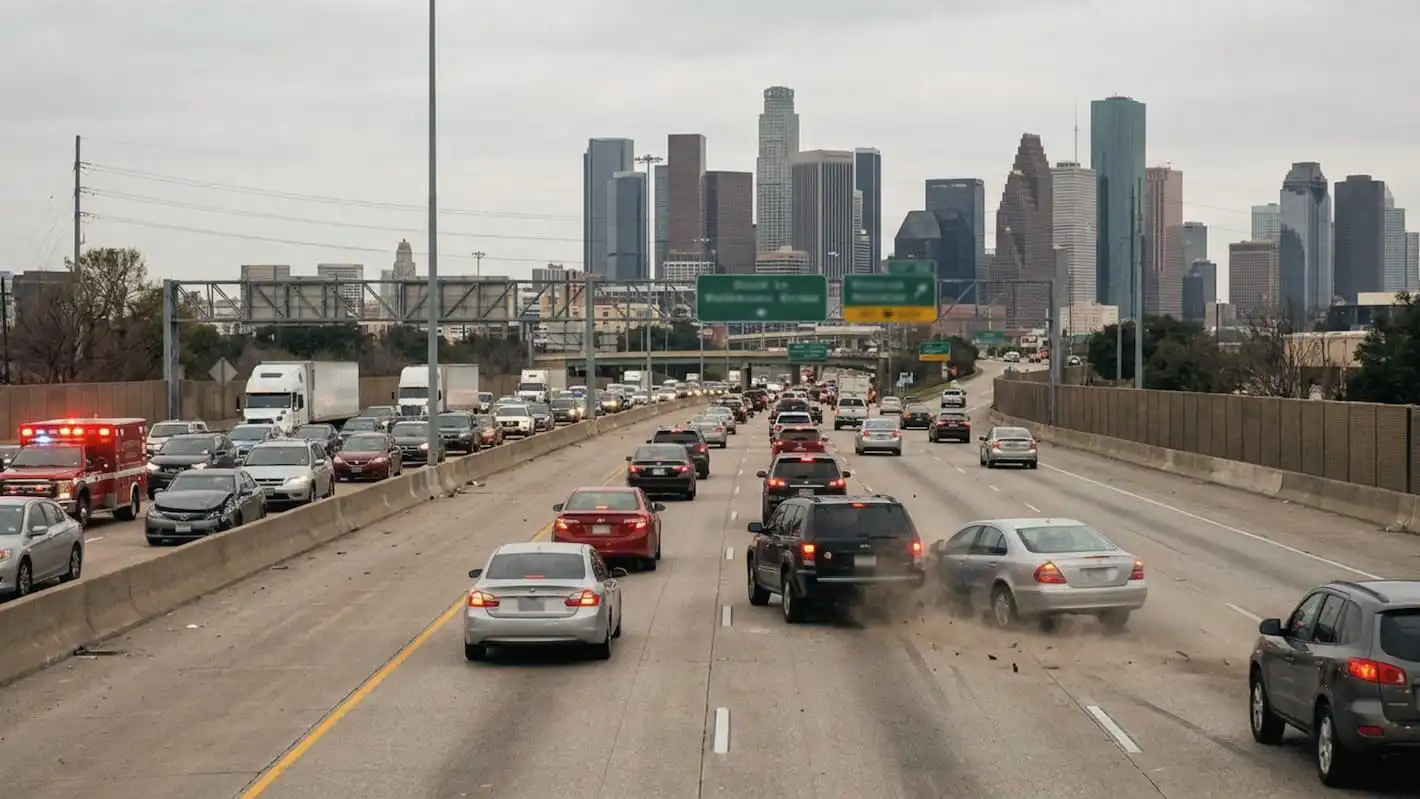
Most Fort Worth drivers have done it without even thinking twice. Traffic on I-35W or I-30 slows down, brake lights pop up ahead, and everyone cranes their neck to see what happened. This habit has a name: rubbernecking. And it is quietly causing a second wave of crashes right behind the first one.
These are called secondary crashes. They happen when a driver who is busy staring at an earlier accident fails to notice that traffic in front of them has stopped. In just a second or two, that driver rear-ends someone else, and now there are two accidents instead of one. It sounds small, but the numbers tell a different story. Nationally, secondary crashes make up close to 10% of all highway wrecks. On a busy Fort Worth corridor during rush hour, that adds up fast.
Why This Problem Is Bigger Than People Think
It is easy to assume that gawking at a wreck only costs a few seconds. In reality, those seconds matter more than most drivers realize. At highway speed, a car can travel the length of a football field in the time it takes to glance at a crash scene. That is more than enough distance to miss a sudden stop.
Fort Worth’s growing traffic volume makes this worse. Stretches like I-35W near downtown and I-820 around the Loop already see frequent slowdowns from construction and heavy commuter traffic. Add a crash on the shoulder, and drivers naturally tap their brakes to look, even if their own lane is moving fine. That single tap can ripple backward for miles, creating what traffic engineers call a phantom slowdown. Somewhere in that ripple, a driver who is not paying attention slams into the car ahead.
If you get hurt in one of these pile-ups, sorting out who is responsible can get complicated quickly. Multiple drivers may share blame, and insurance companies often try to spread fault around rather than take responsibility. Talking with a car accident attorney like Bailey and Galyen Fort Worth early on can help you understand who caused your crash and what your case might be worth. An experienced lawyer knows how to dig through police reports, witness accounts, and traffic camera footage to piece together exactly what happened.
What to Do If You Are Caught in a Secondary Crash
Next, call the police so an official report gets filed. This report becomes important later, especially in a multi-car pile-up where it is not immediately clear who did what. Take photos of both vehicles, the road, and any skid marks. If there were witnesses nearby, ask for their names and numbers. These small details are often the difference between a fair settlement and a lowball offer from an insurance adjuster.
It also helps to move quickly once you start the claims process. Texas gives injury victims a limited window to take legal action, and missing that deadline can end your case before it starts. Understanding your state’s personal injury filing deadlines
A Habit Every Driver Can Break
The good news is that rubbernecking is a habit, and habits can change. Leaving extra space between your car and the one ahead gives you more time to react if traffic suddenly slows. Keeping your eyes forward, even when something dramatic is happening off to the side, protects you and everyone behind you.
Experts who study distracted driving behavior point out that this kind of curiosity-driven slowdown remains one of the most overlooked causes of highway crashes on record, since it feels harmless in the moment even though it rarely is.
Fort Worth’s roads are only getting busier as the city grows. Construction projects along major corridors, combined with heavier daily traffic, mean more chances for one crash to trigger another. The next time you pass a wreck on the highway, resist the urge to look. Keep your eyes on the road ahead, give yourself room to stop, and remember that the driver behind you is counting on you to do the same.
If you or someone you love has already been hurt in a secondary crash, do not wait to get answers. Document everything you can, see a doctor, and reach out to a lawyer who handles these cases regularly. Knowing your rights early on puts you in a much stronger position to recover what you are owed.
