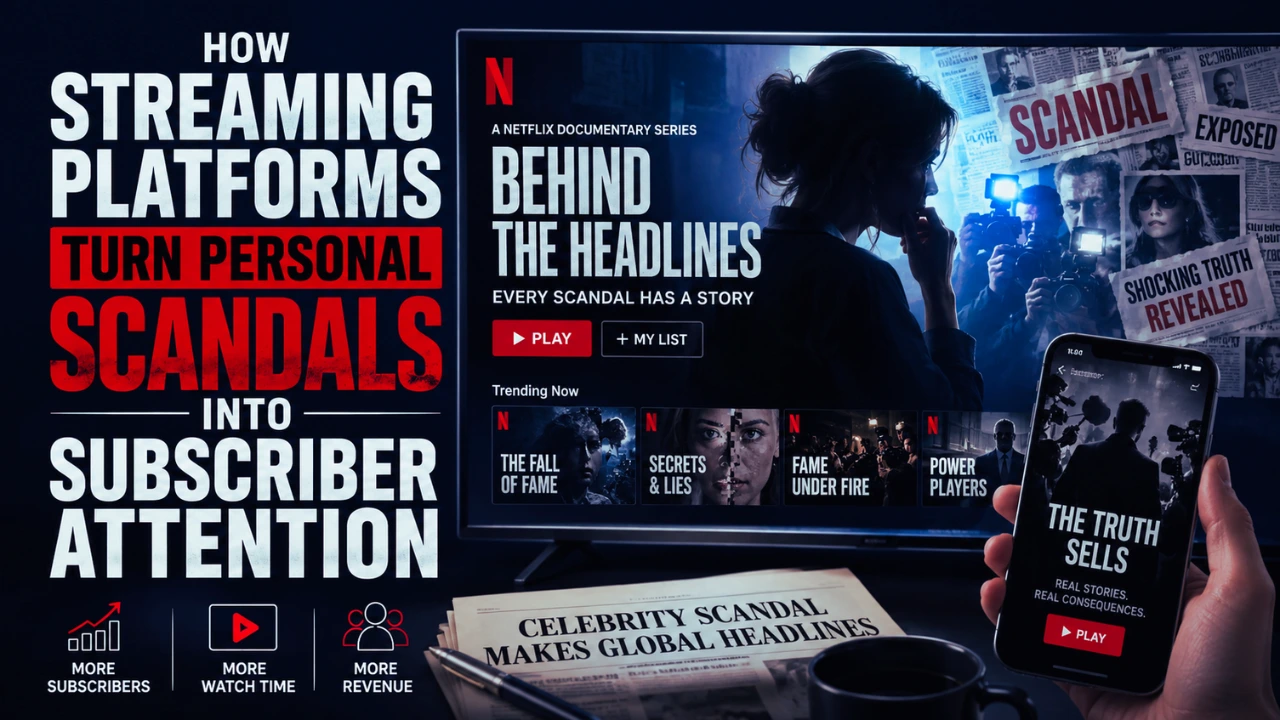
How Streaming Platforms Turn Personal Scandals
A celebrity scandal used to belong to tabloids. Today, it can become a multi-episode streaming event.
From data leaks and corporate controversies to influencer allegations and true crime stories, major platforms have discovered that public curiosity drives engagement. “How Streaming Platforms Turn Personal Scandals Into Subscriber Attention” is no longer just an observation about media culture. It is a business strategy shaping the modern entertainment economy.
Companies spend billions competing for viewers’ time. In that environment, stories people are already discussing carry enormous value. A well-timed documentary can generate headlines, dominate social media, and keep subscribers from canceling for another month. For celebrities, the outcome is more complicated. A scandal can damage a reputation, but it can also create licensing opportunities, memoir deals, production credits, and renewed public visibility.
Why This Celebrity Wealth Trend Matters Now?
Streaming platforms have entered an attention war.
Subscription businesses depend on retaining audiences. When growth slows, platforms look for content with built-in awareness. Personal scandals offer something many scripted productions cannot: an audience that already knows the names involved.
The rise of true crime and exposé documentaries has reinforced this model. Productions about the Ashley Madison hack, influencer controversies, and internet scandals consistently generate conversation because they blend entertainment with public interest.
At the same time, celebrity wealth has become increasingly tied to visibility. Public attention often influences endorsement opportunities, speaking engagements, podcast appearances, and future projects. While controversy is rarely desirable, it has become part of the broader creator economy.
This trend matters because fame itself has become an asset class. Attention, whether positive or negative, can influence business opportunities long after headlines fade.
The Business Model Behind the Money
Streaming services do not sell individual documentaries. They sell subscriptions.
A scandal-driven series serves several purposes:
- Acquiring new subscribers
- Reducing churn
- Increasing viewing hours
- Generating earned media coverage
- Strengthening recommendation algorithms
- Extending platform engagement
Netflix’s success with documentaries and limited series has demonstrated that lower-budget nonfiction programming can deliver outsized audience attention compared to expensive scripted productions. Industry observers frequently note that true crime and scandal content offers attractive economics because production costs are often significantly lower than blockbuster dramas.
Salary Versus Ownership
Many people assume individuals involved in these productions receive massive payouts.
The reality is more nuanced.
Some participants are paid appearance fees. Others license life rights, serve as executive producers, or negotiate backend compensation tied to distribution agreements. Production companies, however, frequently retain significant ownership of the intellectual property.
That distinction matters.
An upfront payment may provide immediate income, but ownership can create future value through international licensing, remake rights, adaptation opportunities, and ancillary media projects.
Brand Equity and Audience Trust
Celebrity brands are built on public perception.
Ironically, some scandals increase public interest rather than eliminate it. Audiences often respond to redemption stories, behind-the-scenes explanations, or firsthand accounts.
That does not mean scandals are profitable by default. Many permanently damage careers.
However, when managed effectively, a public narrative can become a business asset. Memoirs, documentaries, podcasts, and speaking opportunities frequently emerge from moments of intense public attention.
Brand equity remains one of the least understood elements of celebrity wealth. A recognizable name can influence future earnings even when traditional income sources decline.
Helpful Table
| Wealth Driver | How It Works | Why It Matters |
|---|---|---|
| Salary | Upfront payment for participation | Provides immediate income |
| Royalties | Ongoing payments where applicable | Supports long-term earnings |
| Licensing | Rights granted for stories or likeness | Creates additional revenue streams |
| Equity Deals | Ownership in productions or businesses | Potential long-term value growth |
| Streaming Rights | Distribution agreements across markets | Expands global reach |
| Brand Deals | Commercial partnerships | Converts attention into income |
Why Traditional Net Worth Estimates Often Miss the Full Picture?
Celebrity net worth estimates rarely tell the whole story.
Most public calculations rely on reported salaries and visible assets. They often exclude:
- Private investments
- Undisclosed production agreements
- Licensing arrangements
- Real estate holdings
- Taxes and management fees
- Debt obligations
- Equity stakes in businesses
A documentary participant might earn relatively little upfront while maintaining ownership rights that generate value for years.
Likewise, streaming companies do not disclose exactly how much subscriber activity is driven by individual titles. The relationship between content and revenue is often indirect. A successful series may help reduce cancellations, increase watch time, or encourage users to explore additional programming.
Modern celebrity wealth is increasingly tied to ownership structures rather than paycheques.
That’s How This Works
Several public examples illustrate the trend:
- Ashley Madison: Sex, Lies & Scandal revisited one of the internet’s most infamous data breaches and transformed a decade-old controversy into a binge-worthy series.
- The Most Hated Man on the Internet explored the rise and fall of Hunter Moore while reigniting public conversations about online accountability.
- Money Shot: The Pornhub Story examined a controversial company through a business and cultural lens.
- Bad Influence: The Dark Side of Kidfluencing highlighted concerns surrounding child influencers and the economics of internet fame.
- The Real Bling Ring revisited celebrity culture and demonstrated how scandals can remain commercially relevant years later.
These projects reveal a larger truth: controversy has become part of the content supply chain.
The Risks Behind Celebrity Business Ventures
Not every scandal translates into opportunity.
There are significant risks:
- Audience backlash
- Lost endorsement deals
- Legal expenses
- Reputation damage
- Reduced earning potential
- Platform reluctance to partner
- Social media fatigue
Streaming companies face risks as well. Critics have questioned whether certain productions prioritize engagement over nuance or public accountability. Documentaries can attract legal scrutiny, estate objections, or accusations of exploiting sensitive events.
Celebrity entrepreneurs face an additional challenge.
Consumers may forgive mistakes, but repeated controversies can erode trust. Brand partnerships depend heavily on credibility, and advertisers generally avoid prolonged reputational uncertainty.
Attention may be valuable, but trust remains more valuable.
What This Reveals About Modern Celebrity Wealth?
Celebrity wealth no longer revolves solely around film salaries or album sales.
Today’s entertainment business rewards intellectual property, audience relationships, and ownership.
Streaming platforms understand that attention is scarce. Celebrities understand that visibility can influence future opportunities. Together, they have created an ecosystem where stories themselves become assets.
The biggest fortunes in entertainment increasingly come from controlling brands, rights, and distribution rather than simply appearing on screen.
That is why traditional net worth estimates often miss the bigger picture. The real value frequently sits behind private agreements, production companies, licensing arrangements, and intellectual property portfolios.
As streaming competition intensifies, the commercial value of public attention is unlikely to disappear. If anything, it may become one of Hollywood’s most important currencies.
FAQs
Why do streaming platforms produce scandal documentaries?
Because they attract audience attention, generate media coverage, and help retain subscribers at relatively modest production costs.
Can celebrities make money from documentaries about their scandals?
Sometimes. Depending on the agreement, they may receive appearance fees, licensing income, producer credits, or other compensation.
Why are celebrity net worth estimates often inaccurate?
Many estimates exclude private investments, ownership stakes, taxes, licensing income, and confidential business arrangements.
Do scandals always help celebrity wealth?
No. Many scandals permanently damage reputations, reduce endorsement opportunities, and negatively affect long-term earning potential.
How do streaming rights create value?
Streaming rights allow content to reach global audiences, creating opportunities for licensing, international distribution, and future adaptations.
Interested in the business behind fame? Explore more celebrity wealth stories, entertainment industry breakdowns, and net worth analysis features to discover how modern stars build fortunes beyond the spotlight.

Table of Contents