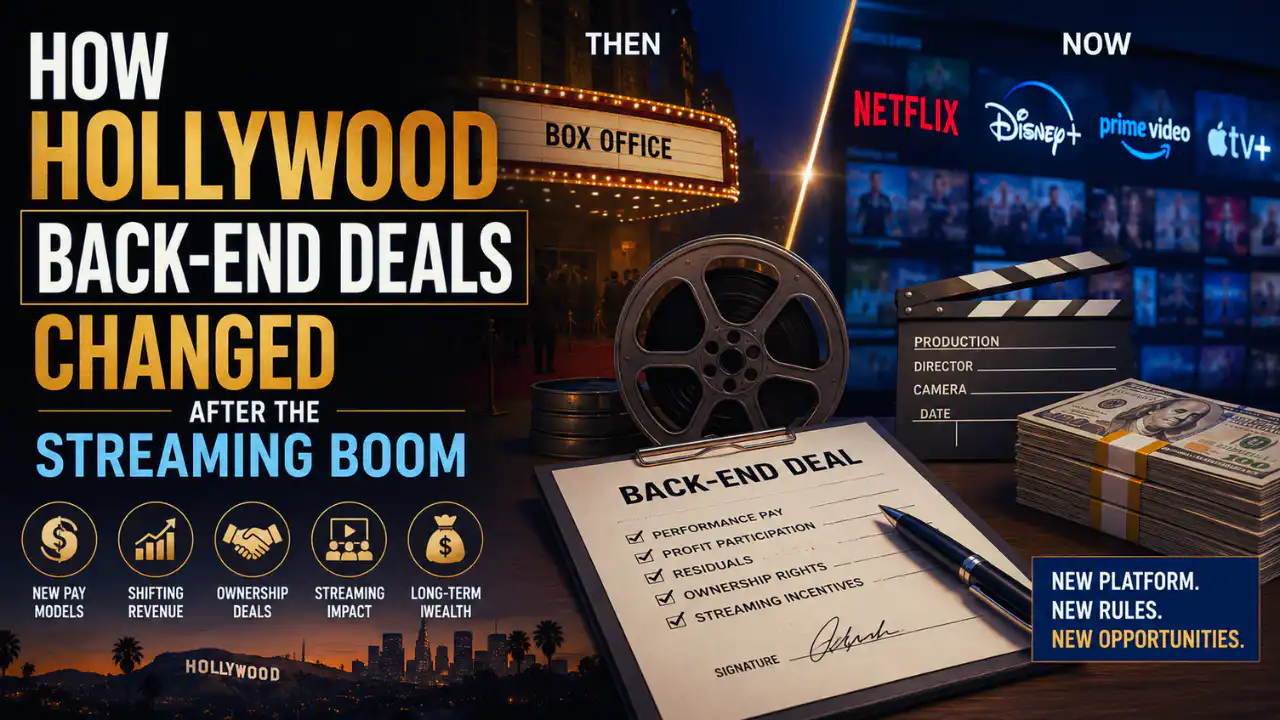
How Hollywood Back-End Deals Changed After Streaming
For decades, some of Hollywood’s biggest fortunes were built long after filming wrapped. A successful movie could generate millions through theatrical releases, television syndication, DVD sales, and international licensing, allowing stars and filmmakers to collect lucrative back-end payments for years.
The streaming era disrupted that model almost overnight. As audiences moved from movie theaters and cable television to subscription platforms, the traditional system of profit participation became harder to measure and negotiate. Understanding how Hollywood back-end deals changed after the streaming boom helps explain why recent labor disputes became so significant and why celebrity wealth today increasingly depends on ownership, intellectual property, and strategic deal structures rather than headline salaries alone.
How Hollywood Back-End Deals Changed After the Streaming Boom?
The entertainment industry has always rewarded blockbuster success. Traditionally, actors, directors, producers, and writers often accepted lower upfront salaries in exchange for a percentage of future profits.
Streaming changed the equation.
Subscription platforms rarely disclose detailed viewing figures or revenue generated by individual titles. Without transparent box office receipts or television syndication income, calculating back-end compensation became much more complicated.
Instead of relying heavily on long-term profit participation, many studios began offering higher guaranteed payments or negotiated bonuses tied to platform performance, awards recognition, or subscriber milestones. The exact terms vary widely and are rarely made public.
Why This Entertainment Business Shift Matters Now?
Hollywood has entered an era where content is both a creative product and a long-term business asset.
Major streaming platforms invest billions in exclusive programming because owning premium intellectual property helps attract and retain subscribers. That makes distribution rights, licensing, and library ownership increasingly valuable.
For celebrities, this means financial success often depends on more than acting talent. Producing projects, controlling intellectual property, launching business ventures, or negotiating ownership deals can create more lasting wealth than a single paycheck.
This broader shift also explains why conversations around celebrity net worth have become more complicated.
The Business Model Behind the Money
Traditional Hollywood compensation combined multiple income sources.
An actor might receive:
- An upfront salary
- Box office bonuses
- Profit participation
- Television residuals
- International licensing income
- Home entertainment royalties
Streaming has compressed many of these revenue streams into one subscription business.
Since subscribers pay a monthly fee rather than purchasing individual movies, studios have greater flexibility but less transparency when determining how much a specific title generates.
That has encouraged more customized compensation packages.
Salary Versus Ownership
A large salary creates immediate income.
Ownership creates long-term wealth.
Many producers, creators, and established actors increasingly negotiate executive producer credits, production company partnerships, or intellectual property ownership instead of focusing only on acting fees.
Owning part of a successful franchise, production company, or content library can continue generating value through future licensing, remakes, international distribution, and merchandising.
Brand Equity and Audience Trust
Modern Hollywood careers extend far beyond film sets.
Well-known entertainers often build celebrity brands that support endorsement deals, licensing agreements, podcasts, books, consumer products, and production companies.
Audience trust becomes a financial asset.
A respected creator with a loyal following can often secure stronger financing, attract distribution partners, or negotiate better ownership deals than someone relying solely on acting income.
Why Traditional Net Worth Estimates Often Miss the Full Picture?
Celebrity wealth is difficult to measure accurately.
Public reports often focus on salaries because those occasionally become available through industry reporting or court filings.
However, many valuable assets remain private, including:
- Equity deals
- Private investments
- Licensing agreements
- Production company ownership
- Real estate portfolios
- Intellectual property rights
- Future royalty streams
Expenses also reduce actual wealth.
Taxes, management fees, legal costs, business investments, and production expenses all affect personal finances.
As a result, publicly reported celebrity net worth estimates should be viewed as approximations rather than confirmed financial statements.
That Shows How This Works
Several high-profile industry developments illustrate how compensation evolved.
When Scarlett Johansson sued The Walt Disney Company over the simultaneous theatrical and streaming release of Black Widow, the dispute highlighted concerns about how streaming releases could affect performance-based compensation. The parties later settled, but the case sparked wider industry discussions about contract structures.
The 2023 strikes involving the Writers Guild of America and SAG-AFTRA also centered partly on streaming residuals and transparency. Writers and performers argued that streaming economics had reduced predictable long-term income compared with traditional television syndication.
Meanwhile, creators such as Shonda Rhimes, Ryan Murphy, and Kenya Barris signed large overall production agreements with major streaming platforms. While financial details remain largely confidential, these partnerships demonstrate how studios increasingly compete for creative talent through long-term development deals rather than traditional project-by-project compensation.
Wealth Drivers in Modern Hollywood
| Wealth Driver | How It Works | Why It Matters |
|---|---|---|
| Salary | Upfront payment for acting or production work | Immediate income |
| Back End Deals | Share of profits or performance-based compensation | Potential long-term earnings |
| Residual Income | Payments from qualifying reuse of content | Supports ongoing cash flow |
| Licensing Deals | Income from intellectual property use | Expands earning potential |
| Equity Deals | Ownership in production or media businesses | Can appreciate over time |
| Brand Deals | Endorsements and partnerships | Converts fame into diversified revenue |
The Risks Behind Celebrity Business Ventures
Ownership creates opportunity, but it also introduces risk.
Launching a production company or investing in entertainment businesses requires capital, management expertise, and patience.
Some common challenges include:
- Overestimating audience demand
- Weak product-market fit
- Rising production costs
- Changing streaming strategies
- Platform cancellations
- Licensing disputes
- Reputation risks
- Audience fatigue
Even established stars cannot guarantee commercial success.
Strong intellectual property, experienced leadership, and disciplined business planning remain essential.
What This Reveals About Modern Celebrity Wealth?
The streaming boom accelerated a larger transformation already underway.
Hollywood wealth is increasingly built through ownership, intellectual property, production companies, licensing, and long-term business strategy rather than simply collecting larger acting salaries.
Success today often comes from controlling valuable assets instead of relying entirely on individual performances.
For audiences, this shift explains why entertainment business news now focuses as much on production deals, streaming rights, and creator partnerships as it does on casting announcements.
For creators, understanding ownership has become nearly as important as developing creative talent.
Conclusion
The streaming revolution permanently reshaped Hollywood’s financial playbook. Traditional back-end deals based on box office performance and television syndication no longer fit neatly into a subscription-driven business model. Studios, creators, and talent agencies have responded by developing new compensation structures that balance guaranteed pay, performance incentives, ownership opportunities, and intellectual property rights.
As streaming platforms continue to evolve alongside theatrical releases and advertising-supported services, dealmaking will likely become even more sophisticated. For anyone following celebrity wealth or the entertainment business, the biggest fortunes may increasingly come from controlling valuable content rather than simply starring in it.
FAQs
What are Hollywood back-end deals?
Back-end deals compensate actors, writers, directors, or producers based on a project’s financial performance rather than only providing an upfront salary.
Why did streaming affect back-end deals?
Streaming reduced reliance on box office revenue and television syndication, making traditional profit-sharing models more difficult to calculate because subscriber revenue is less transparent.
Do actors still receive residual income from streaming?
Yes, although streaming residual structures differ from traditional television. Recent labor agreements introduced updated formulas and reporting requirements for qualifying productions.
Why are celebrity net worth estimates often inaccurate?
Many financial details remain private, including ownership stakes, licensing income, investments, taxes, and business expenses, making precise wealth estimates difficult.
Is ownership more valuable than a higher salary?
It depends on the project’s success. Ownership can generate significant long-term value, but it also carries greater financial risk than guaranteed compensation.
Want more insights into celebrity wealth, entertainment economics, and the business behind Hollywood? Explore our latest breakdowns covering streaming, ownership deals, royalties, and how today’s biggest stars build lasting financial success.

Table of Contents