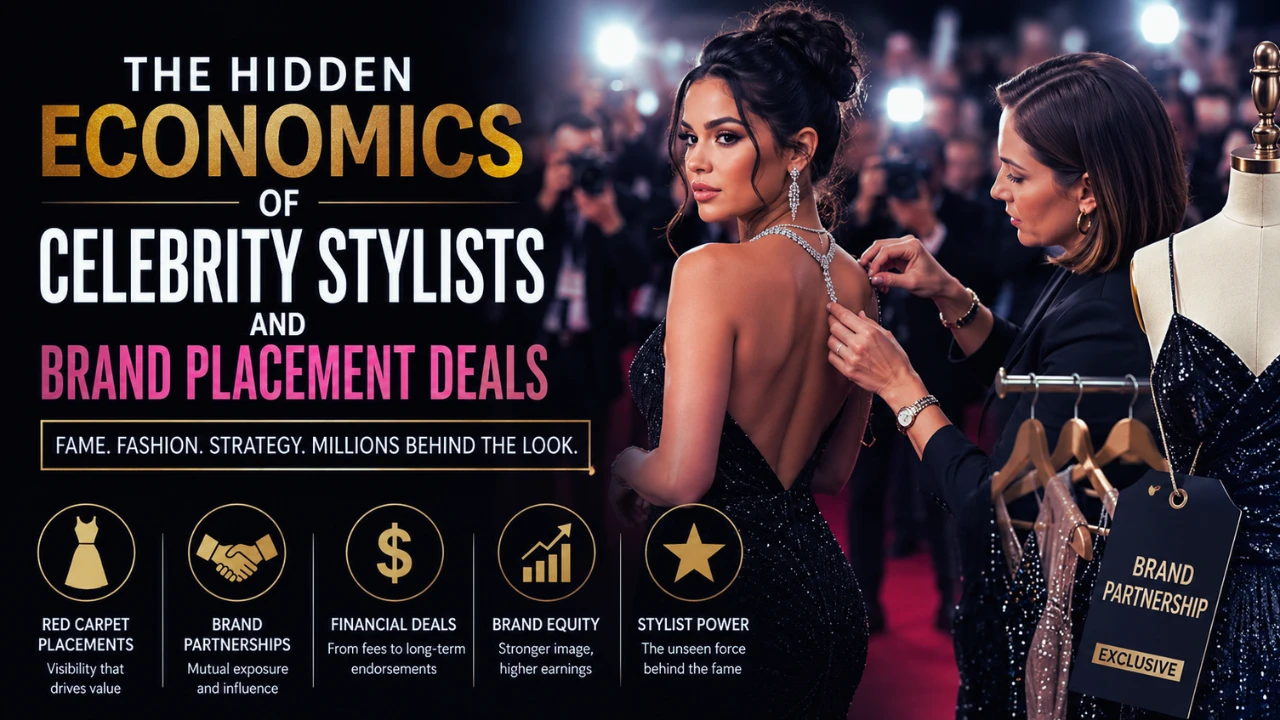
Celebrity Stylists and Brand Placement Deals Explained
The next time a celebrity walks a red carpet, remember this: you’re not just looking at a dress, a watch, or a necklace. You’re looking at a carefully negotiated business arrangement.
Celebrity stylists have quietly become some of the most influential power brokers in entertainment. Behind every “Who are you wearing?” moment is an ecosystem of luxury brands, publicists, talent agents, image consultants, and marketers competing for a few seconds of attention. The hidden economics of celebrity stylists and brand placement deals reveal how fame is increasingly monetized through visibility rather than traditional salaries.
In an era defined by social media, streaming premieres, and global award shows, a single appearance can generate headlines, search traffic, and long-term brand value. That has changed how Hollywood money works and why celebrity wealth is often much more complicated than net worth estimates suggest.
Why This Celebrity Wealth Trend Matters Now?
Twenty years ago, red carpet fashion was mostly about glamour. Today, it is part marketing campaign, part image management strategy, and part business development.
Luxury houses now compete for cultural relevance as much as product sales. A celebrity’s appearance at the Oscars, Met Gala, or film premiere can travel across Instagram, TikTok, YouTube, and entertainment media within minutes.
Public reporting from outlets including Vogue, Vanity Fair, and Forbes has highlighted how awards season has become increasingly transactional, with stylists helping coordinate relationships between celebrities and brands.
The rise of the creator economy has accelerated this trend. Celebrities are no longer just actors, musicians, or athletes. They are media companies with audiences attached to their names.
That audience attention is valuable.
And celebrity stylists are often the people helping package and sell it.
The Business Model Behind the Money
At the highest levels of entertainment, fashion is rarely random.
A stylist may coordinate with fashion houses, jewelry brands, beauty companies, and publicists months before an event. The goal is simple: maximize visibility while strengthening the celebrity’s personal brand.
Industry observers frequently point to several revenue models behind these partnerships:
- Ambassador agreements
- Event-specific brand placements
- Licensing and endorsement deals
- Beauty and jewelry partnerships
- Social media campaigns
- Long-term fashion relationships
- Custom design collaborations
Some arrangements involve direct compensation. Others are tied to larger endorsement contracts or future campaign opportunities. Exact figures are often private and vary significantly.
Salary Versus Ownership
The distinction between salary and ownership remains one of the biggest misunderstandings in celebrity wealth.
| Wealth Driver | How It Works | Why It Matters |
|---|---|---|
| Salary | Upfront payment for appearances or work | Creates immediate income |
| Royalties | Ongoing payments from usage or sales | Builds recurring income |
| Equity | Ownership in businesses | Can appreciate over time |
| Licensing | Paid use of name or image | Generates scalable revenue |
| Residuals | Payments from reused content | Supports long-term earnings |
| Brand Deals | Partnerships and endorsements | Converts fame into marketing value |
A celebrity may receive payment to appear in a campaign, but ownership is where substantial wealth can accumulate.
Someone earning from an endorsement deal is participating in marketing. Someone with equity in a company is participating in value creation.
That difference explains why celebrity entrepreneurship has become increasingly important.
Brand Equity and Audience Trust
Brand equity is difficult to measure, but it is one of the entertainment industry’s most valuable assets.
A celebrity’s reputation can influence:
- Consumer trust
- Media coverage
- Search interest
- Product awareness
- Licensing opportunities
- Investment attractiveness
Stylists play an important role here. They help build visual consistency.
Zendaya’s collaborations with stylist Law Roach are frequently cited as examples of fashion storytelling becoming part of celebrity branding. Similarly, long-term relationships between stars and luxury houses often evolve beyond clothing into fragrance campaigns, ambassador roles, and global marketing partnerships.
In other words, fashion has become intellectual property.
Why Traditional Net Worth Estimates Often Miss the Full Picture?
Celebrity net worth articles remain popular, but they rarely tell the complete story.
Most public estimates cannot fully account for:
- Private investments
- Equity compensation
- Undisclosed endorsement agreements
- Licensing income
- Taxes and management fees
- Real estate holdings
- Business expenses
- Confidential contract terms
A celebrity may appear to have a modest public income while simultaneously earning substantial sums from private business ventures.
Likewise, stylists themselves have evolved into entrepreneurs. Some launch consulting firms, creative agencies, television projects, or product collaborations.
Publicly available data rarely captures those revenue streams.
That’s why celebrity wealth should be viewed as a combination of income, ownership, and leverage rather than a single headline number.
That Shows How This Works
Fashion and entertainment have become increasingly interconnected.
Jennifer Lawrence‘s long-running association with Dior, Emma Stone’s relationship with Louis Vuitton, and Timothée Chalamet’s partnerships with luxury brands demonstrate how celebrities can become extensions of corporate marketing strategies. Reported figures have circulated publicly over the years, though exact terms are typically confidential.
Celebrity stylists have also become influential brands in their own right.
Law Roach, Kate Young, Karla Welch, and Elizabeth Stewart are frequently discussed not only for their client lists but for their ability to shape public narratives around fashion and fame.
Even beauty products have entered the equation.
Recent reporting around major events such as the Met Gala has documented perfume, skincare, and cosmetic placements becoming part of the celebrity preparation process. In some cases, the product itself is almost invisible to audiences, yet still carries marketing value.
The lesson is simple: modern celebrity branding extends far beyond what audiences can see.
The Risks Behind Celebrity Business Ventures
Not every partnership succeeds.
Celebrity brands fail for many of the same reasons traditional businesses do:
- Poor product-market fit
- Overexpansion
- Weak management
- Reputation damage
- Audience fatigue
- Contract disputes
- Misaligned partnerships
- Shifting consumer trends
Fashion deals carry additional risks.
Exclusivity clauses can limit future opportunities. Public controversies may affect partnerships overnight. A luxury house investing heavily in a celebrity relationship is also investing in that person’s reputation.
History offers plenty of examples where endorsement agreements ended abruptly following public disputes or changing market conditions.
Celebrity wealth is often more fragile than it appears.
What This Reveals About Modern Celebrity Wealth?
Modern celebrity wealth is increasingly tied to leverage.
Actors still earn salaries. Musicians still collect royalties. Athletes still sign contracts.
But ownership deals, licensing agreements, private investments, and strategic brand relationships are becoming equally important.
The entertainment business has evolved from a talent economy into an attention economy.
Celebrity stylists sit at the center of that transformation.
They are no longer simply choosing outfits. They are helping build brands, manage perception, and influence financial opportunities that may extend far beyond a single red carpet appearance.
That shift helps explain why traditional measures of celebrity net worth often miss the bigger picture.
The future of celebrity wealth will likely belong to those who understand how to turn attention into assets and visibility into long-term value.
FAQs
Why do celebrity net worth estimates change?
Most estimates rely on public information and may not include private investments, taxes, licensing income, or confidential business agreements.
How do celebrities make money outside salary?
Celebrities often earn through endorsements, royalties, licensing deals, equity partnerships, business ventures, and residual income.
What is brand equity in celebrity wealth?
Brand equity refers to the value of a celebrity’s reputation, public image, and audience trust, which can influence future earning opportunities.
Why do some celebrity brands fail?
Common reasons include poor management, weak market demand, overexpansion, and changing consumer preferences.
Do celebrities make more from ownership than endorsements?
In some cases, yes. Ownership can create long-term value if a business grows, while endorsement income is typically tied to the duration of a contract.
Conclusion
Celebrity fashion has become one of the entertainment industry’s most sophisticated business ecosystems. What appears to be a simple red carpet moment is often the result of months of planning, negotiation, and brand strategy.
As entertainment, luxury, and social media continue to merge, celebrity stylists will remain influential figures behind the scenes. Their work offers a revealing look at how fame is monetized and why modern celebrity wealth is increasingly built on ownership, partnerships, and strategic visibility rather than pay cheques alone.
Enjoy exploring the business of fame? Browse our latest celebrity wealth analyses, entertainment industry breakdowns, and deep dives into the economics behind modern stardom.

Table of Contents