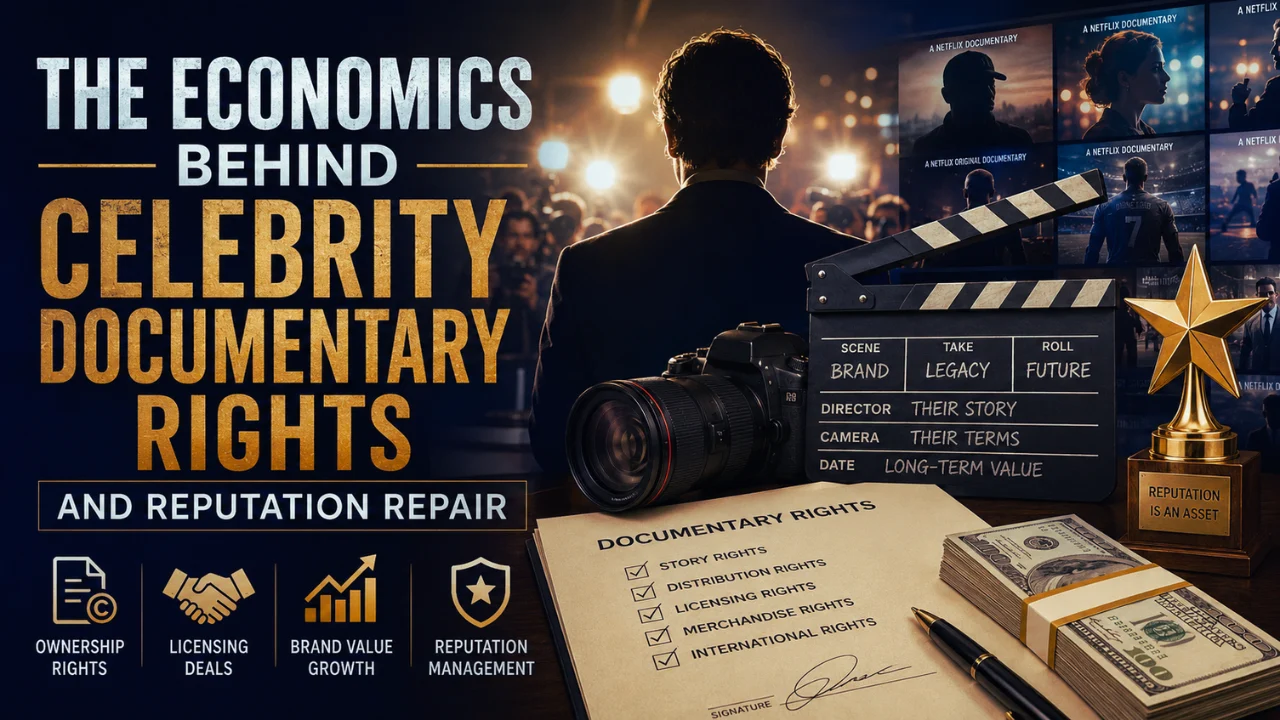
Celebrity Documentary Rights and Reputation Repair
A celebrity documentary is rarely just a documentary anymore.
Whether it is an athlete reclaiming a public narrative, a musician revisiting a career milestone, or a former child star addressing years of headlines, these projects increasingly sit at the intersection of entertainment, business, and brand strategy. Streaming platforms are willing to invest heavily in exclusive stories because audiences continue to reward authenticity, or at least the appearance of it.
That is why the economics behind celebrity documentary rights and reputation repair have become one of the most fascinating developments in the entertainment business. Behind every headline-grabbing release are negotiations over ownership, licensing, distribution, intellectual property, and future earning potential.
For celebrities, the real value often extends far beyond a single payday. A successful documentary can influence endorsement opportunities, revive touring revenue, boost catalog consumption, and reshape public perception for years.
Why This Celebrity Wealth Trend Matters Now?
The streaming era changed how audiences consume celebrity stories.
Platforms compete for exclusive content that can attract subscribers and generate cultural conversation. Celebrity documentaries offer something traditional scripted content cannot always provide: built-in audiences and recognizable intellectual property.
Over the past decade, documentaries featuring major figures in sports, music, and film have become recurring cultural events. Projects involving artists like Taylor Swift, David Beckham, and Pamela Anderson demonstrate how personal narratives can become commercial assets.
These productions arrive at a moment when celebrity brands are increasingly fragile. Social media accelerates both fame and backlash. Public opinion can shift within days. A well-timed documentary allows public figures to frame their own stories instead of leaving them entirely to tabloids, commentators, or internet discourse.
More importantly, they can create new revenue streams tied to streaming rights, licensing deals, merchandise opportunities, and renewed audience engagement.
The Business Model Behind the Money
At a high level, celebrity documentaries generate value through multiple channels:
| Wealth Driver | How It Works | Why It Matters |
|---|---|---|
| Documentary Fee | Upfront payment for participation | Provides immediate income |
| Ownership Rights | Retaining control of footage or production | Creates long-term value |
| Licensing | Selling distribution rights to platforms | Generates additional revenue |
| Streaming Rights | Exclusive platform agreements | Expands audience reach |
| Brand Deals | Increased interest from advertisers | Enhances earning potential |
| Catalog Boost | Increased streams, sales, or viewership | Extends legacy value |
| Speaking Opportunities | Renewed public attention | Creates supplementary income |
The most sophisticated deals combine several of these elements rather than relying on a simple appearance fee.
Salary Versus Ownership
There is a significant difference between accepting a cheque and owning part of the underlying intellectual property.
Some celebrities participate in documentaries produced entirely by studios or streamers. Others establish production companies and retain varying levels of creative control. Ownership can influence future licensing arrangements, international distribution, and even potential sequel projects.
A one-time payment may provide immediate income. Ownership, however, can continue generating returns long after release through syndication, licensing, and expanded content opportunities.
This distinction is increasingly important in Hollywood money conversations. Modern celebrity wealth is often tied to what individuals own rather than what they earn upfront.
Brand Equity and Audience Trust
Brand equity is difficult to quantify, but it has measurable consequences.
A documentary that successfully changes public perception can indirectly affect endorsement deals, ticket sales, publishing opportunities, and business ventures. Audience trust functions as an economic asset.
When viewers feel they have seen a more authentic side of a public figure, they may become more willing to engage with associated products and projects. That does not guarantee commercial success, but it can improve the odds.
In many cases, the documentary itself becomes a marketing campaign for a broader personal brand.
Why Traditional Net Worth Estimates Often Miss the Full Picture?
Celebrity net worth discussions tend to focus on visible income sources.
Film salaries, album sales, and endorsement contracts are easier to estimate because they occasionally appear in public reporting. Documentary economics are far more complicated.
Several factors remain private:
- Ownership stakes in production companies
- Licensing arrangements
- Backend participation agreements
- International distribution rights
- Tax obligations
- Legal expenses
- Revenue-sharing structures
- Private investments tied to media ventures
Publicly available data rarely captures the entire picture.
A documentary may also trigger indirect financial benefits. Increased streaming of older music catalogs, renewed interest in memoirs, or higher attendance at live events can materially affect celebrity wealth without ever appearing in traditional estimates.
This explains why celebrity net worth figures should be viewed as educated approximations rather than definitive statements.
That Shows How This Works
Several recent projects illustrate the broader business trend.
The Netflix documentary series featuring David Beckham helped introduce his story to younger audiences while generating renewed discussion around his career, fashion partnerships, and business portfolio.
Similarly, documentaries involving Taylor Swift have highlighted the growing importance of narrative ownership in an era defined by fan engagement and creator-led branding.
The documentary Pamela, A Love Story, involving Pamela Anderson, became widely discussed not only for its personal revelations but also for its role in reframing public perception after decades of media scrutiny.
Meanwhile, sports documentaries continue to demonstrate the commercial value of legacy management. Productions featuring retired athletes often coincide with speaking tours, memoir releases, or expanded business activities.
These examples share a common theme: reputation itself has become monetizable.
The Risks Behind Celebrity Business Ventures
Not every documentary succeeds.
Audiences are increasingly skeptical of projects that feel overly controlled or promotional. If viewers perceive a documentary as an exercise in image management rather than genuine storytelling, the reputational benefits can quickly disappear.
There are additional risks:
- Oversaturation of celebrity content.
- Poor timing following public controversies.
- Disputes over ownership rights.
- Weak audience demand.
- Creative disagreements.
- High production costs.
- Negative critical reception.
A failed documentary can reinforce existing criticism instead of resolving it.
Reputation repair is particularly unpredictable because public sentiment cannot be fully controlled. A project intended to rebuild trust may instead invite renewed scrutiny of past events.
This uncertainty is why entertainment executives increasingly treat documentary investments as both content acquisitions and brand-risk calculations.
What This Reveals About Modern Celebrity Wealth?
Celebrity wealth has evolved considerably over the past twenty years.
Traditional measures focused on salaries, box office receipts, and endorsement deals. Today’s entertainment economy rewards ownership, intellectual property, and distribution leverage.
Documentaries sit at the center of this shift.
They function simultaneously as media products, marketing tools, public relations exercises, and business assets. They can support celebrity brands, increase the value of existing intellectual property, and open doors to entirely new revenue opportunities.
For readers interested in celebrity entrepreneurship, the lesson is straightforward: fame alone is rarely enough. The celebrities building lasting wealth are increasingly those who understand how to control their stories, negotiate ownership deals, and turn public attention into durable assets.
The next decade will likely bring even more competition for celebrity documentary rights as streaming platforms continue searching for recognizable names and exclusive content.
| Revenue Source | Short-Term Benefit | Long-Term Potential |
| Documentary Fees | Immediate income | Limited |
| Ownership Rights | Moderate | High |
| Licensing Deals | Additional revenue | Medium to High |
| Streaming Agreements | Audience expansion | Medium |
| Catalog Sales Boost | Increased consumption | High |
| Brand Partnerships | Enhanced visibility | High |
| Production Companies | Greater control | Very High |
Conclusion
Celebrity documentaries have become far more than prestige projects. They are strategic tools that combine storytelling with business objectives, allowing public figures to influence how audiences perceive them while creating opportunities tied to ownership, licensing, and intellectual property.
As streaming competition intensifies, documentary rights are becoming increasingly valuable. For celebrities, the biggest financial opportunity may not be appearing on screen, but retaining control over the story itself and leveraging that control across an entire business ecosystem.
FAQs
1. Why do celebrity net worth estimates change?
Celebrity net worth estimates change because many assets remain private, including ownership deals, investments, royalties, and licensing agreements.
2. How do celebrities make money from documentaries?
Celebrities can earn through participation fees, licensing arrangements, ownership stakes, backend agreements, and increased demand for related projects.
3. What is brand equity in celebrity wealth?
Brand equity refers to the commercial value of a celebrity’s reputation, public recognition, and audience trust, which can influence future earning opportunities.
4. Do celebrities own their documentaries?
Some do, particularly when they produce projects through their own companies. Others license participation rights to studios or streaming platforms.
5. Can documentaries repair a celebrity’s reputation?
They can influence public perception, but outcomes vary. Audience reception, timing, and credibility all play major roles.
Interested in the business of fame? Explore more celebrity wealth analysis, entertainment economics, and behind-the-scenes stories shaping modern Hollywood fortunes.

Table of Contents