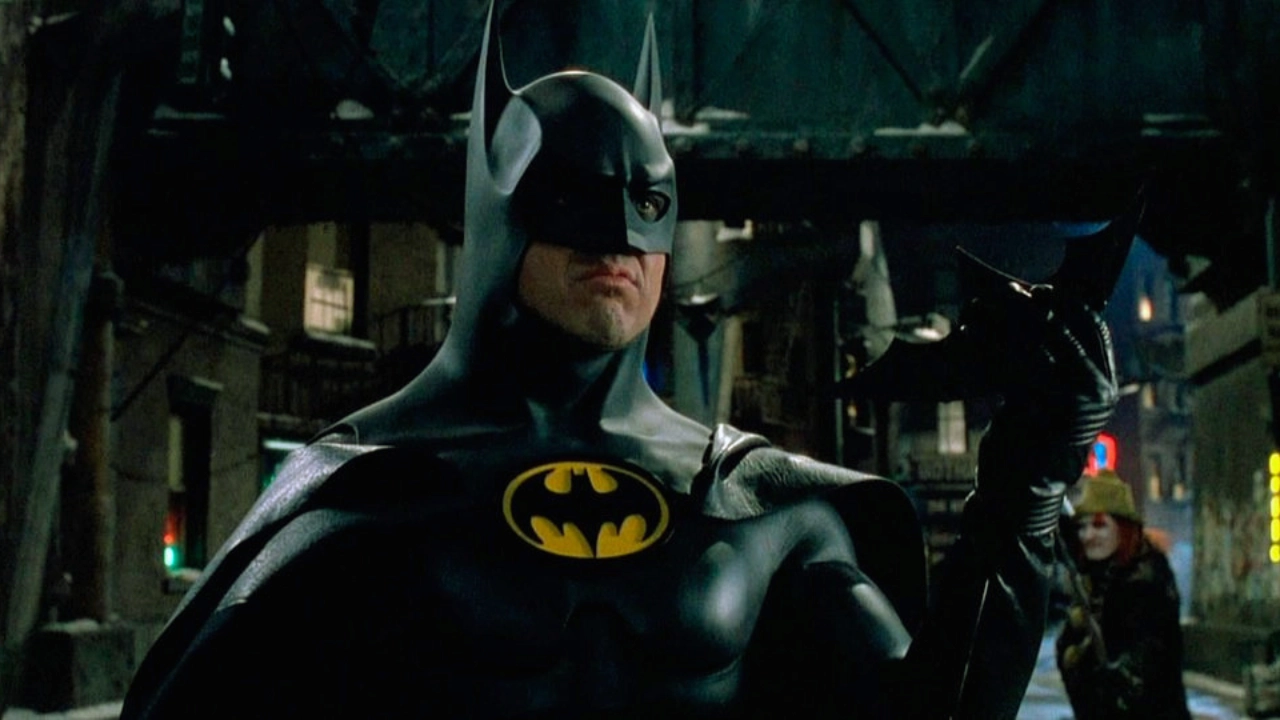
Bette Davis Reportedly Declared Her Era ‘Over’ After Seeing Michael Keaton as Batman: ‘I’ve Come Here to Pass the Torch’
A long-circulating Hollywood anecdote about legendary actress Bette Davis has resurfaced online, describing how the two-time Academy Award winner allegedly knew her era in American cinema was ending after seeing the colossal production of Tim Burton’s 1989 “Batman,” starring Michael Keaton.
According to the popular story, Davis, then in her early 80s and in poor health, went on set or saw elements of the blockbuster production and told those around her her Hollywood days were over. “I’ve come here to pass the torch,” she said reportedly.
An old Hollywood story resurfaced: when Bette Davis saw the scale of 1989’s “Batman,” starring Michael Keaton, she said her time in Hollywood was “over” and that “I’ve come here to pass the torch.” Davis died later that year, months after the film’s release.
Key Details
- What happened: One reported anecdote is that Bette Davis responded to the 1989 Batman production by declaring that her Hollywood era was over.
- Who’s involved: Bette Davis (1908-1989), Michael Keaton, and the making of Tim Burton’s ‘Batman’.
- Where: Los Angeles, California, while filming or promoting “Batman” (1989).
- When: Around 1988-1989, Davis’ last year.
- Latest development: The anecdote has been making rounds again on social media and entertainment news portals.
- What’s next: There’s been no new primary-source verification of the exact quote; the story remains an attributed Hollywood anecdote.
The Anecdote and Its Context
This story has been told in many forms across entertainment media and social platforms for years, and it revolves around a symbolic transition moment in Hollywood history. According to the account, Davis—whose career defined the studio-era golden age of American film—faced the enormous scale of the “Batman” production and realized the industry she had ruled for decades had changed forever.
Tim Burton’s 1989 movie “Batman,n” starring Michael Keaton as Bruce Wayne,e was a watershed moment in blockbuster filmmaking. The film’s huge merchandising drive, its elaborate set construction at Pinewood Studios in England, and its unprecedented cultural saturation were a new model of Hollywood spectacle, a stark contrast to the character-driven studio pictures in which Davis had starred in the 1930s, 1940s and 1950s. The reported quote “I’ve come here to pass the torch” frames Davis’s reaction not as bitterness but as a clear-eyed recognition of generational change.
What Is Confirmed and What Remains Anecdotal
- Bette Davis was alive when “Batman” was made and released (1989). She died on October 6, 1989, in Neuilly-sur-Seine, France, about three and a half months after the film opened in theaters on June 23.
- Davis was in failing health in her last years. In 1983, she had a mastectomy and shortly after experienced a stroke that resulted in the right side of her face being partially paralyzed and affected her speech.
- The 1989 film, which starred Michael Keaton as Batman/Bruce Wayne, became the year’s top-grossing film and a cultural phenomenon.
- Davis was active for more than five decades, from the early 1930s to the late 1980s.
- Accounts vary on the exact nature of Davis’s alleged brush with the “Batman” production — whether she visited a set, saw the Batmobile,e or viewed promotional footage.
- The exact wording of the “pass the torch” quote has not been traced to any one definitive primary source, such as a contemporaneous interview, published memoir, or verified eyewitness account.
- It is unclear whether the anecdote came from a crew member, fellow actor, biographer, or journalist, and different versions of the story have been told over the years.
Bette Davis’s Final Years
By the time “Batman” opened in theaters during the summer of 1989, Davis was 81 and suffering from serious health issues. During the 1980s, she continued to work sporadically in film and television, driven by a well-known refusal to retire, despite her physical limitations.
Davis was one of Hollywood’s most powerful and revered actresses. She won the Academy Award for Best Actress twice, for “Dangerous” (1935) and “Jezebel” (1938), and received eight more nominations over her career. She remains a landmark of American cinema, with roles in films like All About Eve (1950), What Ever Happened to Baby Jane? (1962) and Now, Voyager (1942).
Her passing in October 1989, just months after “Batman” became a worldwide phenomenon, gave the anecdote about her sensing the end of an era a bittersweet quality.
Why It Matters
It resonates because it’s a true inflection point in Hollywood history. The 1989 “Batman” is among the films film historians cite as helping secure the modern superhero blockbuster as Hollywood’s dominant commercial model. This trend has only gained momentum in the decades since.
For Davis, who had built his career in the era of star-driven dramas and studio contract players, “Batman” was a different kind of filmmaking altogether. Whether accurate or not, the anecdote symbolizes the broader transition from classic Hollywood to the franchise-driven blockbuster era.
The story has gained new momentum, in part, because of ongoing cultural conversations about where cinema is going, the dominance of superhero movies, and the lasting influence of classic Hollywood stars.
FAQ
Did Bette Davis really go to the set of Batman (1989)?
No definitive record exists of the exact circumstances of Davis’s alleged encounter with the production of “Batman.” Different versions of the story disagree on whether she attended a set, observed production elements, or viewed promotional material. The story is an attributed Hollywood anecdote without a confirmed primary source.
When did Bette Davis pass away?
Bette Davis died October 6, 1989, in Neuilly-sur-Seine, France, at age 81. She died about three and a half months after the release of Tim Burton’s Batman on June 23, 1989.
Why is the Bette Davis Batman anecdote significant?
The anecdote marks the shift from the classic Hollywood studio era, in which Davis was a dominant force, to the age of the blockbuster franchise, exemplified by Batman. It feels like a generational recognition from one of cinema’s most iconic figures.

Table of Contents