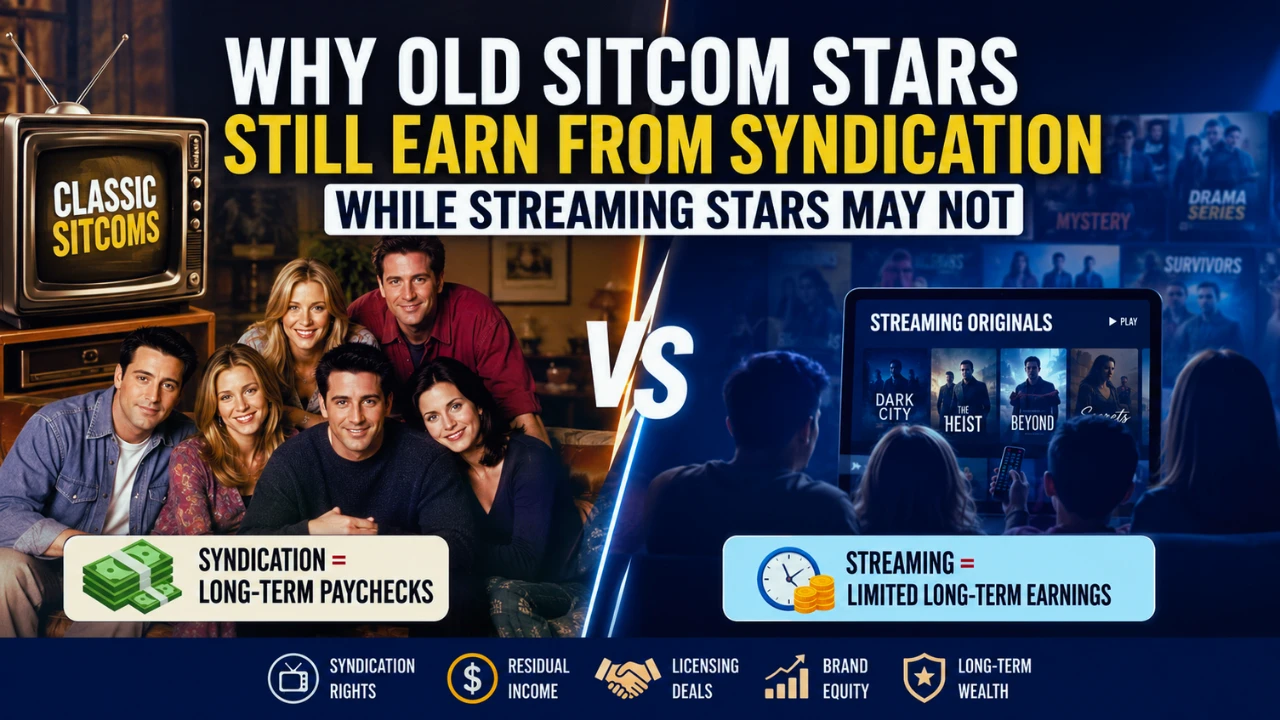
Why Old Sitcom Stars Still Earn From Syndication
A hit television show can make an actor famous overnight, but fame does not always translate into lasting wealth. For decades, stars of popular sitcoms benefited from syndication deals that kept their shows on television and generated ongoing residual income. Today, many actors headline successful streaming series watched by millions, yet their long-term earnings can look very different.
Understanding why old sitcom stars still earn from syndication while streaming stars may not reveals much more than the difference between old and new television. It highlights how ownership, licensing, distribution rights, and entertainment business models influence celebrity wealth long after filming wraps.
Why Old Sitcom Stars Still Earn From Syndication While Streaming Stars May Not?
The entertainment industry has shifted dramatically over the past twenty years. Traditional television relied on advertising, local station licensing, and repeated broadcasts. Streaming platforms, meanwhile, prioritize subscriber growth, exclusive content, and global libraries.
That shift has changed how money flows throughout Hollywood.
Actors who appeared in successful network sitcoms often benefited from contracts negotiated during an era when reruns represented a major revenue source. Streaming originals typically operate under different licensing models, meaning long-term payouts may be smaller, less predictable, or structured differently.
The result is a growing divide between two generations of television stars.
Why This Celebrity Wealth Trend Matters Now?
The conversation around celebrity wealth has expanded beyond salaries and box office earnings.
Today’s audiences are increasingly curious about how entertainers build lasting fortunes through:
- Residual income
- Royalties
- Ownership deals
- Licensing agreements
- Brand equity
- Business ventures
- Intellectual property
The 2023 Hollywood labor disputes also brought renewed attention to streaming compensation. Writers and actors argued that streaming success often does not generate the same long-term financial rewards that network television once provided.
As more viewers consume entertainment exclusively through streaming services, understanding these changing revenue models has become essential for anyone interested in Hollywood money.
The Business Model Behind the Money
Traditional television and streaming platforms generate revenue in very different ways.
A successful network sitcom might first air weekly before entering syndication after producing enough episodes, often around 100. Television stations across the country then license those episodes, creating repeated revenue streams for studios and, depending on contracts, residual payments for actors, writers, and directors.
Streaming services generally purchase or produce content to keep it available on their own platforms instead of repeatedly licensing it to hundreds of broadcasters.
That difference changes how money is distributed.
Salary Versus Ownership
An actor’s salary pays for performing in a project.
Ownership creates ongoing value.
For example:
- A fixed salary ends after production.
- Residuals compensate creators for additional uses of their work.
- Equity deals allow participants to benefit if a business grows.
- Intellectual property ownership can generate income for decades.
Many classic television contracts included residual structures tied to reruns. Streaming contracts have evolved, but the economics remain different because content is not repeatedly sold to local television stations in the same way.
Brand Equity and Audience Trust
A successful sitcom also creates something less tangible but equally valuable.
It builds brand equity.
Actors associated with beloved shows often enjoy lasting recognition that leads to:
- Endorsement deals
- Convention appearances
- Podcast opportunities
- Merchandise licensing
- Book publishing
- Production partnerships
Even when residual payments decline over time, the cultural impact of a long-running sitcom can continue opening business opportunities.
Why Traditional Net Worth Estimates Often Miss the Full Picture?
Celebrity net worth headlines rarely capture the complete financial picture.
Public estimates usually cannot account for:
- Private investments
- Confidential licensing agreements
- Undisclosed residual income
- Real estate holdings
- Taxes
- Management commissions
- Legal expenses
- Business liabilities
Similarly, two actors earning identical salaries may accumulate very different levels of long-term wealth depending on ownership rights, investment decisions, and intellectual property participation.
Reported net worth figures should therefore be viewed as estimates rather than verified financial statements.
ThatShowsw How This Works
Several classic sitcoms illustrate the power of syndication.
Shows such as Friends, Seinfeld, and The Big Bang Theory became global syndication successes, remaining popular years after their original broadcasts. Public reporting over many years has documented how syndication generated substantial revenue for studios, with certain lead actors continuing to receive residual payments based on their negotiated agreements.
By comparison, streaming hits like Stranger Things, Wednesday, or Bridgerton have attracted enormous audiences. Still, their long-term compensation structures are typically governed by modern streaming contracts rather than traditional rerun economics.
That does not mean streaming actors earn less overall. High-profile streaming productions can offer significant upfront salaries, bonuses, and career opportunities. However, the recurring income model often differs from classic television syndication.
| Wealth Driver | How It Works | Why It Matters |
|---|---|---|
| Salary | Upfront payment for acting work | Immediate income |
| Residuals | Payments when content is reused under qualifying agreements | Can provide long-term earnings |
| Syndication | Television stations license reruns | Creates recurring revenue for rights holders and eligible talent |
| Licensing | Use of intellectual property or celebrity image | Expands income beyond acting |
| Equity Deals | Ownership stake in a business | Potential long-term wealth creation |
| Brand Deals | Paid endorsements and partnerships | Converts fame into commercial value |
| Intellectual Property | Ownership of creative assets | Can generate income across multiple platforms |
The Risks Behind Celebrity Business Ventures
Long-term wealth is never guaranteed.
Even successful actors face financial risks when expanding beyond entertainment.
Some common challenges include:
- Investing in businesses with weak market demand
- Overextending personal brands
- Poor licensing partnerships
- Changing consumer preferences
- Reputation damage
- Declining audience interest
- Unsuccessful product launches
Similarly, streaming success can fade quickly if a platform cancels a series after one or two seasons, limiting opportunities for future residual income or merchandise growth.
Building sustainable celebrity wealth requires careful business strategy alongside public popularity.
What This Reveals About Modern Celebrity Wealth?
Hollywood’s financial landscape has become more complex than ever.
Today’s biggest stars increasingly diversify through production companies, fashion brands, beauty businesses, technology investments, podcasts, publishing, and licensing agreements.
Rather than relying solely on acting salaries, many seek ownership wherever possible.
Meanwhile, the debate over streaming compensation continues as studios, talent unions, and platforms adapt to changing viewing habits.
The broader lesson is clear. Long-term wealth often comes from controlling valuable assets rather than simply earning high paychecks. Ownership, intellectual property, distribution rights, and strong brand equity frequently create more durable financial opportunities than one-time salaries alone.
Conclusion
The reason old sitcom stars still earn from syndication while streaming stars may not comes down to how entertainment revenue is generated and shared. Traditional television rewarded repeated licensing through reruns, creating ongoing residual income for many performers. Streaming has introduced new opportunities but also different compensation structures that do not always mirror the economics of syndication.
As Hollywood continues to evolve, ownership, intellectual property, and strategic business decisions are becoming just as important as starring in a hit show. For anyone interested in celebrity wealth and the entertainment business, understanding these behind-the-scenes financial models offers a much clearer picture than headline salary figures alone.
FAQs
Why do old sitcom stars still receive syndication income?
Many classic sitcom contracts included residual payments tied to syndicated reruns. When television stations continue licensing those shows, eligible actors may receive ongoing payments based on their agreements.
Why don’t all streaming actors receive similar residuals?
Streaming services generally operate under different licensing and distribution models than traditional broadcast television. Compensation often depends on contract terms and applicable union agreements.
Are syndication payments the same as royalties?
Not exactly. Syndication payments often fall under residual agreements for television reuse, while royalties usually refer to payments tied to intellectual property such as music, publishing, or licensing.
Does appearing on a hit streaming show guarantee long-term wealth?
No. Long-term wealth depends on many factors, including salary, ownership interests, business ventures, endorsements, investments, and contract structure.
Why are celebrity net worth estimates often inaccurate?
Most estimates rely on publicly available information. They usually cannot include confidential contracts, private investments, taxes, liabilities, or undisclosed business arrangements.
Want to learn how celebrities really build lasting fortunes? Explore more of our entertainment business, celebrity wealth, and Hollywood money breakdowns for deeper insights into the financial side of fame.
Table of Contents