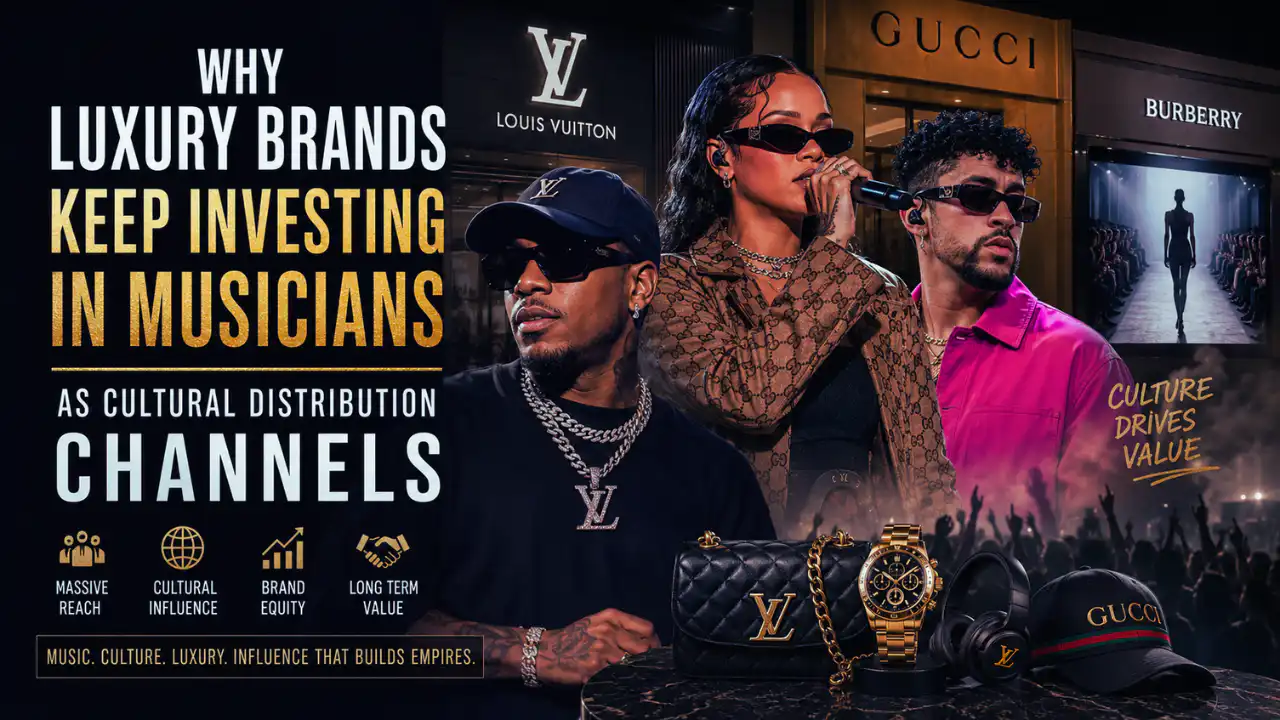
Luxury Brands Investing in Musicians Explained
A luxury handbag cannot trend on TikTok by itself. A £10,000 watch does not suddenly become desirable because of a billboard in Paris.
Luxury brands have realized that culture moves through people, and few people move culture faster than musicians.
That is why Louis Vuitton works with Pharrell Williams, why Gucci collaborates with artists like Bad Bunny, and why brands from Burberry to Balmain continue to court musicians across K-pop, Afrobeats, hip-hop, and Latin music. These artists are no longer just ambassadors. They have become global distribution networks for attention.
The rise of luxury brands investing in musicians reflects a broader shift in entertainment business strategy. Brands are buying access to communities, credibility, and cultural relevance in a world where influence travels faster than traditional advertising ever could.
Why This Celebrity Wealth Trend Matters Now?
For decades, luxury marketing revolved around exclusivity. Today, exclusivity alone is not enough.
Luxury houses face slowing growth in some markets and increasing competition for younger consumers. Gen Z and younger millennials often discover brands through social media, streaming platforms, concerts, and fan communities rather than fashion magazines.
Musicians sit at the center of that ecosystem.
A single artist can reach audiences across Spotify, YouTube, Instagram, live tours, documentaries, and merchandise drops. Luxury companies understand that they are not merely hiring talent. They are accessing an existing distribution system built on trust and fandom.
K-pop provides one of the clearest examples. Luxury houses have increasingly partnered with globally recognized Korean artists because the Hallyu wave has become a major cultural export with worldwide influence.
Similarly, the growth of Latin music and Afrobeats has created new opportunities for brands seeking relevance in emerging consumer markets. Publicly available industry data shows strong growth across both genres in recent years.
The Business Model Behind the Money
Luxury companies rarely expect a musician partnership to generate immediate sales.
Instead, they measure something more valuable: cultural positioning.
An artist wearing a luxury label on tour, appearing in campaigns, or attending runway shows creates repeated exposure across multiple channels. The goal is to remain aspirational until consumers eventually enter higher-earning years.
Salary Versus Ownership
Not every musician receives the same type of deal.
Some partnerships involve:
- Traditional endorsement fees
- Multi-year ambassador agreements
- Licensing arrangements
- Creative director roles
- Equity opportunities
- Revenue-sharing collaborations
Pharrell Williams’ appointment at Louis Vuitton illustrates how luxury brands increasingly blur the line between celebrity and executive creative leadership. Likewise, LVMH’s investment in Virgil Abloh’s Off-White demonstrated how cultural influence itself can become a valuable business asset.
A one-time campaign payment creates immediate income. Ownership and long-term partnerships can create wealth that extends well beyond an artist’s music career.
Brand Equity and Audience Trust
Luxury brands are essentially renting credibility.
Fans may never meet their favorite musician, but they often trust their taste in fashion, lifestyle, and culture. That trust has economic value.
When Bad Bunny appears in a luxury campaign, or Tyla attends a major fashion event, brands gain access to audiences that traditional advertising struggles to reach. Industry observers frequently describe these relationships as investments in cultural capital rather than direct sales initiatives.
In many cases, musicians become extensions of the brand’s identity.
| Wealth Driver | How It Works | Why It Matters |
|---|---|---|
| Endorsement Deals | Paid partnerships with brands | Creates immediate income |
| Licensing Deals | Use of name, likeness, or music | Generates additional revenue streams |
| Equity Deals | Ownership in ventures or collaborations | Offers long-term upside |
| Royalties | Payments from music usage | Creates recurring income |
| Creative Roles | Artistic leadership positions | Expands influence beyond entertainment |
| Brand Equity | Cultural credibility and audience trust | Increases long-term earning potential |
Why Traditional Net Worth Estimates Often Miss the Full Picture?
Celebrity net worth remains one of the internet’s favorite topics.
The problem is that much of modern celebrity wealth is difficult to verify.
Public estimates rarely account for:
- Private investments
- Undisclosed licensing agreements
- Equity stakes
- Future royalty streams
- Intellectual property holdings
- Management and legal costs
- Taxes and debt obligations
A musician’s reported earnings from touring may represent only one part of their financial picture.
An artist with a lower annual income but substantial ownership deals may ultimately accumulate more wealth than someone earning larger upfront payments.
That is particularly true as entertainment increasingly overlaps with fashion, technology, and private investment.
That Shows How This Works
Several high-profile partnerships illustrate the trend:
- Louis Vuitton appointed Pharrell Williams as Men’s Creative Director.
- Gucci has collaborated with Bad Bunny and Kendall Jenner on campaigns.
- Burberry previously featured Burna Boy in major marketing initiatives.
- Louis Vuitton has embraced artists including BTS members and other K-pop figures.
- Audemars Piguet has developed long-term music initiatives involving artists such as Mark Ronson and RAYE.
These examples reveal a common strategy.
Luxury brands increasingly act less like fashion companies and more like media businesses. They invest in individuals who can distribute stories, aesthetics, and aspirations across borders.
The product remains important, but culture is increasingly the delivery mechanism.
The Risks Behind Celebrity Business Ventures
Not every partnership succeeds.
Luxury brands face several risks when tying themselves to public figures:
- Reputation damage from controversies
- Audience fatigue
- Weak alignment between artist and brand
- Poor campaign execution
- Shifting cultural trends
- Overexposure
The Adidas and Kanye West situation remains a reminder of how quickly celebrity partnerships can become liabilities. Meanwhile, some brands have turned toward musician estates because they offer cultural recognition with fewer reputational uncertainties.
Artists face risks as well.
Too many partnerships can dilute authenticity. Fans tend to recognize when a collaboration feels transactional rather than organic.
The most successful partnerships tend to share a common trait: the relationship feels believable.
What This Reveals About Modern Celebrity Wealth?
Celebrity wealth used to revolve around album sales, movie salaries, and concert tickets.
That model is changing.
Today’s entertainment economy rewards ownership, intellectual property, and audience access. A musician’s greatest asset may no longer be their latest single. It may be the community they have spent years building.
Luxury companies understand this better than almost anyone.
They are investing in musicians because artists have become cultural infrastructure. They connect brands with consumers in ways that traditional advertising cannot replicate.
For readers interested in celebrity wealth, that distinction matters.
The next generation of entertainment fortunes will likely be built not just through talent, but through leverage. Ownership, licensing, partnerships, and cultural influence increasingly determine who creates lasting wealth.
Conclusion
Luxury brands are not simply buying endorsements. They are investing in distribution, trust, and cultural relevance.
Musicians offer something increasingly scarce in the modern economy: attention that people willingly seek out rather than avoid.
As entertainment, fashion, and business continue to merge, the line between artist, entrepreneur, and media company will become even harder to distinguish. The biggest fortunes in celebrity culture may ultimately belong to those who understand that influence itself has become an asset class.
FAQs
Why do luxury brands invest in musicians?
Luxury brands invest in musicians because artists provide access to loyal audiences, cultural relevance, and global visibility across multiple platforms.
How do musicians make money from luxury partnerships?
They can earn through endorsement fees, licensing deals, creative roles, royalties, and sometimes equity or ownership arrangements.
What is a cultural distribution channel?
A cultural distribution channel refers to a person or platform that helps ideas, trends, and products spread across audiences. Musicians are among the most influential examples today.
Why are celebrity net worth estimates often inaccurate?
Many estimates do not include private investments, royalties, licensing agreements, taxes, or undisclosed ownership interests.
Do luxury partnerships guarantee financial success for musicians?
No. Successful partnerships depend on authenticity, audience alignment, and long-term brand strategy. Poorly matched collaborations can damage both parties.
Interested in the business behind fame? Explore more celebrity wealth breakdowns, entertainment business analysis, and stories about how modern stars build fortunes beyond the spotlight.
Table of Contents