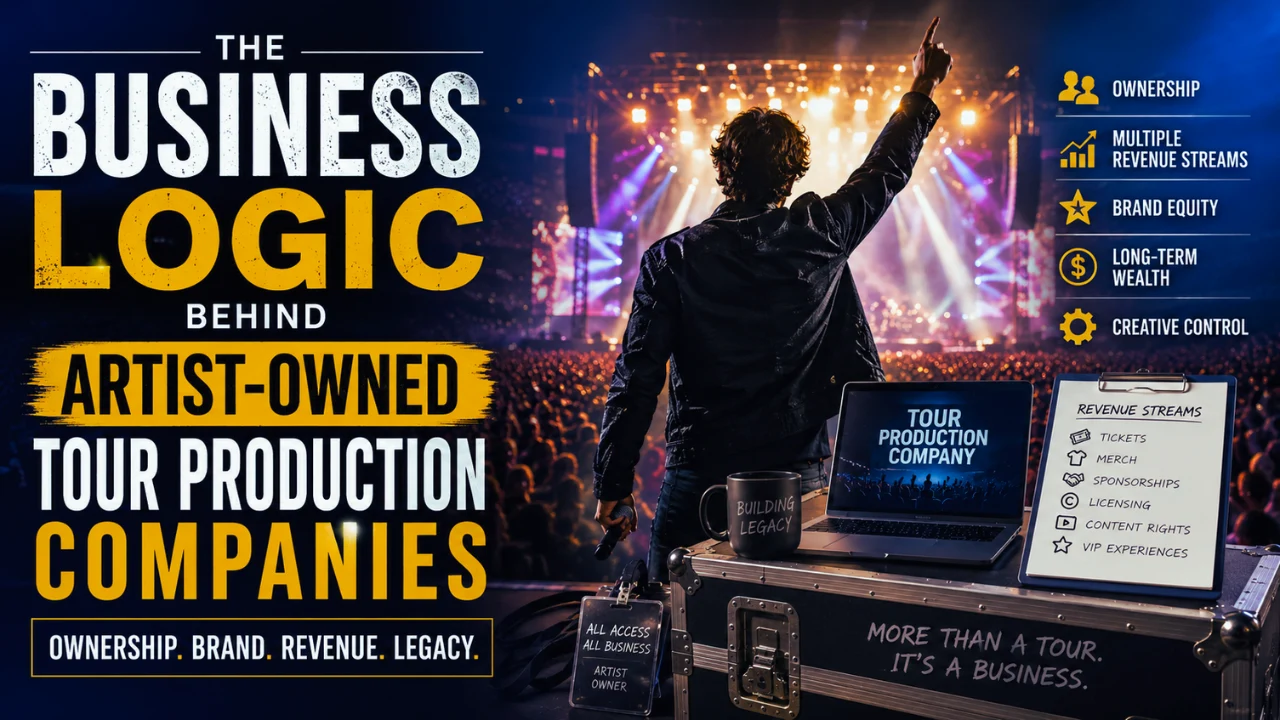
Artist-Owned Tour Production Companies Explained
For decades, touring was treated as a necessary part of being a successful musician. Artists performed, promoters handled logistics, and everyone took their share of the proceeds. Today, that equation is changing.
The rise of artist-owned tour production companies reflects a broader shift in entertainment. Musicians are no longer thinking only about ticket sales. They are thinking about ownership, intellectual property, licensing opportunities, and how a concert can become a media asset with value long after the final encore.
From global stadium tours to filmed concert experiences and branded merchandise, artists are increasingly building businesses around live events rather than simply participating in them. It is a trend that says as much about celebrity entrepreneurship as it does about modern music.
Why This Celebrity Wealth Trend Matters Now?
Live entertainment has become one of the most valuable segments of the music industry.
Streaming changed how artists earn money. While platforms offer massive reach, per-stream payouts remain relatively modest for many performers. Touring, meanwhile, remains one of the few places where artists can directly monetize audience demand at scale.
That helps explain why ownership matters more than ever.
An artist who controls part of a tour production company may influence everything from stage design and merchandising to documentary rights and future licensing opportunities. A successful tour can generate multiple revenue streams beyond ticket sales.
The timing also makes sense. Concert films have become major releases, social media turns performances into viral moments, and brands increasingly want to align themselves with live cultural events.
Celebrity wealth is increasingly tied to assets rather than appearances. Touring is becoming one of those assets.
The Business Model Behind the Money
At its core, an artist-owned tour production company functions like a hybrid business.
It oversees creative development, production planning, vendor relationships, staffing, branding, and in some cases, media exploitation rights associated with a tour. While many artists still partner with established promoters such as Live Nation, ownership structures can give them greater participation in the event’s economics.
Revenue may come from:
- Tour management fees
- Production services
- Merchandise sales
- Sponsorship agreements
- Licensing deals
- Concert film rights
- Streaming rights
- VIP experiences
- Future use of tour-related intellectual property
Not every artist owns every piece of the puzzle. Deal structures vary considerably, and many arrangements remain private.
Salary Versus Ownership
There is a significant difference between getting paid to perform and owning part of the business behind the performance.
A touring artist receives compensation from ticket revenue, often subject to expenses and contractual arrangements. Ownership creates another layer of potential value.
An artist who owns a production entity may benefit if that company expands into future tours, consulting, branded experiences, or media projects.
That distinction helps explain why celebrity entrepreneurship has become a major part of the entertainment business. Ownership creates opportunities for residual income long after a tour concludes.
Brand Equity and Audience Trust
Artists are not just performers. They are brands.
Fans do not buy tickets solely for songs. They buy experiences associated with a name, reputation, and cultural moment.
Brand equity influences:
- Sponsorship demand
- Merchandise sales
- Premium ticket pricing
- Licensing opportunities
- Media partnerships
- Future business ventures
When artists control production, they can ensure every element aligns with their public image.
A carefully designed tour can reinforce a musician’s identity in ways that extend into fashion collaborations, endorsement deals, and private investments. Audience trust becomes a financial asset.
Helpful Table
| Wealth Driver | How It Works | Why It Matters |
|---|---|---|
| Salary | Payment for performing | Creates immediate income |
| Royalties | Ongoing payments from music usage | Builds long-term earnings |
| Equity | Ownership in businesses | Can appreciate over time |
| Licensing | Permission to use IP or branding | Generates additional revenue |
| Residual Income | Earnings from reused content | Extends profitability |
| Brand Deals | Corporate partnerships | Converts fame into business value |
| Tour Production Ownership | Control of live event operations | Creates multiple monetization paths |
Why Traditional Net Worth Estimates Often Miss the Full Picture?
Celebrity net worth figures are popular, but they are rarely complete.
Public estimates often rely on visible income sources such as album sales, film salaries, or property holdings. They typically cannot account for private equity stakes, confidential licensing agreements, debt obligations, tax structures, or undisclosed business ownership.
Artist-owned tour production companies add another layer of complexity.
Publicly available data may reveal that an artist controls a company, but it rarely discloses margins, ownership percentages, or future contractual rights. A tour could also generate value through content licensing years later.
Industry observers often note that celebrity wealth is increasingly difficult to measure because so much of it exists in private business arrangements.
The headline number may tell part of the story. Ownership tells the rest.
That Shows How This Works
Several artists have demonstrated the power of treating touring as a business asset.
Taylor Swift’s Eras Tour highlighted how a live event can evolve into a broader commercial ecosystem. Beyond ticket sales, the tour generated merchandise demand, extensive media coverage, and a successful theatrical concert film.
Beyoncé has similarly embraced ownership across various creative ventures. Her Renaissance World Tour was accompanied by a concert film that expanded the project’s commercial life.
Meanwhile, artists like Jay-Z have spent years building businesses around entertainment infrastructure, illustrating how control over distribution and production can create lasting value.
These examples do not necessarily indicate full ownership of every touring entity involved. However, they demonstrate an industry-wide shift toward greater creative and financial control.
The Risks Behind Celebrity Business Ventures
Ownership comes with responsibilities.
Running or investing in a tour production company means dealing with operational challenges that audiences rarely see.
Common risks include:
- Rising production costs
- Supply chain disruptions
- Insurance expenses
- Weather-related cancellations
- Weak ticket demand
- Reputational damage
- Sponsor withdrawals
- Legal and licensing disputes
- Audience fatigue
A large-scale tour can involve hundreds of employees and millions in expenses before opening night.
Celebrity brands can also lose momentum. Public perception changes quickly, and a poorly received album or controversy can affect ticket sales and partnership opportunities.
Ownership magnifies both upside and downside.
What This Reveals About Modern Celebrity Wealth?
Modern celebrity wealth looks very different from the entertainment economy of previous generations.
Artists once relied heavily on record sales and performance fees. Today, wealth is increasingly tied to ownership deals, intellectual property, business ventures, and strategic control over distribution.
Artist-owned tour production companies fit neatly into that larger story.
They represent a move away from simply earning money toward building assets that can generate value across multiple channels. A successful tour can lead to streaming rights, documentary projects, licensing deals, and new business relationships.
The creator economy has accelerated this shift. Audiences expect direct engagement, and celebrities increasingly want a larger share of the value they create.
That does not mean every artist should own a production company. Scale, management expertise, and financial resources still matter.
But the trend offers a clear lesson: in modern entertainment, ownership often outlasts fame.
Conclusion
The business logic behind artist-owned tour production companies is ultimately about control.
Artists are recognizing that live performances are not just promotional activities. They are valuable intellectual property assets with the potential to generate income across multiple platforms and over many years.
As entertainment continues to blur the lines between music, film, branding, and commerce, ownership is becoming one of the defining characteristics of modern celebrity wealth. The artists who understand that distinction may be building something more durable than a successful tour. They may be building an entertainment enterprise.
FAQs
1. What are artist-owned tour production companies?
They are businesses created or controlled by artists to manage aspects of live tours, including production, branding, logistics, and related revenue opportunities.
2. Why do artists start their own tour production companies?
Many artists seek greater creative control, ownership of intellectual property, and additional revenue streams beyond performance fees.
3. How do celebrities make money from touring besides ticket sales?
Artists may earn from merchandise, sponsorships, licensing deals, VIP packages, streaming rights, and concert film distribution.
4. Why are celebrity net worth estimates often inaccurate?
Most estimates rely on public information and cannot fully account for private investments, equity deals, taxes, liabilities, or confidential business arrangements.
5. Can tour production companies become long-term businesses?
Yes. Some production entities expand into consulting, media production, branded events, and future entertainment ventures, creating ongoing income opportunities.
Interested in the economics of fame? Explore more celebrity wealth breakdowns, entertainment business analysis, and modern net worth stories to see how ownership is reshaping Hollywood money.
Table of Contents