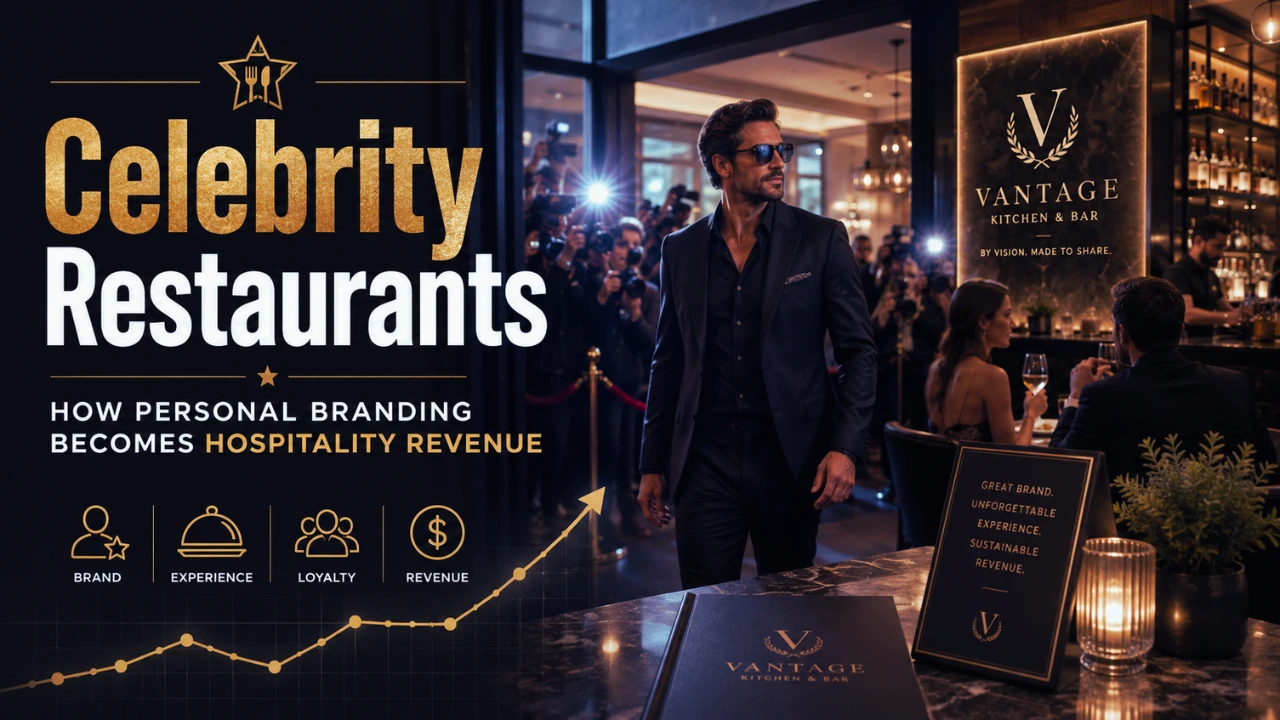
How Celebrity Restaurants Turn Personal Brand Into Revenue
This article explains how celebrity restaurants convert fame, personal branding, and audience trust into hospitality revenue. It breaks down ownership deals, licensing, brand equity, restaurant margins, fan-driven demand, and why celebrity net worth estimates often miss the value of private business ventures.
A famous name can get people through the door once. A strong restaurant business has to make them come back.
That is the real story behind celebrity restaurants. They are not just vanity projects with a star’s name on the sign. At their best, they turn personal branding into hospitality revenue through food, location strategy, licensing, equity, merchandise, media exposure, and long-term brand equity.
The trend matters because modern celebrity wealth is no longer built only from movie salaries, music royalties, sports contracts, streaming rights, or endorsement deals. More celebrities now want ownership. Restaurants offer something powerful: a physical experience fans can buy into, photograph, revisit, and associate with a lifestyle.
But the business is risky. Hospitality operates on tight margins, faces high labor costs, rent pressure, food inflation, and brutal competition. The National Restaurant Association projected U.S. restaurant industry sales of $1.55 trillion in 2026, but growth does not erase the day-to-day difficulty of running a profitable operation.
Why This Celebrity Wealth Trend Matters Now?
Celebrity brands used to rely mostly on exposure. A star appeared in a commercial, endorsed a product, collected a fee, and moved on. That model still exists, but it is no longer the whole picture.
The creator economy changed how fame works. Audiences want access, lifestyle, identity, and shareable moments. A restaurant can offer all of that in one place. Fans are not only buying dinner. They are buying proximity to a celebrity story.
That is why hospitality has become attractive for actors, musicians, athletes, chefs, and influencers. A restaurant can work as a revenue stream, a marketing platform, a real estate anchor, and a brand extension. It can also strengthen celebrity wealth by turning cultural attention into something that continues after a movie release, album cycle, or sports season ends.
Still, fame is only the first layer. If the food, service, operations, and financial structure are weak, the celebrity name cannot save the business forever.
The Business Model Behind the Money
Celebrity restaurants can make money in several ways. The most obvious is food and beverage sales. Customers pay for meals, drinks, private events, delivery, catering, and sometimes merchandise.
But the deeper money often sits in the structure of the deal.
Some celebrities are founders. Some are investors. Some license their name. Some are paid endorsers. Some own franchise rights in certain markets. Others may have equity in a parent company, hospitality group, or related brand.
That difference matters.
A celebrity who appears in advertising may earn a campaign fee. A celebrity who owns equity may benefit if the company expands, sells, franchises, or attracts outside investment. A celebrity who licenses a name may receive payment without managing daily operations. These are different kinds of income, and they should not be treated as the same thing.
Salary Versus Ownership
Salary is immediate income. Ownership is potential future upside.
For example, a celebrity might receive a guaranteed fee to promote a restaurant concept. That is useful, but it usually stops when the contract ends. Equity is different. If the business grows, the ownership stake may become more valuable. If the business fails, that stake may be worth little or nothing.
This is why celebrity entrepreneurship gets so much attention in Hollywood money coverage. The real wealth shift happens when stars move from paid promotion into ownership deals, licensing deals, franchise partnerships, or private investments.
Brand Equity and Audience Trust
Brand equity is the value attached to a name, image, reputation, and emotional connection.
In celebrity restaurants, brand equity can reduce customer acquisition costs. A new restaurant normally has to spend heavily to get noticed. A celebrity-backed concept already has media interest, social visibility, and built-in curiosity.
Wahlburgers is a clear example of family branding in restaurant form. The official brand story presents the chain as a family restaurant founded by chef Paul Wahlberg with brothers Mark and Donnie, and its timeline highlights how the restaurant concept expanded into television, franchising, and merchandise.
That does not mean every location succeeds. A recent Wahlburgers closure in Illinois was publicly tied to pressures, including higher food and fuel costs and lease challenges, which shows how even famous restaurant brands face the normal economics of hospitality.
Helpful Table
| Wealth Driver | How It Works | Why It Matters |
|---|---|---|
| Food and beverage sales | Revenue from meals, drinks, events, delivery, and catering | Creates daily operating income |
| Equity deals | A celebrity owns part of the business or the parent company | Can grow if the company expands or sells |
| Licensing deals | Celebrity name, image, or brand is used for a fee | Allows income without full operational responsibility |
| Franchise rights | Operators pay to use the concept in new markets | Helps scale the brand beyond one location |
| Merchandise | Apparel, sauces, packaged goods, or branded items | Turns restaurant identity into extra revenue |
| Media exposure | TV shows, social media, interviews, and fan content | Lowers marketing costs and builds cultural relevance |
Why Traditional Net Worth Estimates Often Miss the Full Picture?
Celebrity net worth estimates can be useful for broad curiosity, but they are rarely complete financial records.
A public salary is easier to track than a private restaurant stake. Movie pay, sports contracts, and endorsement deals may be reported. But restaurant equity, licensing terms, debt, taxes, investor dilution, management fees, real estate obligations, and operating losses are often private.
That means a celebrity restaurant can be undercounted or overvalued by casual wealth estimates.
A star may look richer because they are attached to a popular restaurant brand, even if they only have a small promotional role. Another celebrity may quietly hold meaningful equity in a hospitality group, but public websites may miss it because the deal terms were never disclosed.
This is why celebrity wealth analysis should separate confirmed income from speculation. Salary, royalties, residual income, endorsement deals, licensing income, and equity ownership are not interchangeable.
Examples That Show How This Works
Nobu is one of the strongest examples of celebrity hospitality done on a luxury scale. Nobu Hotels describes the concept as helmed by chef Nobu Matsuhisa, Robert De Niro, and Meir Teper, demonstrating how culinary credibility, celebrity connection, and hospitality execution can combine to create a global lifestyle brand.
Forbes reported in 2025 that Nobu Hospitality had grown into a portfolio of 46 hotels, 57 restaurants, and 20 residences worldwide. That makes the brand more than a restaurant story. It is also a story about hotels, real estate, and luxury experiences.
Jimmy Buffett’s Margaritaville shows another model. It began as a song and lifestyle identity, then expanded into restaurants, resorts, hotels, cruises, and vacation experiences. The official Margaritaville ecosystem now includes resorts, hotels, all-inclusive properties, cruises, and branded hospitality destinations.
LeBron James and Blaze Pizza illustrate the athlete-investor angle. Forbes described James as an investor, franchisee, and paid endorser of Blaze Pizza, which is a useful example of how celebrity participation can mix capital, promotion, and operating rights.
These examples are not identical. Nobu leans into luxury hospitality. Margaritaville leans into lifestyle licensing. Wahlburgers leans toward family and casual dining. Blaze Pizza shows how an athlete can use fame and business capital in a fast-casual chain. The common thread is that fame becomes more valuable when it is attached to a scalable business model.
The Risks Behind Celebrity Business Ventures
Celebrity restaurants can fail for ordinary reasons.
The menu may not be strong enough. The location may be too expensive. The concept may rely too much on novelty. The operator may expand too quickly. Fans may visit once for a photo and never return. Public image can change. Licensing partners can underperform. Food costs can rise. Labor can become harder to manage.
Planet Hollywood is the classic cautionary tale. The movie-themed restaurant chain had major celebrity backing in the 1990s, but public reports show it later faced financial distress and bankruptcy restructuring. The Los Angeles Times reported in 1999 that the company was preparing a Chapter 11 filing while trying to reduce unprofitable restaurants.
The lesson is simple: celebrity attention can create opening-week demand, but hospitality revenue depends on repeat customers, margins, leases, supply chains, training, and operational discipline.
This is also why social media followers are not guaranteed sales. A celebrity may have millions of fans, but only a small percentage will live near a restaurant, pay premium prices, or return regularly.
What does this reveal about modern celebrity wealth?
Celebrity wealth is becoming less about one paycheck and more about leverage.
A movie role can create fame. Fame can create brand equity. Brand equity can support restaurants, spirits, beauty brands, fashion lines, production companies, podcasts, streaming rights, real estate deals, and licensing deals.
Restaurants are part of that broader shift. They turn a celebrity’s image into a place people can enter. When the business works, it can produce revenue beyond the original career that made the celebrity famous.
But the smartest celebrity-restaurant plays are not built solely on fame. They need serious operators, clear positioning, realistic expansion, quality control, and a reason for customers to return after the novelty fades.
That is the future of celebrity entrepreneurship: not just being famous, but building businesses that can survive when the celebrity is not in the room.
Conclusion
Celebrity restaurants show how personal branding can become hospitality revenue when fame is paired with ownership, licensing, operational skill, and audience trust.
They also reveal why celebrity net worth is harder to measure than it looks. A public paycheck tells only part of the story. The bigger financial picture may include private investments, restaurant equity, brand partnerships, franchise growth, royalties, real estate, and licensing income.
The winners will be the celebrities who treat hospitality as a real business, not a photo opportunity. Fame may open the door, but the restaurant has to earn the second visit.
FAQs
Why do celebrities open restaurants?
Celebrities open restaurants to turn personal branding into revenue, build business ownership, connect with fans, and expand beyond salaries, royalties, residuals, and endorsement deals.
How do celebrity restaurants make money?
They can make money through food and drink sales, events, merchandise, licensing deals, franchise fees, equity growth, delivery, catering, and hospitality partnerships.
Do celebrities always own their restaurants?
No. Some celebrities are owners, while others are investors, endorsers, license partners, franchisees, or minority stakeholders. Exact deal terms are often private.
Why do some celebrity restaurants fail?
They can fail because of high rent, weak operations, poor food quality, overexpansion, rising labor costs, bad timing, licensing problems, or fading public interest.
Are celebrity restaurants included in net worth estimates?
Sometimes, but not always accurately. Private investments, debt, equity stakes, licensing income, and operating costs are often not fully visible in public celebrity net worth estimates.
Explore more entertainment business breakdowns to understand how fame, ownership, licensing, and brand equity shape modern celebrity wealth.
Table of Contents