What impact can winning the first match in the World Cup group stage have on the rest of the tournament for the teams?
The opening match of a World Cup has an aura to it that few other games in football can match. Planning takes months, and time is reduced to 90 minutes. A single goal can defuse a dressing room, a little error can make a campaign feel fragile.
Hence the importance of the first match win impact to the fans, coaches and bettors. While anyone can find the 2026 World Cup results and follow the table changes, one thing is still unclear: does winning first change a team’s tournament, or is it just a beginning?
The answer is it is a tremendous advantage to the team that wins the first game in the group stage, but it does not guarantee victory. One thing is statistically correlated with another and the psychology and tactics tell us why. History has the admonition that champions can falter and outsiders can come to the fore.
In this article, we will look at both the data and the mental swing, tactical consequences and case studies (Argentina 2022, Spain 2010), which illustrate the immense strength and the overall constraints of the opener.
The statistical advantage: How 3 points shape qualification
Historical analysis of World Cup data since 1998 shows that approximately 82-84% of teams that win their opening match advance to the knockout stage. That is 82.1%, near the pre-Qatar 84% trend. Data for the matches, teams that qualified, and their standing in the groups, through 2022, have been used for men’s World Cup calculations.
Only 11 out of 84 teams (13.1%) that lost their first match still advanced to the knockout stage. The first game win is not only a story, but it is also among the easiest to understand football tournament metrics in the group stage.
It’s because of the simplicity. Three points are awarded and when a side gets 2 matches, they typically only need 1 more positive result. A win and a draw can earn four points, which in the past was sufficient to stay alive. In 2026’s format, 12 groups of 4 have 32 knockout spots, which means three points should still hold weight, only the comparisons will have to be adjusted.
The psychology of a winning start: Momentum and morale
A World Cup momentum boost is only just put into effect at the end of the final whistle. The players can smile as they face the media, training is easier, and supporters plan for knockouts rather than crises. Confidence is not a score itself but it affects the choices of passing, intensity of pressing and confidence to try out challenging actions.
The second game is not a salvation but a platform for coaches. A team can play with more freedom as they have a result to play up to. An opening loss, on the other hand, gives rise to an “against the wall” feeling. The next game turns into a mini-final, and each bad pass feels like it weighs more.
The emotional gap is what makes football discussions about momentum and preventing the rot so different in sports psychology. When you win first, you have faith, when you lose first, you have to patch it up.
Strategic freedom vs. Tactical desperation
How a win opens up tactical options
If the coach wins the first game, he has options. However, if it is a stronger second team, it may be okay to play a draw and have a lower risk plan. If the second game is won, too, it’s almost certain they’ll be in, and the third group game might be an opportunity to rest important players, keep an eye on those with a yellow card and deal with injuries.
It also benefits the entire roster. Minutes can be used with substitutes to involve fringe players prior to knockout rounds. Where travel, heat and short turnarounds challenge the recovery, that depth is important.
The scramble following a defeat
Opening loss reverses that. The coach may need to play more of the ball up the front, bring full-backs forward, or use additional attacking players even if the balance is not ideal. Desperation can make a side predictable and easier to counter.
Pressure also increases disciplinary risk. When a team feels like they are losing the tournament, late tackles, dissent and rushed clearances become more common. Tactical urgency doesn’t usually come alone, it also comes with mental errors.
Case studies: When matchday 1 defined a nation’s fate
This is the classic underdog story for Costa Rica in 2014. They started off with a 3-1 victory over Uruguay, followed by Italy and England. That victory was shocking and changed the group. Later, Costa Rica defeated Italy, tied with England, and finished unbeaten on the so-called Group of Death.
The 2014 Spanish campaign reveals the dark side. The defending champions had been rocked in their first game by a 5-1 defeat at the hands of the Netherlands. They were then defeated by Chile and eliminated in the group stage. Their one loss mathematically didn’t rule them out, but it certainly did set a harsh emotional tone.
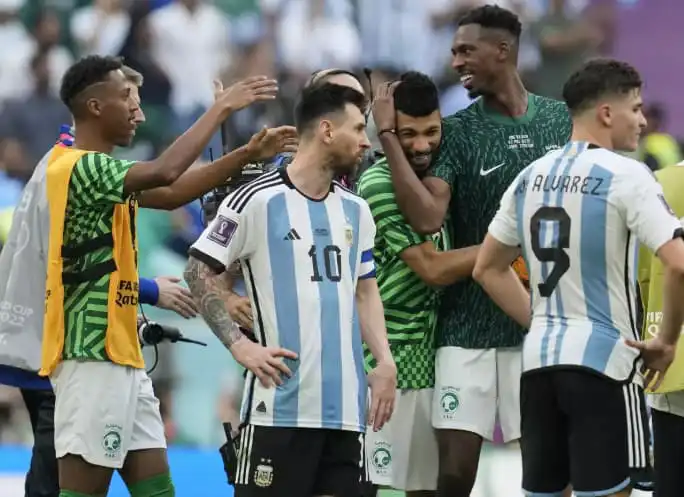
However, two champions reveal that the rule has its exceptions. In their first 2010 match, Spain lost to Switzerland 1-0 but regained control and patience to win the tournament. It is what Argentina did in 2022, when they lost 2-1 to Saudi Arabia and bounced back to take the trophy. Those comebacks illustrate that you can overcome a poor beginning.
Conclusion: A huge advantage, not a golden ticket
Winning the first game is one of the best predictors of qualification from the World Cup group stage. It provides points, belief, tactical flexibility, and a less volatile decision-making process. The first-match win impact is a trend in data that bettors and analysts simply can’t afford to overlook.
Nevertheless, it is not an inevitability. The shock of a bad defeat can be overcome, adapted to and grown, and that’s what Spain 2010, and Argentina 2022, have demonstrated. The opener is a great filter, distinguishing the side that’s ready and confident from the side that’s nervous. The real winners, though, are the ones who can capitalize on a quick win or a late recovery. In fact, the World Cup opening match, and the whole group stage is so interesting because of that uncertainty.

Table of Contents