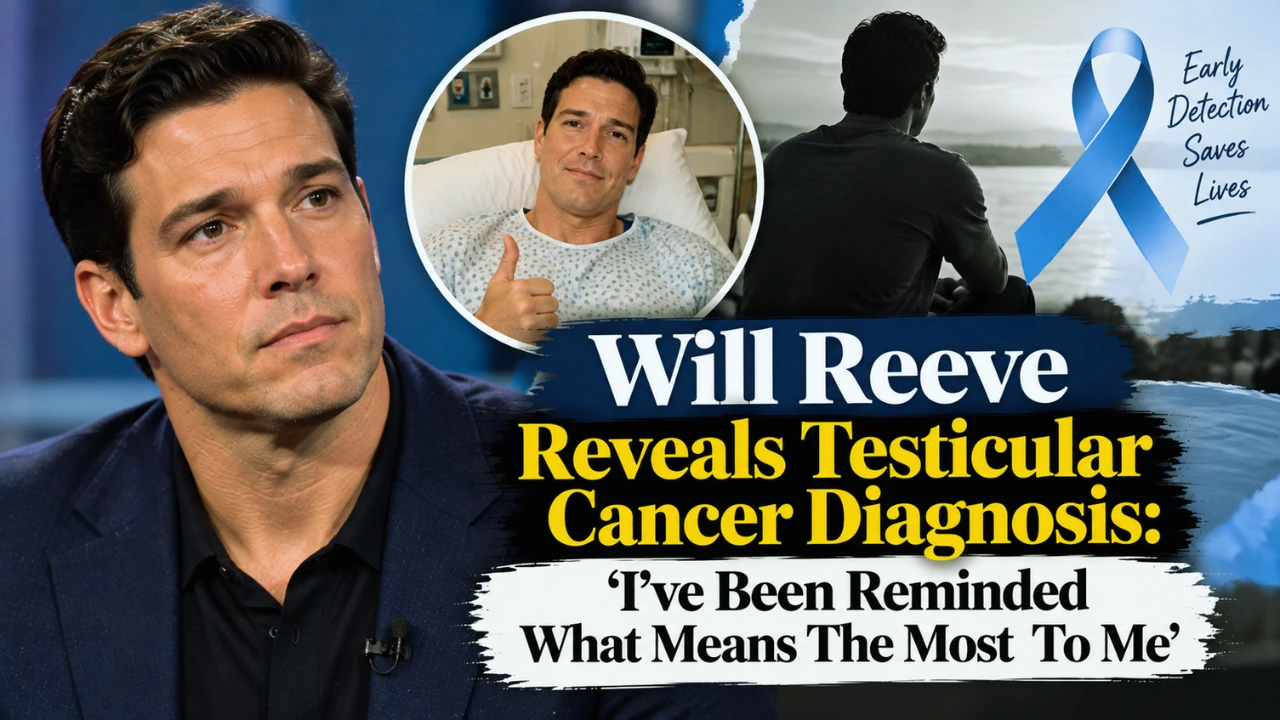
Will Reeve Reveals Testicular Cancer Diagnosis: ‘I’ve Been Reminded What Means The Most To Me’
ABC News correspondent and anchor Will Reeve shared that he was recently diagnosed with testicular cancer. The journalist shared the news during a segment, talking about his successful surgery and recovery and urging men to get regular health screenings.
Reeve, a substitute anchor for ABC World News Tonight and correspondent for Good Morning America, said the diagnosis was a surprise but that the cancer was caught early. He had one of his affected testicles surgically removed and is now monitoring his health with the help of medical professionals.
Will Reeve, who anchors for ABC News, has been diagnosed with testicular cancer. He had surgery to remove the tumor, which was successful, and he is now recovering. Reeve used his platform to raise awareness about the importance of self-exams and early detection, saying he was diagnosed early, and that is why his prognosis is positive.
Key Details
- Who is involved: Will Reeve is an ABC News anchor and the son of the late actor Christopher Reeve.
- What Happened: Diagnosed with testicular cancer and had the affected testicle removed surgically.
- When: The diagnosis and operation took place recently; the public announcement was made in late 2024.
- Status: Recovering from surgery; no additional treatment such as chemotherapy or radiation therapy has been announced as necessary at this time.
- Key Message: Reeve says it’s important for men to get regular check-ups and do self-exams.
What Happened?
And in a recent broadcast, Will Reeve turned to the camera to share his own health journey. He said the abnormality was discovered during a routine physical examination. Follow-up tests confirmed testicular cancer.
“It’s been a reminder of what means the most to me,” Reeve said, reflecting on the experience. The period between the first discovery and the diagnosis confirmation was stressful, he said, and this was a common feeling for patients waiting for biopsy results.
Reeve had an orchiectomy – the surgical removal of one or both testicles – the usual first-line treatment for testicular cancer. “The surgery went well, and he is recovering at home,” he said in a statement.
Why Early Detection Matters
“Testicular cancer is very treatable if it is found early.” The American Cancer Society reports the five-year relative survival rate for localized testicular cancer is nearly 99%. However, many men delay seeing their doctor because of embarrassment or lack of awareness of symptoms.
Reeve’s announcement brings to the surface several major red flags that health groups have urged:
- A lump or swelling in one or both testicles.
- Pain or discomfort in the testicles or scrotum.
- A heavy feeling in the testicles.
“My doctor caught it during a routine check-up,” Reeve said, highlighting the significance of preventive care even for those who feel healthy—a dull ache in the lower abdomen or groin. Do not miss your appointments. “Pay attention to changes in your body.”
Background: The Reeve Family Legacy
Will Reeve is the youngest son of the late actor Christopher Reeve, best known for playing Superman, and Dana Reeve. Christopher Reeve, who became paralyzed after a 1995 horse-riding accident, became a worldwide spokesman for research into spinal cord injury. He died in 2004.
Will Reeve grew up in the public eye and has often spoken about the strength his parents instilled in him. He is continuing a family tradition of using personal struggles to teach and help others by making his cancer diagnosis public. While his father was a proponent for spinal cord injury, Will is now focused on men’s health and oncology awareness.
Will Reeve joined ABC News in 2015 and has become a familiar face on the network, covering major national events and serving as a fill-in anchor for the network’s flagship evening newscast.
What Officials and Medical Experts Say
Will Reeve’s statement was personal, but medical experts keep reinforcing the message he shared. A urologic oncologist, Dr. [General Reference to Urological Standards], usually recommends that men include testicular self-exams in their monthly health routine, especially men ages 15-35, the most common age group diagnosed.
The American Urological Association does not have a universal screening guideline for testicular cancer for asymptomatic men, so men must be aware of the symptoms and report any symptoms to a healthcare provider immediately.
Why It Matters
Celebrity health condition disclosures can measurably affect public health behaviors. When celebrities announce their diagnoses, it often drives a surge in symptom searches and an increase in doctor visits for screenings. This phenomenon, sometimes called the “celebrity effect,” can result in earlier detection in others who might otherwise ignore subtle symptoms.
Stigma remains a barrier to care, especially for men’s health. Her candor is a step toward normalizing the dialogue around reproductive health and inspiring women to be proactive in their medical care.
What Happens Next
Will Reeve is now focused on his recovery. He has not announced a date for his full return to all broadcasting duties but has stayed active in his role during his recovery period.
He will be followed medically with regular exams, blood tests, and imaging to make sure the cancer has not returned. Testicular cancer is not likely to return if it is caught early, but usually patients are followed for a long time after.
Reeve encouraged viewers to consult their own healthcare providers if they have any concerns. “Your health is your most important asset. Protect this.
FAQ
What kind of cancer does Will Reeve have?
Will Reeve has been diagnosed with testicular cancer, a disease that develops in the testicles, which form part of the male reproductive system.
Is Will Reeve having chemotherapy?
Will Reeve had surgery to remove the testicle, he said in a public statement. He has not announced publicly that he needs chemotherapy or radiation, which is a good sign the cancer was caught early when it was still localized.
What are the symptoms of testicular cancer?
Common symptoms are a lump or swelling in the testicle, pain or discomfort in the testicle or scrotum, and a feeling of heaviness in the scrotum. In the early stages, many cases are painless.
How curable is testicular cancer?
Testicular cancer is amongst the most curable cancers. The overall five-year survival rate is better than 95%, and for localized cancer, it’s almost 99%.

Table of Contents