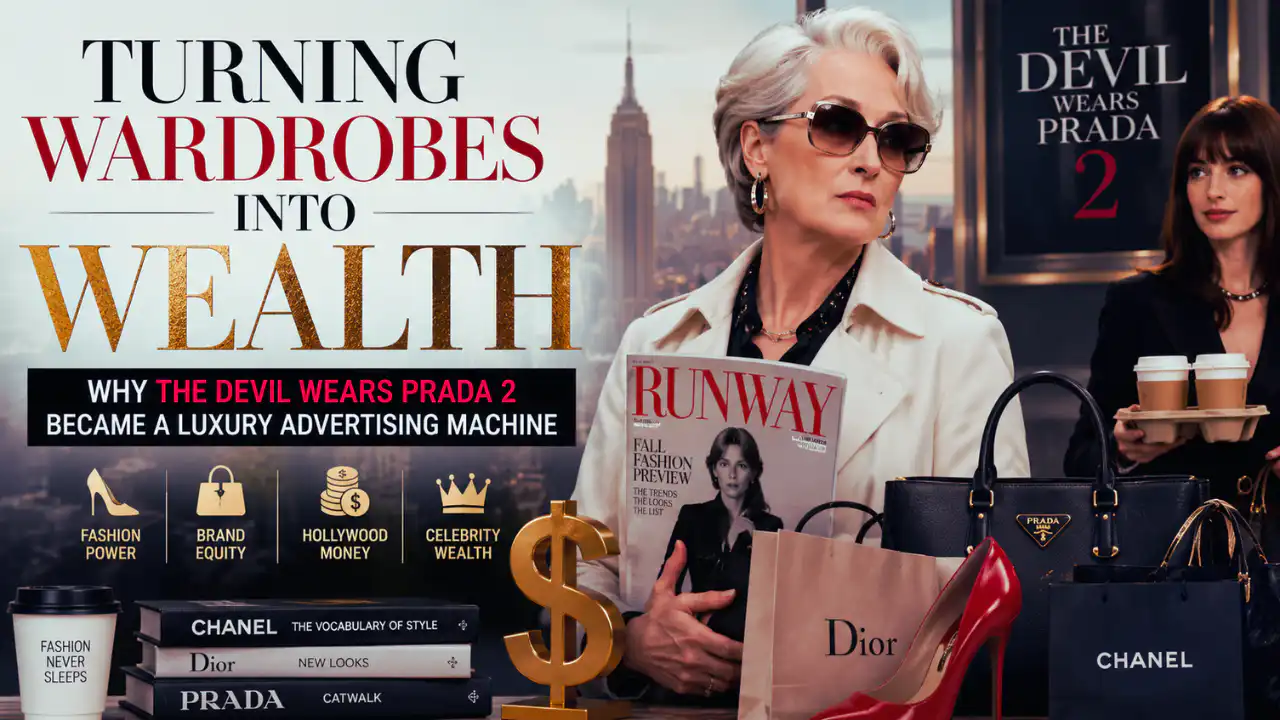
The Devil Wears Prada 2 Luxury Advertising Explained
Nearly two decades after The Devil Wears Prada became a cultural touchstone, its sequel is generating attention for more than nostalgia. Industry observers have noted that The Devil Wears Prada 2 appears poised to function as something larger: a showcase for luxury fashion, celebrity branding, and Hollywood’s growing relationship with high-end advertisers.
The phrase “Turning Wardrobes Into Wealth” captures the shift perfectly. Modern entertainment projects are no longer just films. They are ecosystems where costumes create headlines, social media drives visibility, and luxury brands gain access to global audiences.
For readers interested in celebrity wealth, Hollywood money, and entertainment business trends, The Devil Wears Prada 2 offers a fascinating case study in how wardrobes can become valuable business assets.
Why This Celebrity Wealth Trend Matters Now?
Hollywood has entered an era where attention itself is monetizable.
A single red carpet appearance can generate millions of impressions across social platforms. Fashion publications cover press tours with the same intensity once reserved for box office results. Luxury houses increasingly view films as premium advertising opportunities rather than simple costume placements.
The original The Devil Wears Prada helped cement fashion’s place in mainstream entertainment. Since then, audiences have become more interested in celebrity brands, designer partnerships, and the business behind fame.
Streaming has amplified that effect. A film can live on through licensing agreements, international distribution, streaming rights, and endless social media clips. Every iconic outfit becomes content that continues generating value long after opening weekend.
This is why The Devil Wears Prada 2 matters. It sits at the intersection of luxury fashion, celebrity entrepreneurship, and modern entertainment economics.
The Business Model Behind the Money
At first glance, audiences see beautiful clothes and familiar characters. Behind the scenes, however, several industries stand to benefit.
Luxury brands gain visibility through costume collaborations. Studios benefit from heightened media coverage. Talent receives renewed relevance and potential endorsement opportunities. Fashion publications gain traffic, while streaming platforms benefit from increased catalog interest in the original film.
It is less a movie release and more a coordinated cultural event.
Salary Versus Ownership
Actors are typically paid upfront salaries, though publicly confirmed figures for The Devil Wears Prada 2 have not been disclosed.
Long-term wealth, however, rarely comes from salary alone.
Ownership interests, production credits, backend participation, and intellectual property relationships can significantly influence a celebrity’s financial picture. While specific deal structures remain private, Hollywood has increasingly embraced compensation models that reward continued success.
An actor receiving a large cheque earns income once. A producer with participation rights can potentially benefit for years through distribution and licensing arrangements.
That distinction explains why celebrity net worth estimates are often incomplete.
Brand Equity and Audience Trust
Fashion brands spend decades building prestige. Celebrities spend decades building recognition.
When those assets intersect, the result can be powerful.
A luxury handbag appearing in a highly anticipated film receives something traditional advertising cannot easily buy: cultural relevance.
Similarly, actors associated with iconic fashion moments often strengthen their own brand equity. Public appearances, magazine covers, endorsement deals, and future business ventures can all benefit from renewed visibility.
Industry analysts frequently point to figures such as Sarah Jessica Parker and Rihanna as examples of celebrities who successfully transformed fashion credibility into broader business opportunities.
Helpful Table
| Wealth Driver | How It Works | Why It Matters |
|---|---|---|
| Salary | Upfront payment for work | Creates immediate income |
| Royalties | Ongoing payments from licensed use | Supports long-term earnings |
| Equity | Ownership stakes in businesses | Builds wealth over time |
| Licensing | Paid use of intellectual property | Extends revenue opportunities |
| Residuals | Payments tied to reuse and distribution | Adds recurring income |
| Brand Deals | Partnerships and endorsements | Converts fame into commercial value |
Why Traditional Net Worth Estimates Often Miss the Full Picture?
Celebrity wealth remains difficult to measure accurately.
Public net worth estimates typically rely on reported salaries, property records, and visible business ventures. They rarely account for private investments, taxes, agent commissions, legal expenses, or confidential licensing agreements.
Consider how many revenue streams can exist simultaneously:
- Residual income from older projects
- Undisclosed endorsement deals
- Real estate holdings
- Private investments
- Royalties from books or merchandise
- Producer fees
- Licensing income
For stars returning to beloved franchises, renewed attention can also increase demand for speaking engagements, fashion partnerships, and future projects.
That does not mean every celebrity becomes significantly wealthier after a sequel. It simply means wealth is often more complicated than publicly available figures suggest.
That Shows How This Works
Hollywood and fashion have collaborated for decades.
Barbie demonstrated how costume design and brand partnerships can dominate cultural conversation. The film’s marketing campaign inspired fashion collections, retail collaborations, and extensive media coverage.
Similarly, House of Gucci blurred the line between entertainment and luxury storytelling, while Sex and the City turned designer labels into central characters.
The original The Devil Wears Prada arguably helped establish this formula for a new generation of audiences.
Its sequel arrives at a moment when fashion’s economic influence inside entertainment is stronger than ever.
The Risks Behind Celebrity Business Ventures
Luxury exposure does not guarantee financial success.
Celebrity ventures regularly encounter challenges, including:
- Audience fatigue
- Overexpansion
- Weak product-market fit
- Changing public perception
- Poor management decisions
- Licensing disputes
- Economic downturns affecting luxury spending
Fashion itself is notoriously cyclical. Trends change quickly, and consumer attention moves even faster.
Even highly anticipated projects carry risk. A sequel that fails to connect with audiences can weaken rather than strengthen associated brands.
There is also the question of authenticity. Consumers increasingly recognize partnerships that feel purely transactional. Celebrity brands that succeed often maintain a clear identity and consistent storytelling.
What This Reveals About Modern Celebrity Wealth?
Celebrity wealth has evolved.
Today’s entertainment economy rewards ownership, intellectual property, and distribution just as much as talent.
An actor’s salary remains important, but the larger opportunity often lies in surrounding assets. Production companies, licensing deals, private investments, and brand partnerships increasingly shape long-term financial outcomes.
That shift helps explain why discussions about celebrity net worth continue to grow more complicated.
The Devil Wears Prada 2 represents this evolution perfectly. Its cultural value extends beyond ticket sales. It demonstrates how films can become platforms for luxury advertising, celebrity branding, and sustained commercial relevance.
Wardrobes may not appear on balance sheets, but in modern Hollywood, they can influence careers, partnerships, and business opportunities for years.
Conclusion
The story behind The Devil Wears Prada 2 is not simply about returning characters or nostalgic audiences. It is about the growing convergence of entertainment, luxury fashion, and celebrity wealth.
As studios seek new ways to maximize intellectual property and brands pursue cultural influence, projects like this reveal how interconnected modern media has become. The next generation of Hollywood success stories may be defined not only by what audiences watch, but by who owns the attention surrounding it.
FAQs
Why is The Devil Wears Prada 2 attracting luxury brands?
Luxury brands benefit from global visibility, cultural relevance, and extensive media coverage associated with high-profile entertainment projects.
How do celebrities make money beyond film salaries?
Celebrities may earn through endorsements, royalties, licensing agreements, production credits, investments, and business ventures.
What is brand equity in celebrity wealth?
Brand equity refers to the commercial value attached to a celebrity’s reputation, recognition, and audience trust.
Why are celebrity net worth estimates often inaccurate?
Many estimates exclude private investments, taxes, undisclosed contracts, management fees, and confidential ownership arrangements.
Can fashion partnerships increase celebrity wealth?
Yes. Successful partnerships can lead to endorsement deals, increased visibility, and future business opportunities, although outcomes vary significantly.
Interested in the business behind fame? Explore more celebrity wealth breakdowns, entertainment business analyses, and Hollywood money stories to see how modern stars build fortunes beyond the spotlight.

Table of Contents