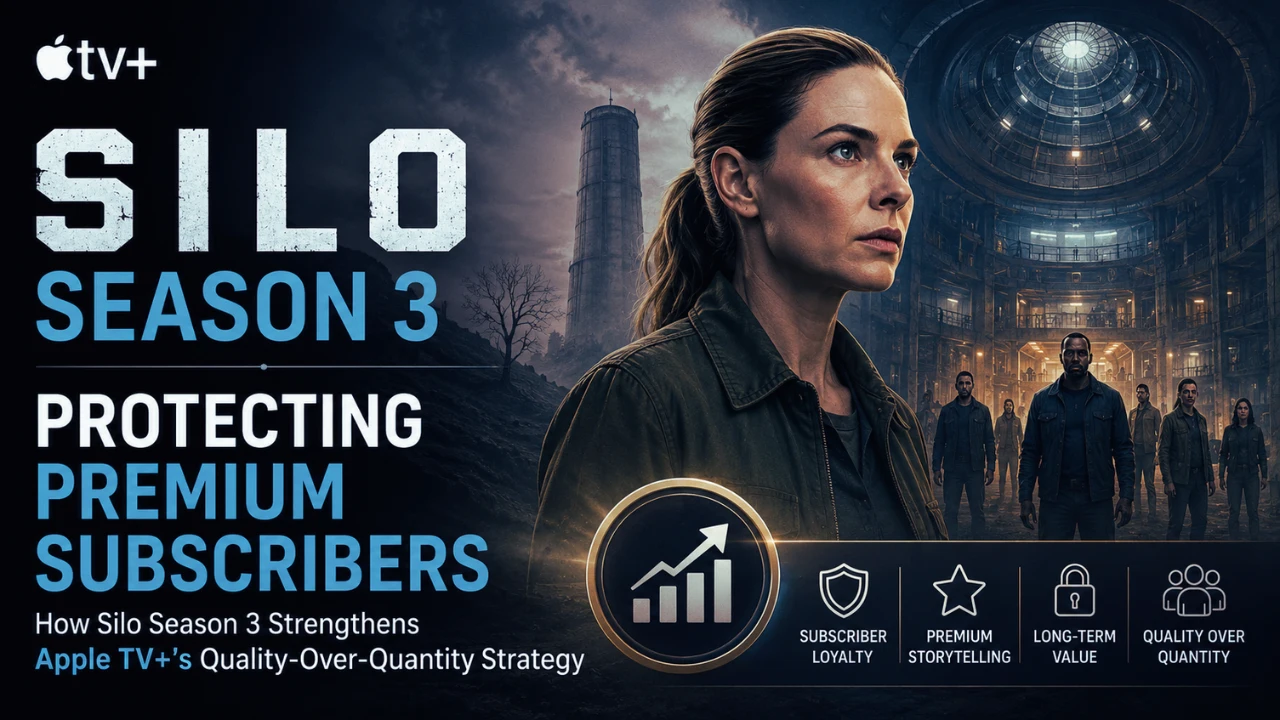
Protecting Premium Subscribers With Silo Season 3
When streaming services compete for attention, many add hundreds of new titles every year. Apple TV+ has taken a noticeably different path. Rather than flooding its catalog, the company continues investing in a smaller collection of premium originals designed to build subscriber loyalty.
Protecting Premium Subscribers: How Silo Season 3 Strengthens Apple TV+’s Quality-Over-Quantity Strategy is more than a discussion about one science fiction series. It offers a look at Apple’s broader entertainment business model, where carefully selected originals become valuable intellectual property that supports subscriptions, strengthens the Apple ecosystem, and enhances long-term brand equity.
Apple renewed Silo through a planned fourth and final season, allowing the adaptation to tell the complete story of Hugh Howey’s novels rather than ending prematurely. That decision reflects Apple’s emphasis on quality storytelling and long-term customer satisfaction over short-term content volume.
Why This Streaming Strategy Matters Now?
The streaming industry has entered a more disciplined era.
A few years ago, platforms competed by spending aggressively and releasing dozens of originals every month. Today, investors and executives increasingly focus on profitability, subscriber retention, and efficient content spending.
Apple TV+ occupies a unique position because it does not rely solely on streaming revenue. The service complements Apple’s broader ecosystem of hardware and subscription services. That allows Apple to prioritize premium content that reinforces its brand rather than maximizing viewing hours through quantity alone.
Series such as Silo, Severance, Slow Horses, and Ted Lasso help define Apple TV+’s identity as a home for prestige television.
Protecting Premium Subscribers Through Silo Season 3
Renewing Silo well before its conclusion sends a message to subscribers.
Instead of wondering whether another favorite show will disappear after one or two seasons, viewers know Apple intends to complete the story. That builds confidence in the platform.
The strategy also benefits Apple in several ways:
- It encourages subscribers to remain active throughout multiple release cycles.
- It strengthens the Apple TV+ brand as a destination for carefully curated originals.
- It creates valuable intellectual property that continues attracting viewers long after release.
- It reduces customer frustration associated with unfinished streaming series.
Apple has positioned Silo as one of its flagship science fiction franchises, confirming both Seasons 3 and 4 to complete the adaptation.
The Business Model Behind the Money
Apple’s streaming economics differ from many competitors.
Instead of relying on advertising or massive viewing numbers, Apple benefits when premium programming increases the overall value of its subscription ecosystem.
A critically acclaimed series can influence consumers to subscribe not only for one show but for Apple’s growing collection of original programming.
That creates recurring subscription revenue while strengthening Apple’s premium brand positioning.
Salary Versus Ownership
Actors, producers, and creators typically receive negotiated compensation for developing and starring in streaming productions.
However, ownership creates a different financial opportunity.
Executive producers may receive additional compensation depending on publicly disclosed agreements. Production companies can also benefit from licensing arrangements, international distribution, and future exploitation of intellectual property.
For Apple, owning exclusive distribution rights to original programming provides long-term strategic value beyond the initial production budget.
Unlike traditional broadcast television, streaming compensation structures often rely less on syndicated residuals and more on upfront negotiations, production deals, and broader participation agreements, although exact terms usually remain private.
Brand Equity and Audience Trust
Trust has become one of Apple’s strongest competitive advantages.
Subscribers increasingly associate Apple TV+ with:
- Premium production values
- Award-winning storytelling
- Carefully selected originals
- Limited but high-quality releases
Every successful series strengthens that reputation.
Brand equity cannot be measured by subscriber numbers alone. It influences customer loyalty, word-of-mouth marketing, award recognition, and long-term willingness to remain subscribed.
| Wealth Driver | How It Works | Why It Matters |
|---|---|---|
| Subscription Revenue | Monthly recurring payments | Supports long-term investment in originals |
| Intellectual Property | Exclusive ownership of original series | Builds long-term business value |
| Licensing Rights | Controlled global distribution | Expands future monetization opportunities |
| Premium Brand Equity | High-quality reputation | Encourages subscriber retention |
| Production Partnerships | Collaboration with studios and creators | Reduces operational risk while expanding content |
Why Traditional Net Worth Estimates Often Miss the Full Picture?
When discussing the entertainment business, public attention often focuses on celebrity net worth.
That only tells part of the story.
Many financial details remain private, including:
- Executive producer agreements
- Backend participation
- Licensing arrangements
- Production company revenues
- Taxes
- Agent and management fees
- Equity compensation
- Private investments
Similarly, Apple’s investment decisions cannot be evaluated simply by comparing production budgets against subscription revenue.
The broader value comes from customer retention, ecosystem growth, and reinforcing Apple’s premium brand across hardware, services, and entertainment.
That Shows How This Works
Apple has developed several prestige franchises that demonstrate this strategy.
Severance became a cultural phenomenon that strengthened Apple TV+’s reputation for premium storytelling.
Ted Lasso evolved into one of the platform’s defining global brands, expanding beyond television into merchandise, licensing, and brand recognition.
Now Silo follows a similar path by becoming a long-term science fiction franchise rather than a short-lived streaming experiment.
Apple’s decision to renew the series through its planned ending reinforces confidence among subscribers that investing time in Apple originals is worthwhile.
The Risks Behind Premium Streaming Investments
Even premium strategies carry meaningful risks.
High-budget productions require significant investment before generating returns.
Potential challenges include:
- Rising production costs
- Audience fatigue
- Increasing competition
- Subscriber churn
- Franchise underperformance
- Delayed production schedules
- Changing viewer preferences
Unlike advertising-supported platforms, subscription services depend heavily on maintaining customer satisfaction over time.
If flagship originals disappoint audiences, subscriber retention becomes more difficult.
What This Reveals About Modern Entertainment Wealth?
Modern entertainment wealth extends far beyond actor salaries.
Today, value increasingly comes from:
- Intellectual property ownership
- Streaming rights
- Licensing deals
- Long-term franchises
- Executive producing
- Business ventures
- Brand equity
- Global distribution
Apple’s investment in Silo demonstrates how streaming companies increasingly treat premium content as strategic assets rather than disposable programming.
That approach benefits creators, strengthens platform identity, and encourages loyal subscribers to remain engaged over multiple years.
Conclusion
Silo Season 3 represents more than another chapter in a popular science fiction story. It illustrates how Apple TV+ continues prioritizing quality, brand reputation, and long-term subscriber trust over sheer content volume.
While competitors often chase larger libraries, Apple is betting that carefully developed originals can create stronger customer loyalty and lasting intellectual property. As streaming economics continue evolving, this strategy may prove that fewer exceptional series can deliver greater long-term value than hundreds of forgettable releases.
FAQs
Why did Apple renew Silo through Season 4?
Apple confirmed Seasons 3 and 4 to complete Hugh Howey’s original story, reinforcing its commitment to long-term storytelling rather than early cancellation.
How does Silo help Apple TV+ retain subscribers?
Flagship originals encourage viewers to maintain subscriptions while strengthening Apple TV+’s premium reputation.
Does Apple TV+ focus on quality instead of quantity?
Yes. Apple generally releases fewer original titles than several competitors while emphasizing high production values, acclaimed creators, and award-winning programming.
Why are streaming rights valuable?
Exclusive streaming rights allow platforms to control distribution, attract subscribers, and build long-term intellectual property value.
Why are celebrity net worth estimates often incomplete?
Many entertainment earnings come from private contracts, royalties, licensing, equity deals, production companies, and undisclosed investments that are not publicly available.
Interested in the business behind Hollywood’s biggest hits? Explore more entertainment business analysis, celebrity wealth stories, streaming strategy breakdowns, and modern net worth insights to understand how today’s media industry really makes money.

Table of Contents