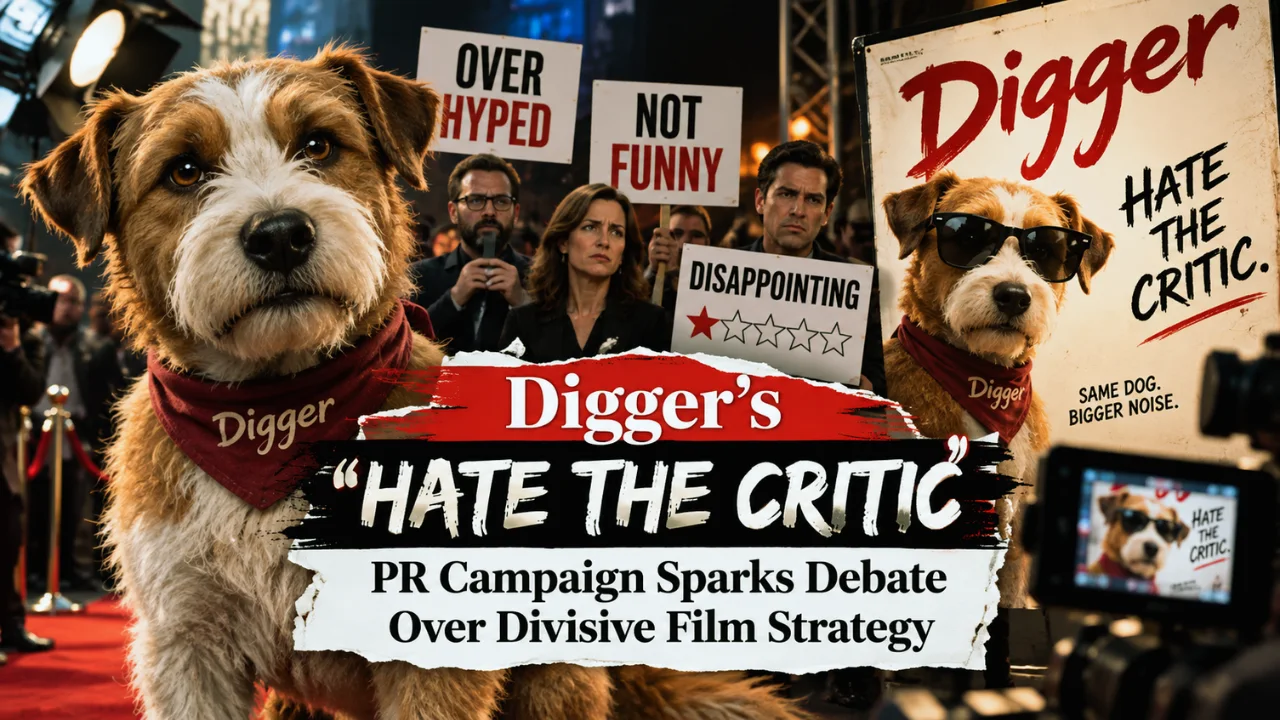
Digger’s ‘Hate the Critic’ PR Campaign Sparks Debate Over Divisive Film Strategy
Digger has launched a new PR campaign for its latest film project, centered on the provocative slogan, “Don’t hate the movie, hate the critic.” The approach is drawing mixed responses from industry observers, especially since the movie was not originally marketed or designed to be a divisive cultural flashpoint.
Digger’s new PR campaign defends its latest film with the slogan ‘Don’t hate the movie, hate the critic.’ Industry sources say this could be a risky strategy, not least because the film was never marketed as a divisive title in the first place. The campaign risks alienating neutral audiences by taking attention away from the film itself.
Key Details
- What happened: Digger launched a new PR campaign with the slogan “Hate the critic, not the movie.”
- Who’s involved: Digger (the PR entity/filmmaker), film critics and general audiences.
- Where: The initiative is rolling out across national digital and traditional media platforms.
- When: Campaign launches this week.
- Most recent: Industry analysts are publicly questioning the viability of the strategy for a film not originally intended to be divisive.
- What’s next: Whether the PR pivot works or backfires will depend on box-office performance and audience reception.
The PR Strategy Explained
Fundamentally, Digger’s new PR push is based on a meta-narrative approach. It asks audiences to “hate the critic,” positioning negative reviews not as a measure of the film’s quality but as part of a larger, possibly biased, critical establishment.
The campaign materials suggest that the goal is to provoke audience curiosity and box office attendance by framing the film as a misunderstood project unfairly targeted for scorn by traditional reviewers. This is a common technique in “counter-programming” strategies, where a film plays up its underdog status to mobilize a certain demographic.
Why It’s Considered a Risky Bet
This PR angle is risky, entertainment industry analysts say, mainly because of the film’s nature.
“It was never intended to be a divisive project. This film wasn’t meant to spark controversy on political or social issues as some movies do. It was supposed to be your average movie for entertainment purposes. If you put a culture-war or anti-critic lens on marketing a non-divisive film, you create a disconnect between the marketing and the actual product.
Marketers have pointed out a few particular dangers with this approach:
- Alienating Neutral Viewers: Those without a strong interest in film criticism may feel alienated by a campaign that asks them to take a side against critics.
- Raising the Bar on the Art: The approach shifts the conversation away from the film’s real substance, themes, and fun, and onto how film criticism works.
- Unwanted Divisiveness: The PR push may create an artificial divisiveness that the filmmakers originally wanted to avoid in framing the reception as a conflict between audience and critics.
Industry and Critical Reaction
The entertainment industry has responded cautiously. “Going after critics can generate short-term social media engagement and news cycles, but rarely translates into sustained box office success unless the movie already has a built-in, highly-motivated fanbase,” public relations professionals say.
But film critics have largely ignored the direct provocation, though a few have observed in their reviews that the marketing campaign is more combative than the film itself.
“The campaign is asking audiences to buy a ticket out of spite, rather than interest,” said one industry analyst in a recent trade publication review of the marketing strategy. It’s a high-stakes gamble for a film that was never meant to be a battleground.”
Why It Matters
This campaign reflects a trend in film marketing where studios and PR teams try to control the narrative by fighting the discourse rather than promoting the art.
As traditional marketing channels become more crowded and expensive, PR teams increasingly turn to controversy, meta-commentary, and audience mobilization to stand out. But Digger’s campaign is a real-time case study of the dangers of applying a divisive marketing strategy to a non-divisive product. If it works, it might indicate a shift to more aggressive, audience-vs.-critic marketing for wide releases. If it doesn’t, it will further entrench the industry standard that a film’s marketing should reflect the film’s true tone and intent.
What Happens Next
- Short-term: The industry will monitor social media engagement and weekend box office estimates to see if the “hate the critic” slogan drives initial ticket sales.
- Medium-term: If the film underperforms, Digger may be forced to pivot the marketing strategy back to the film’s core entertainment value.
- Long-term: Other studios will analyze the campaign’s return on investment before deciding whether to adopt similar anti-critic strategies for their own non-divisive releases.
FAQ
What is the slogan of Digger’s new PR campaign?
Why is the PR campaign considered risky?
What is the goal of the “hate the critic” strategy?

Table of Contents