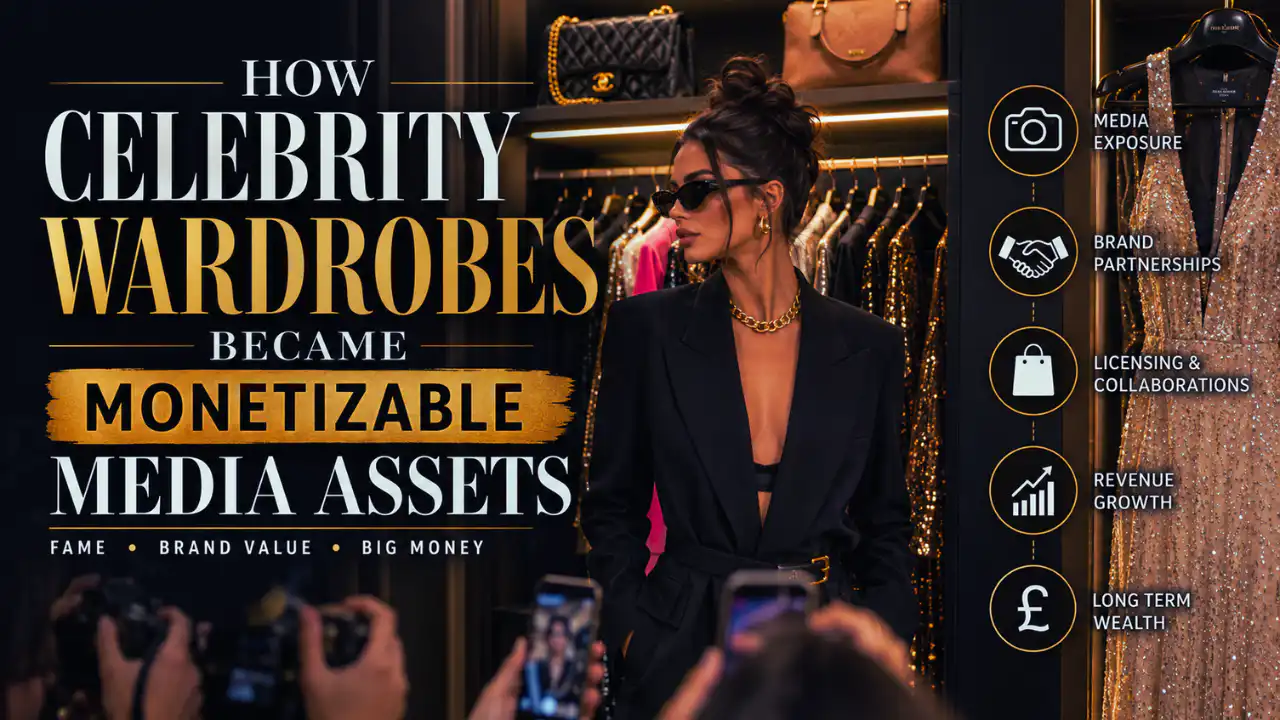
How Celebrity Wardrobes Became Media Assets
A single photograph of a celebrity leaving an airport can travel further than a £5 million advertising campaign.
That reality has transformed fashion from a personal choice into a monetizable asset. Today, celebrity wardrobes are carefully managed business instruments that sit at the intersection of entertainment, luxury marketing, and the creator economy. A red carpet gown, a press tour outfit, or a seemingly casual street-style look can generate headlines, social media engagement, and commercial value long after the cameras stop rolling.
The phrase “How Celebrity Wardrobes Became Monetizable Media Assets” captures a broader shift in Hollywood money. Celebrities are increasingly monetizing attention itself, and wardrobes have become one of the most visible examples of that strategy.
Why This Celebrity Wealth Trend Matters Now?
The entertainment industry has changed dramatically over the past decade.
Studios no longer control all publicity. Social media, paparazzi coverage, fan accounts, and fashion publications have created a 24-hour content cycle. Every public appearance becomes a distribution channel.
Fashion brands understand this well. Luxury houses routinely partner with actors, musicians, and athletes because an outfit can produce millions of impressions within hours. Industry observers frequently point to earned media value, or EMV, as one way brands measure the impact of celebrity exposure across traditional and digital media.
What used to be a wardrobe is now content.
What used to be content is now an asset.
That shift matters because celebrity wealth increasingly comes from ownership deals, licensing arrangements, endorsement contracts, and private business ventures rather than salaries alone.
The Business Model Behind the Money
Celebrity wardrobes generate value in several ways:
- Paid ambassador agreements
- Licensing and image rights
- Sponsored appearances
- Fashion collaborations
- Affiliate and social campaigns
- Archive sales and auctions
- Closet resale partnerships
- Documentary and promotional content
Luxury brands are not simply paying celebrities to wear clothing. They are buying access to audiences, cultural relevance, and attention.
Public reporting has shown that brands increasingly structure multi-year relationships around ambassadors who appear in campaigns, attend events, and integrate products into their public image.
Salary Versus Ownership
A celebrity might receive a fee for appearing in a campaign, but ownership creates a different financial outcome.
An upfront payment ends once the contract does. Ownership and equity can continue generating value over time.
For example:
| Wealth Driver | How It Works | Why It Matters |
|---|---|---|
| Salary | Upfront payment for appearances or campaigns | Immediate income |
| Royalties | Payments tied to ongoing use of content or products | Potential recurring revenue |
| Licensing | Brands pay to associate with a celebrity’s image | Scales without operating a business |
| Equity Deals | Ownership in fashion or lifestyle ventures | Long-term wealth potential |
| Resale Revenue | Selling wardrobe items through approved platforms | Unlocks value from existing assets |
| Brand Partnerships | Multi-year ambassador agreements | Builds sustained earning power |
Many celebrities eventually move beyond endorsement deals and launch their own fashion labels or invest in lifestyle companies. Their wardrobes become part of a larger ecosystem of celebrity entrepreneurship.
Brand Equity and Audience Trust
People rarely buy a jacket simply because it exists.
They buy what it represents.
Celebrity wardrobes communicate status, taste, aspiration, and identity. That is why airport looks, press tours, and award shows receive extensive coverage.
Fashion publications, fan communities, and “who wore what” social accounts have effectively created secondary media businesses around celebrity style. In some cases, entire audiences follow celebrities primarily for fashion inspiration rather than their original profession.
The wardrobe becomes intellectual property adjacent.
Its value comes from association.
Why Traditional Net Worth Estimates Often Miss the Full Picture?
Celebrity net worth estimates are, at best, educated approximations.
Public databases rarely account for:
- Private investments
- Undisclosed licensing agreements
- Equity compensation
- Future royalties
- Tax liabilities
- Management commissions
- Legal expenses
- Real estate holdings
- Intellectual property income
A celebrity may never technically own a dress worn at an awards show. It could be borrowed from a luxury house, archived by a designer, or included within a broader ambassador agreement. In other cases, wardrobe items are retained and later sold through resale platforms or charity auctions.
As a result, traditional celebrity wealth estimates often fail to capture the economic value generated by image rights and fashion partnerships.
That Shows How This Works
Several publicly visible examples illustrate the trend.
Zendaya has become closely associated with luxury fashion through high-profile ambassador relationships and carefully curated press tour appearances.
Kendall Jenner has repeatedly demonstrated how street-style visibility can overlap with brand campaigns, blurring the line between advertising and everyday celebrity coverage.
Paris Hilton generated significant attention through wardrobe-related resale activity, highlighting how celebrity provenance can increase demand for fashion items.
Meanwhile, platforms like Vestiaire Collective and eBay have embraced celebrity closet sales as both commerce and marketing opportunities. Public reporting indicates these partnerships can generate substantial media attention in addition to direct sales.
The lesson is straightforward: the story attached to the item can become as valuable as the item itself.
The Risks Behind Celebrity Business Ventures
Not every wardrobe strategy succeeds.
Celebrity fashion businesses face many of the same challenges as traditional companies:
- Audience fatigue
- Poor product-market fit
- Overexposure
- Licensing disputes
- Weak management
- Economic downturns
- Brand misalignment
- Reputation damage
Fashion also moves quickly.
A celebrity who dominates headlines one year may struggle to maintain relevance a few years later. Public perception remains one of the biggest variables in entertainment economics.
There is also the issue of authenticity. Audiences are increasingly capable of distinguishing genuine personal style from heavily manufactured marketing campaigns.
What This Reveals About Modern Celebrity Wealth?
Celebrity wealth has become increasingly asset-driven.
Actors once relied primarily on salaries. Musicians depended on album sales. Athletes earned through contracts and endorsements.
Today, the biggest fortunes are often built through ownership, intellectual property, licensing, and distribution.
Celebrity wardrobes sit at the center of that transformation.
They create content for social platforms. They strengthen brand equity. They support endorsement deals. They generate licensing opportunities. They can even become resale products years later.
Most importantly, they demonstrate a broader truth about the entertainment business:
Attention has become a monetizable asset class.
Wardrobes happen to be one of the most visible examples.
As media continues to fragment and audiences become more difficult to reach, the value of a celebrity’s public image is likely to increase. The stars who understand this shift will continue treating fashion not merely as self-expression, but as part of a long-term wealth strategy.
Conclusion
Celebrity wardrobes have evolved far beyond clothing racks and stylist appointments. They now function as media assets capable of generating publicity, strengthening partnerships, and creating new revenue streams.
While salaries and box office figures remain important, modern celebrity wealth increasingly depends on what happens outside traditional pay cheques. Ownership deals, licensing agreements, resale opportunities, and brand equity are reshaping how fortunes are built.
The next time a celebrity trends because of an outfit, remember that the headline may be about fashion, but the story is often about business.
FAQs
1. How do celebrity wardrobes make money?
Celebrity wardrobes can generate value through ambassador deals, licensing agreements, resale partnerships, sponsored appearances, and increased media exposure.
2. Do celebrities own all the clothes they wear?
No. Many red carpet and promotional outfits are borrowed from fashion houses or provided under partnership agreements.
3. Why are celebrity wardrobe items valuable in resale markets?
Their value often comes from provenance. Fans are willing to pay premiums for items connected to notable public figures or cultural moments.
4. Do celebrity net worth estimates include fashion partnerships?
Usually not. Many licensing deals, private investments, and contractual arrangements are not publicly disclosed.
5. What is brand equity in celebrity wealth?
Brand equity refers to the commercial value attached to a celebrity’s reputation, influence, and public image, which can translate into business opportunities and revenue.
Enjoy exploring the business behind fame? Browse more celebrity wealth analyses, entertainment business stories, and net worth breakdowns to discover how modern stars turn attention into long-term assets.

Table of Contents