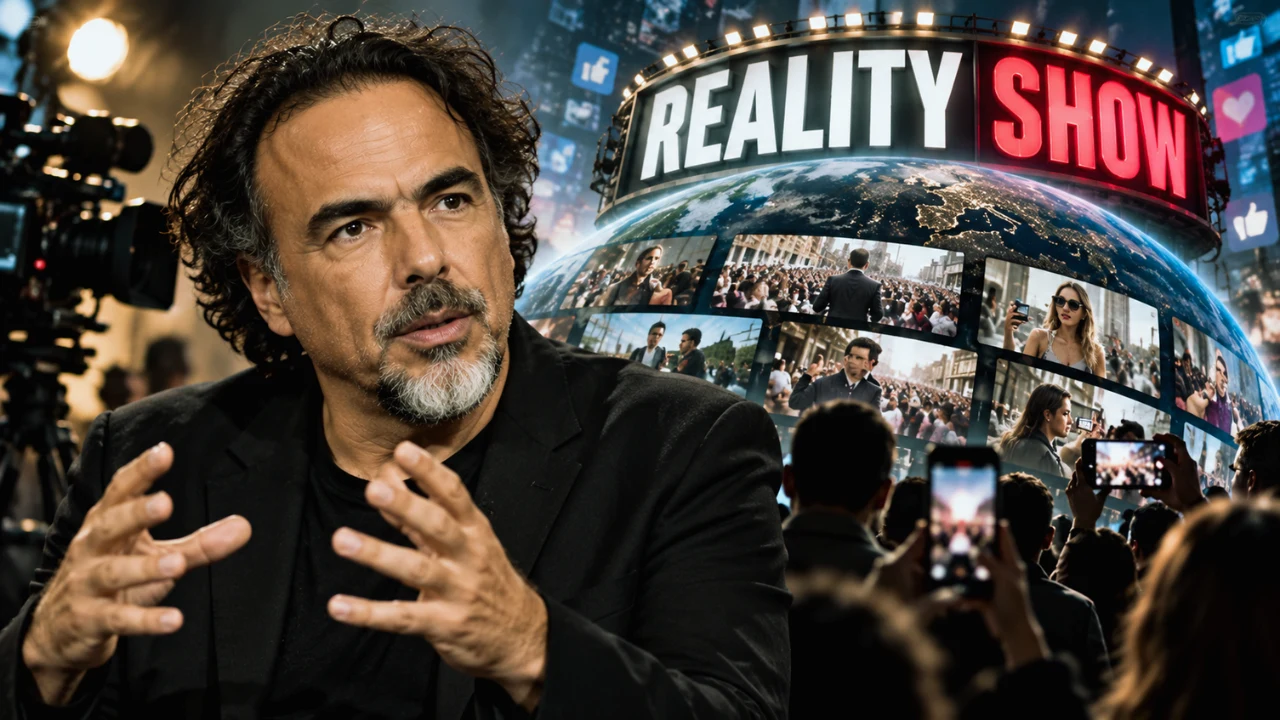
Director Alejandro González Iñárritu Says the World Has Become a ‘Reality Show’
Renowned director Alejandro González Iñárritu has launched a scathing attack on modern culture, saying the world today is a “reality show” and that human behavior is becoming more performative. The Academy Award-winning director says the relentless building of public personas has blurred the lines between real life and manufactured fiction.
Academy Award-winning director Alejandro González Iñárritu says today’s society has become a “reality show” based on performance. He argues that modern culture and digital media have blurred the line between reality and curated fiction, and he advocates a return to real human connection and authentic storytelling.
Key Details
- What happened: Alejandro González Iñárritu took a public shot at modern performative culture and society’s loss of authenticity.
- Who’s involved: Academy Award-winning film director Alejandro González Iñárritu.
- Core statement: “The world has become a reality show; everything is a performance.
- Context: This motif recurs throughout his filmography, particularly in films such as Birdman, Bardo, and False Chronicle of a Handful of Truths.
- Latest development: Iñárritu still argues for art that cuts through society’s performativity and challenges the ego.
The Critique of a Performative Society
Alejandro González Iñárritu said that when asked to comment on the state of culture today, people are tired of inauthenticity. He argued that today’s obsession with self-broadcasting and public approval has made life a constant, unscripted performance.
“This change has fundamentally changed how people interact with each other and how they see truth,” says the director. And everything is staged for an invisible audience, undermining the basic building blocks of authentic human experience. Iñárritu’s criticism reflects a growing unease among cultural commentators about the psychological and social cost of living in a post-truth world, where image triumphs over content.
Connecting the Commentary to His Cinematic Work
Iñárritu’s comments are not isolated remarks; they are embedded in the thematic heart of his recent filmography. His work has always deconstructed the ego, the nature of fame, and the fragile border between reality and illusion.
Iñárritu’s Birdman or (The Unexpected Virtue of Ignorance) explored the desperate performative needs of a washed-up actor seeking relevance, questioning the nature of authenticity in the entertainment industry. His next film, Bardo, False Chronicle of a Handful of Truths, further dismantled the protagonist’s ego, using surrealism to critique how people rewrite their own histories to appear more palatable to the public.
When Iñárritu says that “everything is performative,” he is diagnosing the condition of the real world his fictional characters struggle in. He claims that the cinematic illusions he creates on screen are now reflected in the everyday lives of the general public.
Why It Matters
The director’s commentary matters because it is part of a larger cultural reckoning with digital media and social conditioning. Algorithms reward engagement and visual perfection, which raises the stakes of performance over mere existence.
Iñárritu’s stance serves as a cultural gauge of the exhaustion many feel with curated online personas. His position favors a shift in the film and arts industry toward raw, unpolished, deeply human storytelling that resists the urge to pander to performative trends. It emphasizes the role of cinema not just as entertainment but as an important tool to hold a mirror to a warped society.
What Happens Next
FAQ
What did Alejandro González Iñárritu say about modern society?
The world is a “reality show” and “everything is performative,” said Alejandro González Iñárritu, criticizing the modern tendency to curate and stage daily life for public consumption.
Why does Alejandro González Iñárritu attack performative culture?
He argues that this incessant performativity blurs the line between reality and fabrication, diminishing authentic human connection and fostering a “post-truth” societal milieu.
What do Iñárritu’s views have to do with his movies?
Films like Birdman and Bardo dive deep into the themes of ego, the craving for public approval, and the confusion of reality with illusion, a critique of the performative society in the real world.

Table of Contents