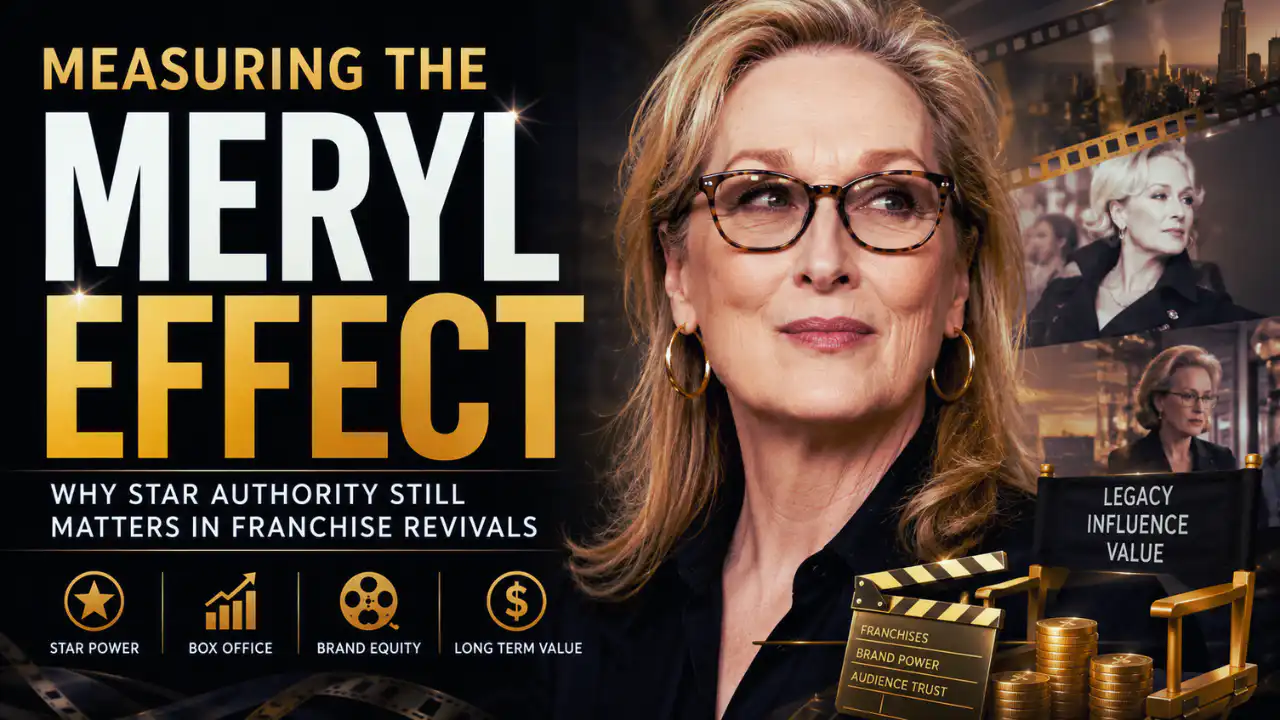
Measuring the Meryl Effect in Franchise Revivals
When audiences hear that a beloved franchise is returning, one question often surfaces before the trailer even drops: Is the original star coming back?
That question says a lot about modern Hollywood.
“Measuring the Meryl Effect” refers to the enduring commercial power of performers whose reputations have become brands in their own right. Few actors symbolize that better than Meryl Streep. Decades into her career, her involvement in a project still signals prestige, reliability, and cultural relevance.
As studios increasingly revive established intellectual property, star authority has become more than a casting decision. It is a business strategy. Franchise revivals depend on audience trust, media attention, streaming value, and global licensing opportunities. In many cases, a respected star can influence all four.
The entertainment business has changed dramatically over the past decade, but one truth remains: audiences may come for the franchise name, yet they often stay for the people who made it matter in the first place.
Why This Celebrity Wealth Trend Matters Now?
Hollywood is living through an era of nostalgia economics.
Studios are reviving everything from fashion comedies to superhero properties because existing intellectual property carries lower marketing risk than launching an entirely new concept. Streaming platforms have accelerated this trend by turning older films into evergreen assets.
Recent conversations surrounding franchise returns, including renewed interest in properties associated with stars like Meryl Streep, demonstrate how legacy talent remains central to entertainment economics.
Star authority matters because it reduces uncertainty. Investors, advertisers, distributors, and audiences all understand what an established performer represents.
A respected actor can deliver:
- Higher media visibility
- Increased streaming engagement
- Greater international appeal
- Stronger awards-season potential
- Enhanced brand partnerships
- Improved merchandising and licensing opportunities
That influence contributes to celebrity wealth in ways that extend far beyond a single pay cheque.
The Business Model Behind the Money
Hollywood’s financial structure is rarely as simple as salary plus bonuses.
A franchise revival creates multiple revenue streams simultaneously. Theatrical releases, streaming rights, television licensing, digital rentals, soundtrack revenue, promotional partnerships, and international distribution all contribute to a project’s financial life cycle.
An actor with significant cultural authority can increase the perceived value of those revenue streams.
Salary Versus Ownership
Most audiences focus on actor salaries because those numbers occasionally become public. Yet salaries are only one piece of the equation.
Some entertainment figures negotiate:
- Backend participation
- Producer credits
- Residual income arrangements
- Licensing agreements
- Executive production roles
- First-look development deals
Publicly available data shows that many high-profile performers have increasingly expanded into producing and development partnerships over the past two decades.
Ownership creates a different kind of wealth. A £5 million salary may provide immediate income, but ownership interests and long-term participation can continue generating value years after release.
That distinction explains why celebrity entrepreneurship has become a growing part of Hollywood’s business model.
Brand Equity and Audience Trust
Brand equity is difficult to measure, but Hollywood spends billions attempting to predict it.
Meryl Streep’s name carries decades of accumulated audience trust. Similar authority can be seen across performers such as Tom Cruise, Sandra Bullock, and Denzel Washington.
Their value lies in consistency.
Consumers associate certain stars with quality, professionalism, and emotional familiarity. That reputation becomes an intangible asset that can influence ticket sales, streaming decisions, and media coverage.
In business terms, celebrity brands function similarly to trusted consumer brands. They lower the perceived risk of purchase.
Why Traditional Net Worth Estimates Often Miss the Full Picture?
Celebrity net worth figures remain among the internet’s most searched topics, but they rarely tell the entire story.
Most public estimates cannot account for:
- Private investments
- Undisclosed equity deals
- Real estate holdings
- Management fees
- Tax obligations
- Licensing income
- Residual payments
- Confidential production agreements
Industry observers frequently note that entertainment wealth is often fragmented across numerous entities and income streams.
A performer may earn money from a decades-old project through syndication, streaming agreements, or international licensing without those details ever becoming public.
That is particularly relevant for legacy stars whose careers span several generations of media distribution.
| Wealth Driver | How It Works | Why It Matters |
|---|---|---|
| Salary | Upfront payment for work | Creates immediate income |
| Royalties | Ongoing payments from use or sales | Can generate long-term income |
| Equity | Ownership stake in a business | May appreciate over time |
| Licensing | Paid use of name or intellectual property | Creates scalable revenue |
| Residuals | Payments tied to reuse of content | Supports long-term earnings |
| Brand Deals | Commercial partnerships | Converts fame into marketing value |
That Show How This Works
Hollywood offers numerous examples of star authority creating measurable business value.
Meryl Streep has built a career associated with critical acclaim and longevity. Her participation in projects often becomes part of the marketing narrative itself.
Harrison Ford returned to multiple legacy franchises throughout his career, illustrating how studios leverage nostalgia alongside established star recognition.
Keanu Reeves helped transform the John Wick franchise into a major entertainment property while also benefiting from producer involvement and long-term franchise expansion.
Meanwhile, Ryan Reynolds demonstrates how celebrity brands increasingly intersect with business ventures, ownership deals, and strategic investments beyond traditional entertainment income.
Each example highlights the same principle: star authority creates optionality. It opens doors to opportunities unavailable to less established talent.
The Risks Behind Celebrity Business Ventures
Celebrity influence is powerful, but it is not foolproof.
History is filled with examples of projects that failed despite major names attached to them. Audience preferences change. Markets become saturated. Nostalgia can be overestimated.
Common risks include:
- Overreliance on legacy appeal
- Poor creative execution
- Weak product-market fit
- Franchise fatigue
- Misaligned brand partnerships
- Licensing complications
- Rising production costs
- Changing public perception
A famous name can attract initial attention, but it cannot guarantee long-term success.
Studios understand this reality. That is why modern franchise revivals increasingly combine legacy stars with younger casts, streaming strategies, and expanded intellectual property ecosystems.
The goal is not merely to revisit the past. It is to extend the commercial lifespan of a brand.
What This Reveals About Modern Celebrity Wealth?
Celebrity wealth has evolved.
For much of the twentieth century, success was measured through salaries and box office performance. Today’s entertainment economy is built around leverage.
Actors increasingly monetize:
- Intellectual property participation
- Production companies
- Licensing deals
- Streaming rights
- Brand partnerships
- Private investments
- Publishing agreements
- Creator economy opportunities
The “Meryl Effect” ultimately reveals something larger about modern entertainment.
Authority has become an asset class.
A respected public image built over decades can create economic opportunities that outlast any single project. In an age dominated by algorithms and endless content choices, trust remains one of Hollywood’s most valuable commodities.
That may explain why franchise revivals continue prioritizing legacy talent despite rising production costs. Studios are not simply hiring performers. They are licensing familiarity, credibility, and decades of audience goodwill.
Conclusion
Measuring the Meryl Effect is less about one actor and more about understanding how Hollywood values reputation.
Franchise revivals succeed when they balance nostalgia with business realities. Legacy stars provide more than recognizable faces. They bring audience trust, media attention, and long-term brand value that can influence everything from streaming performance to licensing opportunities.
As entertainment companies continue investing in established intellectual property, star authority is likely to remain one of the industry’s most durable currencies. In Hollywood’s modern economy, reputation may be the ultimate form of leverage.
FAQs
1. What is the Meryl Effect in Hollywood?
The Meryl Effect describes the lasting commercial and cultural influence of highly respected actors whose involvement can increase audience interest and perceived project value.
2. Why do franchise revivals rely on established stars?
Legacy stars offer audience trust, media visibility, and proven brand equity, helping studios reduce risk when reviving older intellectual property.
3. How do celebrities make money beyond acting salaries?
Celebrities may earn through royalties, residuals, licensing deals, production companies, endorsements, streaming rights, and private investments.
4. Why are celebrity net worth estimates often inaccurate?
Most estimates cannot account for confidential contracts, taxes, undisclosed investments, real estate holdings, or long-term royalty arrangements.
5. Do actors benefit financially from franchise revivals?
Yes. Depending on their contracts, actors may receive salaries, residuals, producer fees, or backend participation tied to a project’s success.
Interested in the business of fame? Explore more entertainment industry breakdowns, celebrity wealth analyses, and Hollywood money stories to see how stars turn cultural influence into long-term financial value.
Table of Contents