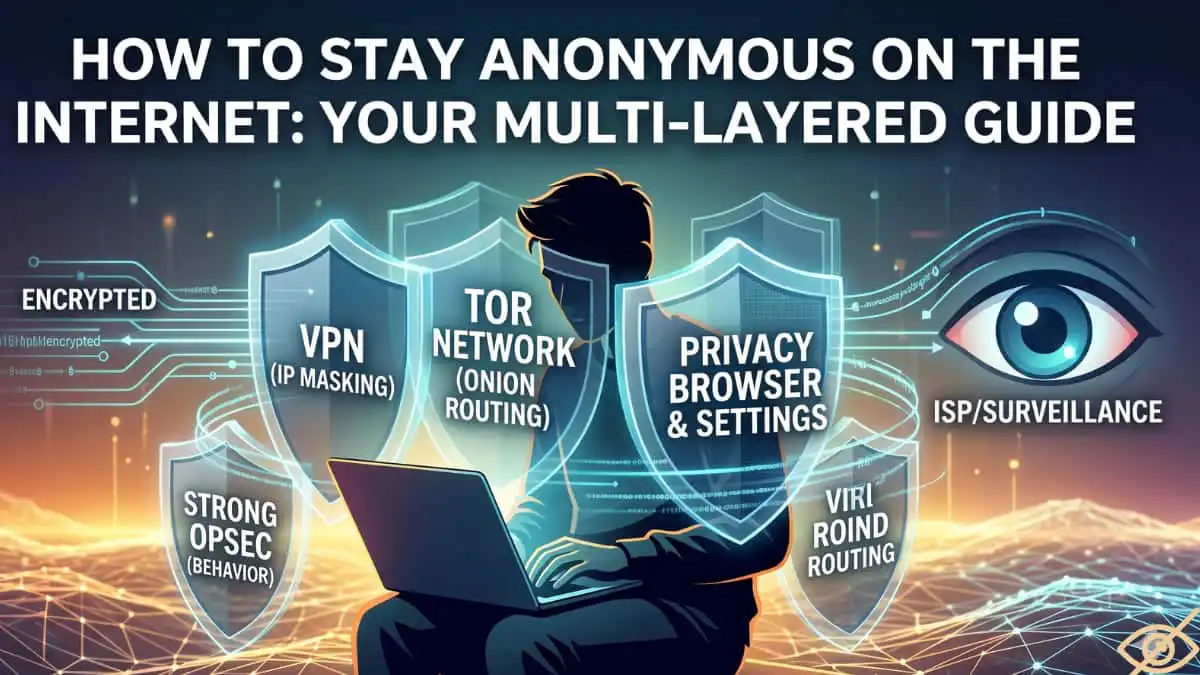
How to Stay Anonymous on the Internet
Every click, search, and message leaves a digital footprint. Data brokers, internet service providers, and marketing agencies track this information to build detailed profiles of your habits. Taking control of your online anonymity is a necessary step for anyone who values their personal privacy. You have the right to navigate the web without constant surveillance.
This guide covers actionable strategies to protect your identity and keep your data private. You will learn how to implement secure browsing habits, leverage encrypted messaging, and use advanced tools to hide your digital tracks.
Understand the Value of Online Anonymity
Websites collect vast amounts of information the moment you load a page. They monitor your IP address, device type, location, and browsing history. Companies use this data to serve targeted advertisements or sell your information to third parties.
Maintaining your privacy prevents malicious actors from accessing sensitive personal details. It also stops internet service providers from throttling your connection based on your activities. When you stay anonymous online, you regain control over who sees your data and how they use it.
Practical Steps to Stay Anonymous Online
Achieving total invisibility requires effort, but you can drastically improve your privacy with a few strategic adjustments. Start by addressing the most common ways websites track your behavior.
Mask Your IP Address with a Reliable VPN
Your Internet Protocol (IP) address serves as your digital home address. It reveals your physical location and ties your internet activity directly to your internet service provider. Virtual Private Networks (VPNs) solve this problem by routing your connection through an encrypted tunnel.
When you use a VPN, websites only see the IP address of the VPN server, keeping your actual location hidden. Choose a provider with a strict no-logs policy to ensure they do not record your browsing history. Activate your VPN every time you connect to public Wi-Fi networks to protect your data from local snoops.
Upgrade Your Secure Browsing Experience
Standard web browsers actively track your search habits, store cookies, and allow third-party trackers to follow you across different sites. Simply using “Incognito Mode” does not hide your activity from your internet provider or the websites you visit.
For genuine secure browsing, you need specialized software that actively blocks tracking attempts. Many users turn to anti-detect browsers like Octo Browser (octobrowser.net) to maintain strict privacy. Octo Browser isolates your data by creating unique digital fingerprints for different profiles.
Websites typically use browser fingerprinting—analyzing your screen resolution, operating system, and installed fonts to identify you even without cookies. Octo Browser prevents this by feeding websites completely different hardware and software data. This allows you to manage multiple accounts or browse the web without platforms linking your activities together. It provides a robust layer of defense for anyone serious about keeping their online identity completely private.
Switch to Encrypted Messaging Apps
Standard SMS text messages and traditional email services lack robust security. Cellular providers can intercept SMS messages, and many email providers scan your inbox for advertising purposes.
To communicate privately, switch to messaging applications that offer end-to-end encryption. Apps like Signal encrypt your messages on your device and only decrypt them on the recipient’s device. This guarantees that nobody, not even the app developers, can read your conversations. Make sure to apply this standard to your emails as well by using encrypted services like ProtonMail.
Adjust Your Search Engine Habits
Major search engines build massive profiles based on your specific search queries. They track what you look for, which links you click, and how long you spend on specific pages.
Protect your online anonymity by switching to privacy-focused search engines like DuckDuckGo or Startpage. These platforms do not track your search history or build user profiles. They deliver search results without attaching your personal data to the queries, ensuring your research remains entirely your own business.
Adopt Privacy First Financial Habits
Your purchasing history tells a comprehensive story about your life. Using traditional credit cards ties your real identity to every online purchase you make.
Consider using virtual credit cards or prepaid gift cards for online transactions. Virtual cards generate a temporary card number for a single purchase, keeping your actual banking details hidden from merchants. For maximum financial privacy, explore using cryptocurrencies like Monero, which obscure the sender, recipient, and transaction amount.
Next Steps for Maximum Privacy
Protecting your identity requires a proactive approach and a commitment to better habits. Start by auditing your current digital footprint. Delete old, unused accounts and opt out of data broker websites that publish your personal information.
Next, install a reputable VPN and switch your daily web activities to a secure browser like Octo Browser. Replace your default search engine with a privacy-friendly alternative. By taking these decisive steps, you can confidently navigate the web, knowing your personal information remains secure and completely under your control.
Online privacy isn’t a one-time fix; it’s an ongoing habit. As technology evolves, so do the methods used by trackers and malicious actors. Periodically review your privacy settings across all accounts, devices, and social platforms. Stay informed about the latest security threats, regularly update your passwords with strong, unique combinations, and enable two-factor authentication whenever possible for an extra layer of security.
Another essential aspect of maintaining anonymity is being mindful of what you share on social media. Even seemingly harmless details, such as your current location or favorite restaurants, can contribute to your digital footprint and make it easier for others to identify you. Be selective with friend and follower requests, and review which third-party apps have access to your data.
Finally, educate those around you. Encourage friends, family, and coworkers to adopt better online safety practices, too. When more people value online anonymity, the digital ecosystem becomes safer for everyone. Practice vigilance, stay curious, and remember: true privacy starts with awareness and continues with daily action.

Table of Contents