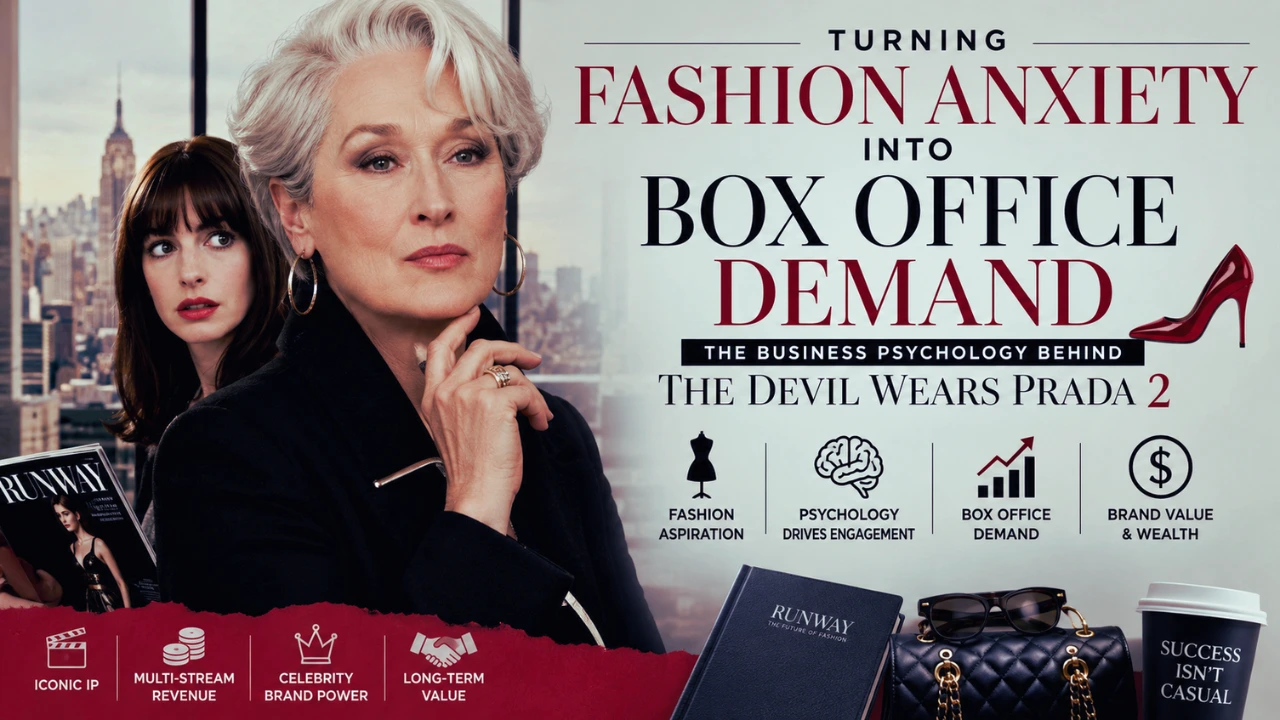
Turning Fashion Anxiety Into Box Office Demand
Nearly two decades after The Devil Wears Prada became a cultural phenomenon, Hollywood is returning to the world of luxury fashion, impossible bosses, and career ambition. That decision is not simply about nostalgia.
The business psychology behind The Devil Wears Prada 2 reveals something deeper about modern audiences. People are still fascinated by the tension between aspiration and anxiety. They want to look inside elite worlds while simultaneously questioning them.
That emotional contradiction has become extremely valuable.
For studios, films like The Devil Wears Prada 2 are more than entertainment products. They are intellectual property assets capable of generating box office revenue, streaming demand, licensing opportunities, fashion partnerships, and renewed attention for everyone involved. Understanding how Hollywood turns fashion anxiety into commercial demand offers an interesting look at celebrity wealth, brand equity, and the changing entertainment business.
Why This Celebrity Wealth Trend Matters Now?
Hollywood has entered an era where familiarity often outperforms novelty. Sequels, reboots, and legacy franchises continue to dominate studio strategies because they reduce marketing risk.
The Devil Wears Prada sits at the intersection of several highly profitable trends:
- Millennial nostalgia
- Luxury fashion culture
- Celebrity-driven marketing
- Streaming catalog value
- Social media discourse
- Female-led storytelling
The original film continues to find audiences through streaming platforms, clips shared across social media, and ongoing discussions around workplace culture. That sustained relevance gives studios a valuable asset that keeps producing attention long after its theatrical release.
Audience interest also arrives at a moment when luxury fashion is more accessible and visible than ever. Consumers may never attend Paris Fashion Week, but they experience designer culture daily through Instagram, TikTok, and celebrity endorsements.
Hollywood understands this dynamic well. Fashion creates aspiration. Aspiration creates engagement. Engagement creates demand.
The Business Model Behind the Money
At its core, The Devil Wears Prada 2 represents a familiar entertainment business model: leverage existing intellectual property while expanding its commercial lifespan.
Revenue opportunities can include:
- Global box office sales
- Streaming licensing agreements
- Digital rentals and purchases
- Television distribution rights
- Promotional partnerships
- Merchandise and publishing tie-ins
- Increased value of the original film’s catalog
While specific deal terms remain private, entertainment analysts frequently note that successful sequels can create value across multiple revenue streams simultaneously.
Salary Versus Ownership
Actors earn upfront compensation for appearing in films. However, salary is only one part of Hollywood money.
Some high-profile talent negotiate backend participation, producer credits, or long-term development agreements. Publicly available reporting has shown that major stars across the industry have historically benefited from profit participation arrangements on select projects.
Ownership tends to outlast paydays.
A salary pays for today’s work. Ownership, royalties, and residual structures can continue generating income years later, depending on contract terms and distribution models.
Brand Equity and Audience Trust
The return of actors such as Meryl Streep, Anne Hathaway, and Emily Blunt carries significant business value.
These performers are not simply cast members. They are brands.
Their names influence:
- Media coverage
- International distribution interest
- Promotional campaigns
- Audience trust
- Social engagement
- Streaming performance
Brand equity is difficult to measure precisely, but Hollywood has spent decades monetizing it.
When audiences buy tickets, they are often purchasing familiarity as much as the story itself.
| Wealth Driver | How It Works | Why It Matters |
|---|---|---|
| Salary | Upfront payment for performance | Generates immediate income |
| Residuals | Payments tied to reuse under certain agreements | Supports long-term earnings |
| Royalties | Income from licensed use and related products | Creates recurring revenue opportunities |
| Equity Deals | Ownership or profit participation arrangements | Potential for long-term wealth creation |
| Licensing | Monetizing intellectual property | Extends a brand’s commercial life |
| Brand Deals | Partnerships and endorsements | Converts public attention into revenue |
Why Traditional Net Worth Estimates Often Miss the Full Picture?
Celebrity net worth estimates are popular, but they rarely tell the entire story.
Public websites generally rely on available reporting, historical salaries, and estimated assets. They rarely account for:
- Private investments
- Undisclosed ownership stakes
- Real estate holdings
- Taxes and expenses
- Management fees
- Licensing income
- Residual payments
- Confidential business arrangements
Entertainment wealth is often less transparent than audiences assume.
A celebrity associated with a major franchise can experience indirect financial benefits as well. Increased visibility may lead to speaking engagements, endorsement deals, new production opportunities, or expanded business ventures.
That is why wealth in Hollywood is increasingly tied to leverage rather than a single pay cheque.
That Shows How This Works
Hollywood has repeatedly demonstrated the financial value of nostalgia.
Disney’s live-action remakes have generated billions globally over the past decade. Franchise revivals such as Top Gun: Maverick proved that legacy brands can outperform expectations when paired with strong audience sentiment.
Similarly, fashion itself has become a profitable storytelling tool.
Films like Barbie showed how cultural conversation can amplify commercial performance across industries. The film’s success extended beyond cinema into consumer products, collaborations, and brand campaigns.
The Devil Wears Prada 2 enters a marketplace where audiences increasingly participate in entertainment rather than consume it. Social media discussions, outfit recreations, and workplace comparisons all contribute to a film’s visibility.
Attention has become a monetizable asset.
The Risks Behind Celebrity Business Ventures
Not every celebrity project succeeds.
Sequels face several challenges:
- Audience fatigue
- Unrealistic expectations
- Changing cultural tastes
- Creative misalignment
- Weak scripts
- Marketing oversaturation
Fashion-driven projects carry additional risks.
Luxury brands are careful about protecting their image. Licensing arrangements, promotional partnerships, and brand associations require strategic alignment. A poorly received film can diminish perceived value rather than enhance it.
Celebrity businesses face similar issues.
Many celebrity-backed fashion labels, restaurants, and consumer brands have struggled due to weak product-market fit or operational problems. Fame attracts attention, but attention does not guarantee sustainable revenue.
Hollywood’s history is filled with projects that looked commercially safe on paper but failed to connect with audiences.
What This Reveals About Modern Celebrity Wealth?
Modern celebrity wealth increasingly revolves around ownership, intellectual property, and timing.
The entertainment economy no longer depends solely on salaries or box office receipts. A successful film can create opportunities across streaming rights, licensing deals, endorsement campaigns, and future projects.
For actors, maintaining cultural relevance may be as valuable as securing a single role.
For studios, intellectual property remains king.
And for audiences, films like The Devil Wears Prada 2 demonstrate how emotions can become economic assets. Fashion anxiety, workplace ambition, and nostalgia are deeply human experiences. Hollywood’s business model is built on packaging those experiences into products people are willing to revisit repeatedly.
That may be the sequel’s biggest advantage.
Conclusion
The business psychology behind The Devil Wears Prada 2 extends far beyond designer handbags and memorable one-liners. It highlights how modern entertainment companies monetize nostalgia, leverage intellectual property, and transform cultural emotions into commercial opportunities.
As Hollywood continues to prioritize established brands, the projects that succeed will likely be those that understand audiences best. Fashion may be the backdrop, but the real story is about ownership, attention, and the enduring value of cultural relevance.
FAQs
Why is The Devil Wears Prada 2 attracting so much attention?
The sequel combines nostalgia, celebrity appeal, and luxury fashion culture, making it highly relevant to audiences who grew up with the original film.
How do celebrities make money beyond movie salaries?
Celebrities can earn through royalties, residual income, licensing deals, endorsements, production credits, and business ventures.
What is brand equity in Hollywood?
Brand equity refers to the commercial value associated with a celebrity, franchise, or intellectual property that influences audience interest and marketability.
Why are celebrity net worth estimates often inaccurate?
Many estimates do not account for private investments, taxes, confidential agreements, or undisclosed ownership interests.
Can sequels increase celebrity wealth?
Yes. Successful sequels can increase visibility and lead to additional opportunities, including endorsement deals, future projects, and business partnerships.
Enjoy exploring the business side of fame? Browse more entertainment wealth analyses, celebrity business stories, and Hollywood money breakdowns to see how modern stars build influence beyond the screen.

Table of Contents