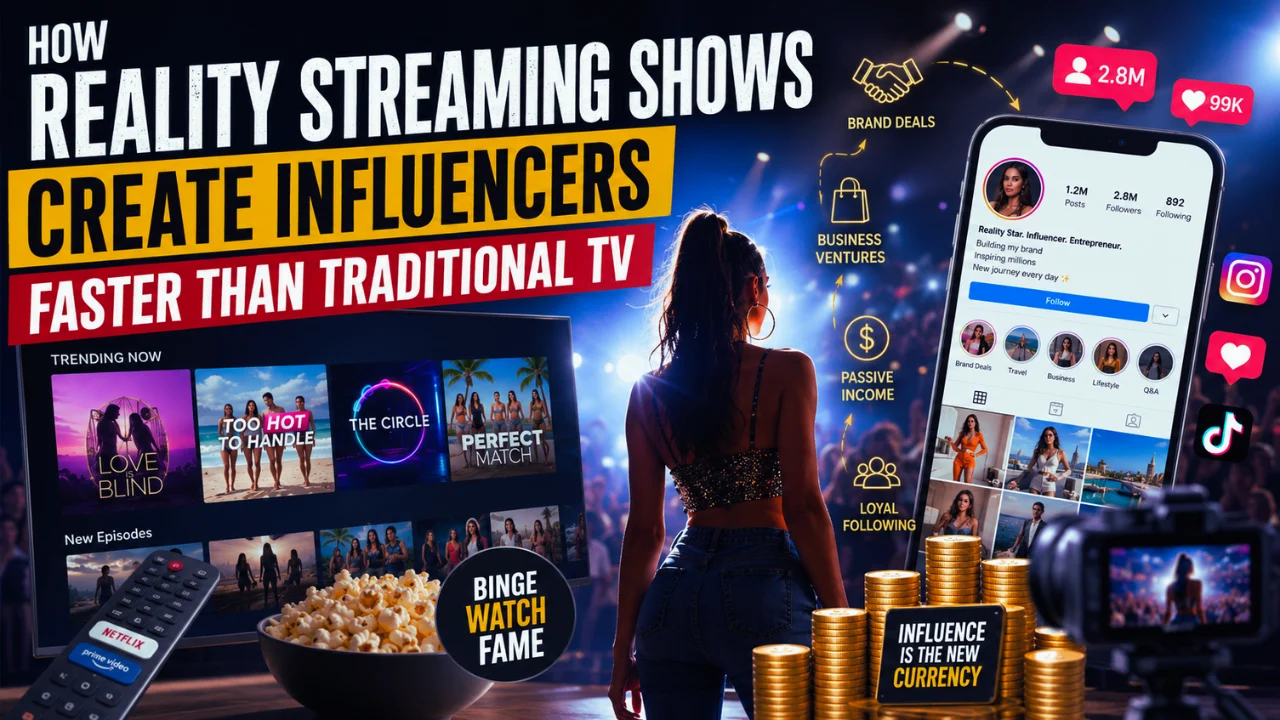
Reality Streaming Shows Create Influencers Faster
A decade ago, becoming a household name usually meant landing a role on network television, surviving multiple seasons, and hoping audiences remembered you long enough to build a career.
Today, a single season on a streaming reality show can change someone’s life almost overnight.
Shows like Netflix‘s Love Is Blind, Too Hot to Handle, and The Circle have repeatedly demonstrated that reality streaming shows create influencers faster than traditional TV. Contestants often leave with millions of social media followers, podcast opportunities, endorsement deals, and in some cases, entirely new businesses.
The shift says a lot about modern celebrity wealth. Fame is no longer just about screen time. It is about audience ownership, platform algorithms, and how quickly a personality can be converted into a brand.
Why This Celebrity Wealth Trend Matters Now?
Streaming platforms have changed the economics of fame.
Traditional television built stars slowly. Weekly episodes gave audiences time to develop long-term relationships with actors and personalities. Reality streaming, by contrast, compresses that process into a few weekends of binge-watching.
When an entire season drops at once, viewers spend eight or ten hours with contestants in a matter of days. That creates a stronger sense of familiarity and often accelerates social media engagement.
At the same time, the creator economy has matured. Brands are willing to pay creators for access to highly engaged audiences, regardless of whether they came from Hollywood, YouTube, or reality television.
Industry observers have noted that contestants from popular streaming franchises frequently transition into:
- Brand partnerships
- Podcast hosting
- Merchandise businesses
- Speaking engagements
- Paid appearances
- Subscription content
- Beauty and fashion ventures
- Talent management opportunities
For many participants, the show itself becomes less valuable than what happens afterward.
The Business Model Behind the Money
Streaming companies are not just producing entertainment. They are producing marketable personalities.
The model works because streaming services benefit from social conversation. Contestants benefit from visibility. Brands benefit from audience access.
Everyone wins, at least in theory.
Salary Versus Ownership
Reality television salaries are often modest compared to scripted productions. Public reporting over the years has suggested that many reality participants earn relatively little for appearing on a season, particularly newcomers without established audiences.
The real opportunity arrives after filming ends.
| Wealth Driver | How It Works | Why It Matters |
|---|---|---|
| Appearance Fees | Payment for participating in a show | Immediate but limited income |
| Brand Deals | Sponsored partnerships with companies | Converts attention into revenue |
| Licensing | Use of a personality’s image or brand | Creates scalable income streams |
| Royalties | Earnings from books, podcasts, or media projects | Supports long-term income |
| Equity Deals | Ownership stakes in businesses | Potential for significant wealth creation |
| Business Ventures | Launching products or services | Builds financial independence |
A contestant who launches a skincare brand or receives equity in a startup may ultimately earn far more than they did from appearing on television.
That distinction matters because celebrity wealth increasingly comes from ownership rather than compensation.
Brand Equity and Audience Trust
Followers are not money. Attention is not ownership.
Yet attention can become an asset when paired with audience trust.
Contestants on reality streaming shows are often perceived as more relatable than traditional celebrities. Audiences watch them date, argue, fail, and celebrate in unscripted environments.
That authenticity, whether entirely organic or partially produced, gives brands something valuable: credibility.
Companies regularly seek partnerships with personalities who can influence purchasing decisions. A contestant with a dedicated audience of several hundred thousand followers may provide more targeted marketing value than a traditional television actor with less digital engagement.
This is where brand equity enters the conversation. A recognizable name, a loyal audience, and a consistent public image can become a significant business asset.
Why Traditional Net Worth Estimates Often Miss the Full Picture?
Celebrity net worth remains one of the internet’s favorite topics, but public estimates rarely tell the whole story.
Most net worth websites rely on publicly available information, which means they often miss:
- Private investments
- Equity deals
- Revenue-sharing agreements
- Licensing income
- Real estate holdings
- Management expenses
- Taxes and liabilities
- Undisclosed business partnerships
A reality star may appear less wealthy on paper than an established actor while quietly building a portfolio of businesses and investments.
For example, an influencer with ownership in a consumer brand could benefit from future acquisitions or licensing opportunities that remain entirely private until publicly disclosed.
Modern entertainment wealth is increasingly difficult to measure because so much of it exists behind corporate structures and confidential agreements.
That Shows How This Works
Several streaming personalities have successfully leveraged reality television into broader careers.
Contestants from Netflix’s Love Is Blind have gone on to launch podcasts, secure endorsement deals, and establish media brands. Participants from Too Hot to Handle have built substantial social media audiences that support fashion collaborations and creator partnerships.
Meanwhile, personalities from Amazon MGM Studios reality properties and other international streaming formats have used their exposure to expand into entrepreneurship.
The pattern extends beyond reality dating shows.
Members of the Disney ecosystem once relied on traditional television for career development. Today’s talent pipeline increasingly includes streaming platforms, where discoverability happens faster, and global distribution is immediate.
A contestant in India, the United Kingdom, or the United States can become internationally recognizable within days if a show trends globally.
That level of exposure was far less common during the era of regional television syndication.
The Risks Behind Celebrity Business Ventures
Fast fame carries obvious advantages, but it also comes with significant risks.
Audience attention is notoriously unstable.
Common challenges include:
- Audience fatigue
- Declining engagement rates
- Failed product launches
- Poor management decisions
- Overexpansion
- Reputation damage
- Platform algorithm changes
- Brand misalignment
History has shown that visibility alone does not guarantee sustainable wealth.
Some personalities attempt to launch multiple businesses simultaneously, only to discover that running a company requires different skills than appearing on television.
Others struggle to maintain relevance after the initial excitement fades.
Celebrity entrepreneurship works best when fame supports a genuinely useful product or service rather than replacing it.
What This Reveals About Modern Celebrity Wealth?
The entertainment industry has entered an era where distribution matters as much as talent.
Streaming platforms have effectively become talent incubators, producing influencers at a pace traditional television cannot easily match.
The biggest winners are often those who understand that fame is temporary,y but ownership can be lasting.
A reality contestant who secures licensing deals, invests in businesses, or develops intellectual property may build considerably more wealth over time than someone relying exclusively on appearance fees.
That is why conversations about Hollywood money have changed. The focus is shifting from salaries and ratings toward equity deals, creator businesses, and audience monetization.
Modern celebrity wealth is increasingly built on leverage.
Leverage of attention.
Leverage of distribution.
And ultimately, leverage of ownership.
Conclusion
Reality streaming shows have become one of the entertainment industry’s most efficient talent factories. They compress years of audience-building into a matter of weeks and create opportunities that extend far beyond television.
For viewers, these shows are easy to binge. For participants, they can become the starting point for careers in media, business, and entrepreneurship.
As streaming platforms continue competing for attention, the next generation of celebrity wealth will likely be shaped less by traditional television contracts and more by who owns the strongest audience relationships when the cameras stop rolling.
FAQs
Why do reality streaming shows create influencers faster than traditional TV?
Streaming shows release globally and are often binge-watched, allowing audiences to form connections with contestants much faster than weekly television programming.
How do reality TV contestants make money after a show?
They can earn income through endorsement deals, sponsorships, podcasts, business ventures, appearances, licensing deals, and occasionally equity partnerships.
Do influencers earn more than traditional TV personalities?
It depends on the individual. Some influencers generate substantial income through creator businesses and brand partnerships, while others experience only short-term success.
Why are celebrity net worth estimates often inaccurate?
Public estimates usually exclude private investments, taxes, undisclosed business arrangements, and ownership stakes that are not publicly reported.
What role does brand equity play in celebrity wealth?
Brand equity reflects the value of a person’s reputation and audience trust. Strong brand equity can lead to endorsement opportunities, licensing agreements, and long-term business growth.
Interested in the business of fame? Explore more entertainment industry breakdowns, celebrity wealth analyses, and stories about how ownership is reshaping modern stardom.

Table of Contents