Who Is Romelu Lukaku? Net Worth, Age & Career
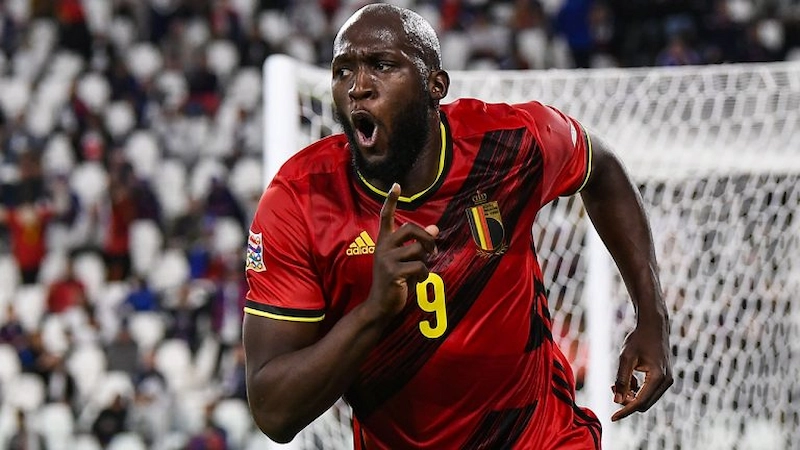
Who is Romelu Lukaku? is a question many football fans ask whenever Belgium’s powerful striker makes headlines. Romelu Lukaku is a Belgian professional footballer best known as one of the most prolific centre-forwards of his generation, Belgium’s all-time leading men’s goalscorer, and a player whose career has moved through some of Europe’s biggest clubs, including Chelsea, Everton, Manchester United, Inter Milan, Roma and Napoli.
People search for Romelu Lukaku because his story blends elite football, huge transfer fees, public pressure, national-team records, injuries, comeback attempts, and long-running curiosity about his net worth. He is not simply a striker with goals; he is a public figure whose career has carried both admiration and tension.
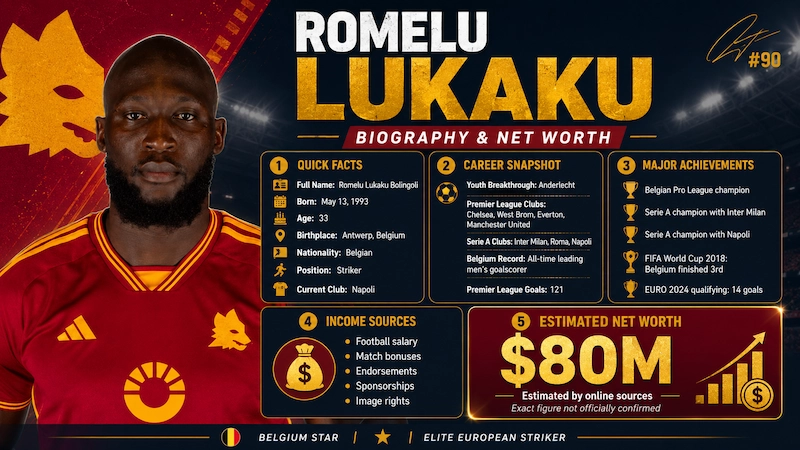
Quick Facts
| Field | Details |
|---|---|
| Full Name | Romelu Lukaku Bolingoli |
| Popular Name | Romelu Lukaku |
| Date of Birth | May 13, 1993 |
| Age | 33 years old |
| Birthplace | Antwerp, Belgium |
| Nationality | Belgian |
| Profession | Professional footballer |
| Playing Position | Striker /Center-forwardd |
| Current Club | SSC Napoli |
| Shirt Number | 9 |
| National Team | Belgium |
| Education | Attended Saint-Guidon Institute in Brussels while developing at Anderlecht (Not publicly confirmed as a formal education record) |
| Marital Status | Not married publicly |
| Spouse or Partner | No reliable public data found (Not publicly confirmed) |
| Children | Reportedly has a son named Romeo Emmanuel (Not publicly confirmed through official sources) |
| Known For | Belgium’s record goalscorer, a major European club career, and a powerful finishing style |
| Current Residence | Naples, Italy, due to Napoli career (Not publicly confirmed as permanent residence) |
| Estimated Net Worth | Several online sources estimate around $80 million, but this figure is not officially verified (Not publicly confirmed) |
| Main Income Sources | Football salary, bonuses, endorsements, sponsorships, image rights |
| Active Years | 2009–present |
| Official Website | No reliable personal official website found (Not publicly confirmed) |
| Official Social Media Profiles | Instagram: @romelulukaku |
These details reveal why Romelu Lukaku remains such a sought-after name. His public identity is built around goals, transfers, physical presence, and resilience. At 33, he is no longer the teenage prodigy who broke through at Anderlecht. Still, he remains relevant because his national-team record and club career keep him near the major football conversations.
Official Sources
- SSC Napoli Player Profile
- Royal Belgian FA Red Devils Team Selection
- Premier League Player Profile
- Official Instagram Profile
Early Life and Background
Romelu Lukaku was born in Antwerp, Belgium, into a family with Congolese roots. His father, Roger Lukaku, was also a professional footballer, which gave Romelu early exposure to the sport. But his childhood was not shaped by comfort. Lukaku has spoken publicly about difficult financial conditions at home, including moments when he realized his family was struggling badly. That background matters because it explains the hunger that has followed him throughout his career.
| Early Life Detail | Information |
|---|---|
| Birthplace | Antwerp, Belgium |
| Family Heritage | Congolese background |
| Father | Roger Lukaku, former professional footballer |
| Brother | Jordan Lukaku, also a professional footballer |
| Early Clubs | Rupel Boom, KFC Wintam, Lierse, Anderlecht |
| Early Motivation | Financial hardship and desire to support his family |
Lukaku’s early story is often told through power and goals, but the emotional part is just as important. He grew up understanding that football could change his family’s life. There is a sense that his ambition came early, not as a vague dream but as a practical mission. By the time scouts noticed him, he was already playing with the seriousness of someone who believed football was his way out.
Education
Romelu Lukaku’s academic background has not been widely documented in official public records. He was reportedly associated with Saint-Guidon Institute in Brussels during his Anderlecht youth years, and his school life was featured in the Belgian documentary series “De School Van Lukaku” (Not publicly confirmed as a complete education record).
| Education / Training Area | Details |
|---|---|
| Schooling | Saint-Guidon Institute, Brussels (Not publicly confirmed as a complete education record) |
| Football Academy | Anderlecht youth system |
| Professional Training | Club-based football development from childhood |
| Languages | Reportedly speaks multiple languages, including Dutch, French, English, Italian, Spanish, and Portuguese (Not publicly confirmed in full through official sources) |
In Lukaku’s case, football education mattered more publicly than academic credentials. He was trained in Belgian youth football, then honed by the Premier League’s intensity and Serie A’s tactical demands. His career shows how environments can educate a player: Anderlecht gave him early belief, England gave him visibility, and Italy gave him structure.
Career Journey
Lukaku became a professional at Anderlecht as a teenager. He made his senior debut at 16 and quickly became one of Belgium’s most talked-about young footballers. His size and finishing were unusual for his age, and European clubs noticed. Chelsea signed him in 2011, but his first spell at Stamford Bridge did not bring regular first-team football. Loans to West Bromwich Albion and Everton changed that.
At West Brom, he showed he could score in England. At Everton, he became a Premier League force. That period turned him from a “promising striker” into a proven top-level forward. Manchester United then signed him in 2017, and while he scored goals, the relationship never felt completely settled. His move to Inter Milan in 2019 under Antonio Conte became one of the defining decisions of his career.
| Year | Career Moment |
|---|---|
| 2009 | Senior breakthrough at Anderlecht |
| 2011 | Joined Chelsea |
| 2012–2013 | Loan spell at West Bromwich Albion |
| 2013–2017 | Developed into a Premier League star at Everton |
| 2017–2019 | Played for Manchester United |
| 2019–2021 | Rebuilt his career at Inter Milan under Antonio Conte |
| 2021 | Returned to Chelsea in a high-profile transfer |
| 2022–2024 | Loan spells at Inter Milan and Roma |
| 2024–present | Joined Napoli on a permanent transfer |
The turning point was Inter. Under Conte, Lukaku looked physically sharper, tactically clearer, and emotionally more secure. He won Serie A with Inter and reminded critics that his best football could dominate elite defenders. His later return to Chelsea was more complicated, and his loan move back to Italy showed how difficult it can be for even a world-class striker to find the right system.
Major Achievements
Romelu Lukaku’s achievements span club and international football. His Belgium record is especially important. For his national team, he became the all-time leading men’s goalscorer, reaching 90 international goals in 2026. That number places him among the most productive international strikers in football history.
| Achievement | Details |
|---|---|
| Belgian Pro League Title | Won with Anderlecht |
| Serie A Title | Won with Inter Milan |
| Serie A Title | Won with Napoli |
| Belgium Record | All-time leading men’s goalscorer |
| UEFA EURO 2024 Qualifying Record | Scored 14 goals in one qualifying campaign |
| FIFA World Cup 2018 | Helped Belgium finish third |
| Premier League Record | Scored 121 Premier League goals |
| Major Clubs | Chelsea, Everton, Manchester United, Inter Milan, Roma, Napoli |
What stands out is the scale of his career. Lukaku has been judged harshly at times, especially during difficult spells at Chelsea or after missed chances for Belgium, but his achievements are too large to dismiss. Many observers believe his career is misunderstood because expectations often follow his transfer fees rather than his actual output.
Businesses, Investments, and Income Sources
Romelu Lukaku makes money mainly through football. His salary has been the foundation of his wealth, supported by bonuses, sponsorships, endorsement deals, and image rights. He has had commercial links with major sports brands, and online sources have reported endorsement income, but exact endorsement figures are not officially verified.
| Income Source | Details |
|---|---|
| Club Salary | Main income source from Napoli and previous clubs |
| Performance Bonuses | Likely included in football contracts (Not publicly confirmed in detail) |
| Endorsements | Sportswear and brand partnerships reported over his career |
| Image Rights | Common for elite football contracts (Not publicly confirmed in detail) |
| National Team Payments: Belgium’s | m appearance and tournament-related compensation (Not publicly confirmed in detail) |
| Investments | No reliable public investment data found (Not publicly confirmed) |
| Real Estate | No reliable public real estate portfolio found (Not publicly confirmed) |
Football salaries remain the most important part of Lukaku’s income story. Capology estimates his current Napoli salary at about €7.69 million gross per year, excluding bonuses, and estimates his career gross earnings at more than €116 million, excluding bonuses. Those are not official club disclosures, but they offer a useful public estimate of his earning power.
Net Worth Analysis
Several online sources estimate Romelu Lukaku’s net worth at around $80 million, but this figure is not officially verified (Not publicly confirmed). Estimates vary across sources, and the exact figure has not been publicly confirmed.
The strongest evidence of Lukaku’s wealth comes from his football contracts and transfer history. Clubs have paid large fees for him across different stages of his career. Everton, Manchester United, Inter Milan, Chelsea, and Napoli all invested heavily in him because elite strikers are rare. His 2021 return to Chelsea was especially significant because it involved a club-record transfer fee at the time.
| Wealth Category | Publicly Available Assessment |
|---|---|
| Estimated Net Worth | Around $80 million from online estimates (Not publicly confirmed) |
| Career Gross Earnings | Estimated above €116 million, excluding bonuses (Not publicly confirmed) |
| Current Salary | Estimated at around €7.69 million gross per year at Napoli (Not publicly confirmed) |
| Endorsements | Reported brand partnerships, exact values not verified |
| Transfer Value History | Major fees paid by Chelsea, Everton, Manchester United, Inter Milan, and Napoli |
| Investments / Assets | No reliable public data found (Not publicly confirmed) |
Lukaku likely built his wealth through a long run at the top of European football rather than one single payday. His Premier League years gave him global visibility. Inter Milan revived its football value. Chelsea’s second deal placed him among the highest-profile strikers in world football. Napoli added another chapter, keeping him within Serie A’s commercial ecosystem.
Still, net worth should be treated carefully. Salary is not the same as net worth. Taxes, agent fees, living costs, family obligations, investment choices, and contract structures all affect the final number. A reported $80 million estimate may be plausible based on his earnings history, but it should not be presented as an official figure.
Personal Life
Romelu Lukaku keeps much of his private life away from public attention. He is not publicly married, and there is no strongly verified public spouse or partner. Some reports have linked him to past relationships, and some online sources mention a son named Romeo Emmanuel, but official public sources do not consistently confirm those details.
| Personal Detail | Information |
|---|---|
| Marital Status | Not publicly married |
| Spouse | No reliable public data found (Not publicly confirmed) |
| Partner | No reliable public data found (Not publicly confirmed) |
| Children | Romeo Emmanuel reportedly mentioned online (Not publicly confirmed) |
| Father | Roger Lukaku, former professional footballer |
| Brother | Jordan Lukaku, professional footballer |
| Religion / Beliefs | Reported to be Christian and private about faith (Not publicly confirmed in full through official sources) |
The most publicly visible part of Lukaku’s personal life is his family background. He has often connected his football drive to his mother’s sacrifices and the poverty he saw as a child. That emotional memory has become part of his public identity. It helps explain why, even when fans criticize his performances, many still respect the human story behind the footballer.
Public Image and Influence
Lukaku’s public image is complex. To Belgian fans, he is a record-breaking striker who has delivered for the national team across many years. To club fans, the picture is more divided. Everton fans remember the goals. Inter fans remember the title-winning force. Chelsea and Manchester United supporters often debate whether he fully met expectations.
That tension is part of why people continue to search for him. Lukaku has never been a quiet background footballer. His transfers were expensive, his goals were numerous, and his mistakes were widely discussed. He has also spoken about racism and unfair treatment, making him a player whose career sits inside larger conversations about media pressure, race, body image, and how footballers are judged.
In many ways, Romelu Lukaku represents the modern striker’s burden. Goals are expected. Transfer fees become a shadow. Every touch is clipped, posted, and judged. Watching the career unfold, it is hard not to notice how often his success and criticism arrive at the same time.
Social Media Presence
Lukaku’s main public social media profile is Instagram, where he has millions of followers. His online presence is not as constant as some footballers’, but when he posts, it often attracts major attention because of his status in European football.
| Platform | Profile / Status |
|---|---|
| @romelulukaku | |
| X / Twitter | No reliable official active profile found (Not publicly confirmed) |
| No reliable official personal page found (Not publicly confirmed) | |
| YouTube | No reliable personal official channel found (Not publicly confirmed) |
| Club Website | SSC Napoli profile available |
| National Team | Listed through the Royal Belgian FA squad information |
Social media contributes to Lukaku’s brand value by making him globally recognizable. But he does not appear to rely on constant online self-promotion. His public image is still shaped more by football performances, transfers, interviews, and major tournament moments than by daily content.
Interesting Facts About Romelu Lukaku
- Romelu Lukaku made his senior professional debut as a teenager at Anderlecht.
- He became Belgium’s all-time leading men’s goalscorer.
- He reached 90 international goals for Belgium in 2026.
- He has played for major clubs in Belgium, England,d and Italy.
- He scored 121 Premier League goals during his time in England.
- He won Serie A with Inter Milan and later with Napoli.
- He scored a record 14 goals in UEFA EURO 2024 qualifying.
- His father, Roger Lukaku, was also a professional footballer.
- His younger brother, Jordan Lukaku, also became a professional footballer.
- He has spoken publicly about growing up with financial hardship.
Future Plans and What Comes Next
Romelu Lukaku’s future depends on fitness, role, leadership, and timing. At 33, he is not at the beginning of his career, but powerful strikers can remain useful when managed well. His 2026 return to Belgium’s squad showed that national-team coaches still value his presence, even when injuries have disrupted his club season.
At Napoli, the challenge is different. He must prove availability, rhythm, and tactical value. If he stays fit, he can still be a penalty-box threat and a physical reference point for teammates. If injuries continue, his role may shift toward experience, squad depth, and selective minutes.
There is also the question of legacy. Lukaku has already achieved enough to be remembered as one of Belgium’s greatest forwards. What comes next will decide how the final chapter feels: a fading veteran story, a late-career revival, or a more measured transition into leadership.
FAQs
Who is Romelu Lukaku?
Romelu Lukaku is a Belgian professional footballer who plays as a striker for SSC Napoli and the Belgium national team.
What is Romelu Lukaku known for?
He is known for his goalscoring, physical strength, major European club career,r and status as Belgium’s all-time leading men’s goalscorer.
What is Romelu Lukaku’s net worth?
Several online sources estimate Romelu Lukaku’s net worth at around $80 million, but this figure is not officially verified (Not publicly confirmed).
How does Romelu Lukaku make money?
He mainly earns money through football salary, bonuses, endorsements, sponsorships, ps and image rights.
How old is Romelu Lukaku?
Romelu Lukaku was born on May 13, 1993, which makes him 33 years old.
Is Romelu Lukaku married?
Romelu Lukaku is not publicly married. No reliable public spouse data found (Not publicly confirmed).
What does Romelu Lukaku do for a living?
He is a professional footballer and plays as a striker.
Where is Romelu Lukaku now?
Romelu Lukaku is currently with SSC Napoli and remains part of the Belgium national team setup.
Final Thoughts
Romelu Lukaku’s story is not neat, and that is what makes it worth following. He has been a teenage prodigy, a Premier League scorer, a Manchester United signing, an Inter Milan hero, a Chelsea debate, a Napoli striker, and Belgium’s record goalscorer. Few modern footballers have carried so many different labels at once.
His legacy will not be built only on perfect moments. It will also include pressure, criticism, injury, reinvention, and public misunderstanding. Yet the numbers remain. The goals remain. The journey from financial hardship in Belgium to elite stadiums across Europe remains.
People continue to search for Romelu Lukaku because his career still feels unfinished. There is always another question: Can he stay fit? Can he deliver one more major tournament moment? Can he reshape the final years of his club career? For a player who has spent most of his life being judged by goals, the final chapters may be judged by something more lasting — resilience.

Table of Contents