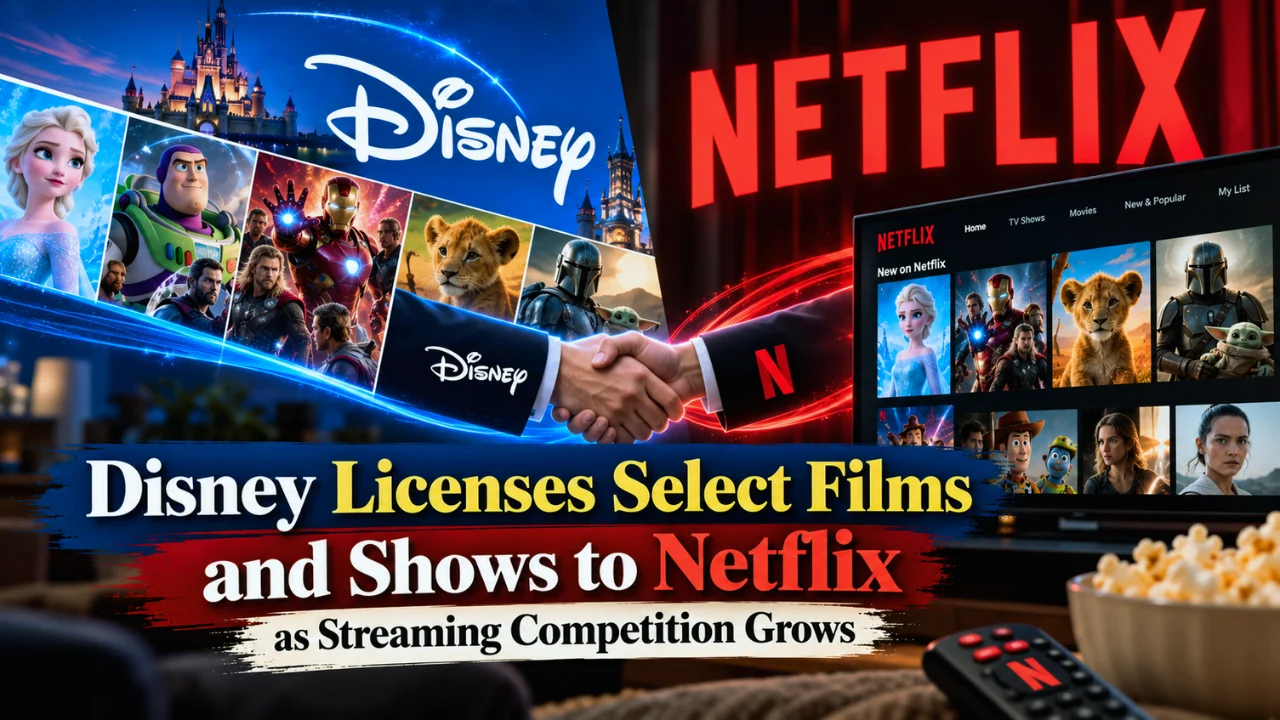
Disney Licenses Select Films and Shows to Netflix as Streaming Competition Grows
The Walt Disney Company has signed a licensing agreement with Netflix to make a number of its films and TV shows available on the competing streaming service. The decision marks a major strategic shift for Disney, which has traditionally kept its intellectual property exclusively on its own service, Disney+, as competition in the digital entertainment space intensifies.
Disney has licensed a set of films and TV shows to Netflix, ending a long stretch of tight exclusivity for those titles on Disney+. The move comes as subscriber growth slows in the streaming industry and aims to generate additional revenue and boost brand visibility. While the deal includes legacy titles and some non-franchise content, the core Marvel and Star Wars properties will mostly remain exclusive to Disney platforms.
Key Details
- What happened: Disney inked a multi-year licensing deal to stream select content on Netflix.
- Who’s in: The Walt Disney Company, Netflix, Inc.
- Strategic Goal: To monetize older or niche content and reach audiences who are not Disney+ subscribers
- Content Scope: Old animated films, classic live-action films, some TV series; no new Marvel Cinematic Universe films or other major current franchises.
- Industry Context: Part of a larger trend of “coopetition” among streaming giants to combat market saturation.
What Happened?
In a move that surprised some in the industry, Disney said it would allow Netflix to stream a rotating slate of its content. Disney has not publicly detailed the full list of titles in a single press release. Still, people familiar with the matter said the deal includes older animated features, classic live-action films, and completed TV series that Disney+ no longer prioritizes acquiring.
The deal marks a shift from the strategy used to launch Disney+ in 2019, when then-CEO Bob Chapek pulled most Disney-owned content from third-party platforms to build a standalone subscriber base. Under current CEO Bob Iger, the company has pivoted away from focusing on subscriber growth at all costs toward profitability and long-term expansion.
Why Is Disney Licensing Content to a Rival?
- Revenue Diversification: Licensing fees for Netflix create an instant stream of high-margin revenue that helps offset the high costs of content production.
- Market Saturation: As U.S. streaming penetration has matured, acquiring new Disney+ subscribers has become increasingly challenging and costly. By licensing content, Disney can make money from users that won’t subscribe to another service.
- Brand Visibility: Having older titles on popular platforms like Netflix helps keep them culturally relevant and keeps Disney franchises in the public conversation.
- Cost Efficiency: Hosting and paying residuals on a huge library of content on Disney+ adds up. Operational overhead can be reduced by moving some of that library to Netflix.
What Content Is Included?
- Legacy Animated Films: Classic Disney animation canon titles that aren’t currently driving new theatrical releases.
- Live-action classics: Older, family-friendlymovies from the 990sand early 22000s
- TV Series: That Have Completed Their Runs and Are Not Part of Active Franchise Expansions.
Industry Reaction and Expert Analysis
Media analysts see the deal as a pragmatic adjustment to the realities of the streaming economy.
“Companies are finding that exclusivity has diminishing returns. “Disney is licensing out non-core assets to Netflix in an effort to capture value from consumers that will never subscribe to Disney+, while Netflix is getting premium family-friendly content without the expense of original production.
Netflix executives are said to have welcomed the addition of Disney content as it bolsters its offering to family demographics. In this key segment, Netflix has long faced stiff competition from Disney+ and Amazon Prime Video.
Why It Matters
This development signals that the streaming market is maturing, with rigid exclusivity models giving way to more flexible distribution. That means consumers can access Disney’s massive catalog without paying for multiple subscriptions. For investors, it’s a signal that big media companies are paying attention to cash flow and profit margins — not vanity metrics like total subscriber numbers.
The deal also reflects a changing dynamic between Disney and Netflix. The two companies, once embroiled in a bitter battle for the same exclusive rights, now have a complex relationship of competition and commercial cooperation.
What Happens Next
Subscribers can expect the first wave of licensed Disney titles to start hitting Netflix in the coming months. Disney has indicated the library will rotate so that titles could move between platforms depending on contractual windows.
Industry observers will watch other big studios, such as Warner Bros. Discovery and NBCUniversal, to see whether they also strike similar cross-platform licensing deals. The streaming wars are continuing, and the line between competitor and partner is increasingly blurry.
FAQ
Will there be new Marvel movies on Netflix?
No. Marvel Cinematic Universe (MCU) films and series, both current and future, are exclusive to Disney+ and theatrical windows to boost subscriptions to Disney’s own services.
So why did Disney yank content from Netflix in the first place?
In 2019, Disney created its own streaming service, Disney+, and moved its content from Netflix to create a unique value proposition that would drive consumers to subscribe directly to Disney.
So does this mean that Disney+ is going away?
No. Disney+ is still a key part of Disney’s direct-to-consumer strategy. The deal only includes certain select, non-core titles, with flagship franchises still exclusive to Disney+.
How long will Disney stuff be on Netflix?
Length will vary depending on the title and the licensing agreement. These deals are often for fixed periods of time (say 12-18 months), after which rights can revert to Disney or be renegotiated.

Table of Contents