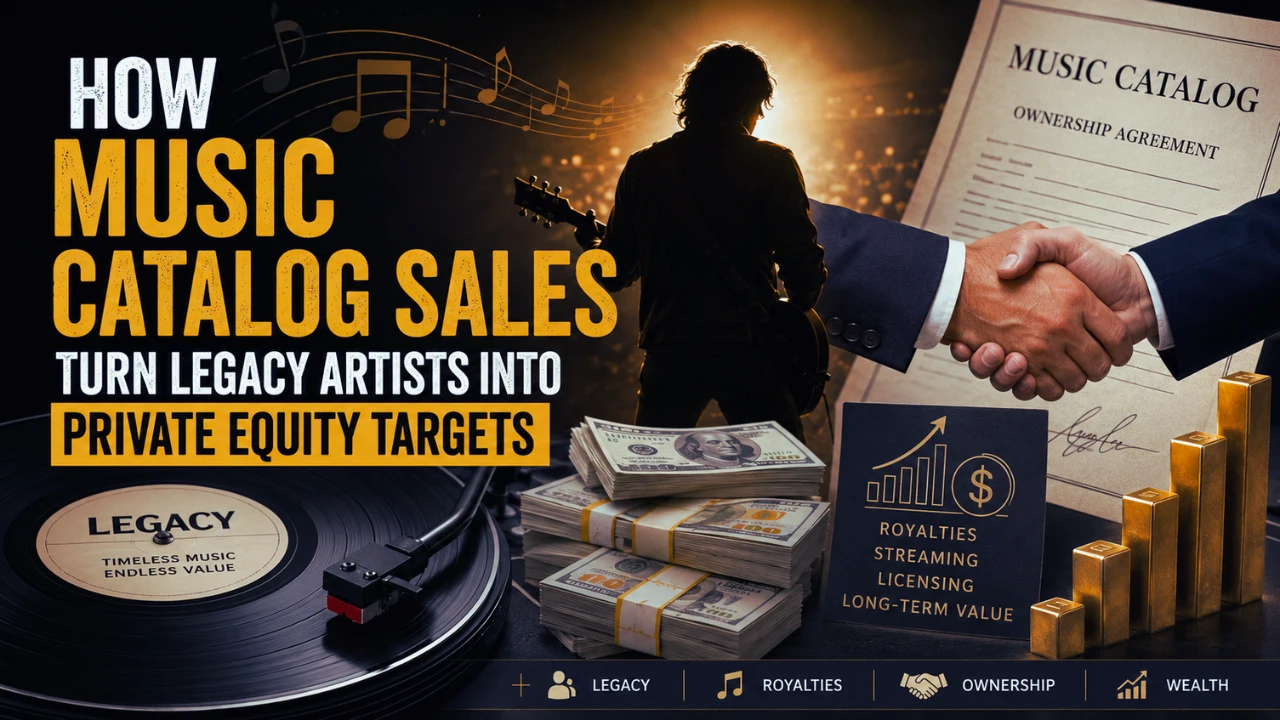
Music Catalog Sales and Private Equity Explained
For decades, a musician’s legacy was measured by awards, sold-out tours, and chart-topping albums. Today, another metric is attracting just as much attention: the value of their song catalog.
Music catalog sales have transformed legacy artists into some of the most sought-after assets in private equity. Firms that once focused on real estate, technology, and infrastructure are now competing for publishing rights and master recordings. From Bob Dylan to Bruce Springsteen and Justin Bieber, publicly reported deals have highlighted a major shift in how entertainment wealth is created and preserved.
Understanding music catalog sales is no longer just for industry insiders. They offer a window into modern celebrity wealth, ownership economics, and the growing role of intellectual property in the entertainment business.
Why This Celebrity Wealth Trend Matters Now?
Streaming changed everything.
Before platforms like Spotify and Apple Music, music revenue was often tied to physical sales and radio play. Today, songs can generate income around the clock across dozens of markets through streaming, licensing, film placements, gaming, social media, and advertising.
For investors, that creates something highly attractive: predictable cash flow.
Private equity firms and specialized investment companies increasingly view music rights as long-term assets. A popular song released 30 years ago can still generate royalties every day. In some cases, its value even grows when it finds new audiences through TikTok trends, television placements, or movie soundtracks.
At the same time, many legacy artists are reaching retirement age. Selling a catalog can provide immediate liquidity while allowing artists to simplify estate planning and secure wealth for future generations.
Music catalogs have effectively become the entertainment industry’s version of dividend-producing assets.
The Business Model Behind the Money
Music catalogs generate revenue from multiple sources, which helps explain why investors are willing to pay premium valuations.
| Wealth Driver | How It Works | Why It Matters |
|---|---|---|
| Publishing Royalties | Income from songwriting rights | Creates recurring long-term revenue |
| Master Rights | Earnings from recordings | Controls commercial use of songs |
| Licensing Deals | Songs used in films, TV, ads, and games | Expands earning opportunities |
| Streaming Revenue | Payments from digital platforms | Generates daily global income |
| Brand Partnerships | Music tied to campaigns and promotions | Increases catalog visibility |
| Estate Value | Catalog becomes an inheritable asset | Supports generational wealth planning |
Salary Versus Ownership
An artist may earn millions during a successful tour, but touring income is active income. It depends on continued performances.
Ownership is different.
A music catalog can continue producing royalties long after an artist stops recording or performing. That distinction explains why ownership deals have become central to celebrity wealth discussions.
A hit song from the 1980s can still generate revenue from streaming playlists, commercials, and international licensing agreements. The artist may not step on stage for years and still receive payments.
This is why entertainment business observers often argue that intellectual property is one of the most valuable forms of celebrity ownership.
Brand Equity and Audience Trust
Private equity is not simply buying songs. It is buying cultural relevance.
A catalog attached to a globally recognized artist carries decades of audience trust. Investors know that songs from artists like Bob Dylan or Bruce Springsteen are likely to remain culturally significant.
Brand equity matters because it supports future monetization. A recognizable catalog has more opportunities for:
- Film and television licensing
- Documentary projects
- Biopics
- Anniversary releases
- Merchandise collaborations
- International expansion
- Streaming playlist placements
Legacy artists become investment opportunities because their names continue to carry commercial value long after their peak chart years.
Why Traditional Net Worth Estimates Often Miss the Full Picture?
Celebrity net worth estimates are often built around visible income sources such as album sales, tours, and endorsement deals.
The problem is that many catalog transactions involve private negotiations.
Public announcements may disclose that a catalog was sold, but exact terms often remain confidential. Tax considerations, payment schedules, retained ownership rights, and future royalty participation are rarely made public.
As a result, publicly available estimates may overlook:
- Private investments
- Partial ownership stakes
- Undisclosed licensing agreements
- Estate planning structures
- Debt obligations
- Management and legal costs
- Revenue-sharing arrangements
Celebrity wealth is rarely a simple equation.
An artist who appears less active publicly may still receive substantial residual income from decades of ownership. Conversely, an artist with a highly visible lifestyle may not have the same long-term assets.
That is one reason why modern entertainment wealth is increasingly difficult to calculate with precision.
That Shows How This Works
Several major deals have brought music catalog sales into mainstream business coverage.
Bob Dylan reportedly sold publishing rights associated with his catalog in a widely covered transaction that drew significant attention from investors and entertainment executives.
Bruce Springsteen was also the subject of a major catalog deal involving both publishing and recorded music rights, according to public reporting.
Justin Bieber later joined the trend, demonstrating that catalog monetization is not limited to artists nearing retirement.
These transactions underscored a broader reality: intellectual property can command valuations traditionally associated with major corporations.
Private equity firms are not betting on nostalgia alone. They are investing in assets with proven demand, global reach, and multiple revenue channels.
The Risks Behind Celebrity Business Ventures
Music catalogs may look like stable investments, but they are not risk-free.
Consumer tastes evolve. Licensing opportunities fluctuate. Regulatory changes can affect royalty structures, while economic downturns may influence acquisition activity.
Other risks include:
- Overpaying for catalogs during bidding wars
- Declining relevance among younger audiences
- Changes in streaming economics
- Copyright disputes
- Estate conflicts
- Shifting international royalty regulations
Artists also face potential trade-offs.
Selling ownership can provide immediate financial security, but it may limit future control over how songs are used commercially. Some artists retain approval rights, while others transfer broader control as part of a transaction.
These decisions are often as much about legacy as they are about money.
What This Reveals About Modern Celebrity Wealth?
Celebrity wealth has entered an ownership era.
For many public figures, the most valuable asset is no longer their next project. It is the intellectual property they’ve accumulated over decades.
The creator economy accelerated this trend by teaching audiences and investors alike that ownership matters more than visibility. Royalties, licensing deals, and equity interests can outlast careers built on performance alone.
Music catalog sales offer a clear example of that shift.
They show how fame can evolve into a financial asset, how cultural influence can become a balance-sheet item, and why traditional conversations about Hollywood money increasingly revolve around ownership rather than paychecks.
The next generation of celebrity billionaires and multimillionaires may not be defined by what they earn this year, but by what they continue to own decades from now.
Conclusion
Music catalog sales have changed the conversation around legacy artists and wealth creation. What was once viewed as a collection of songs is now treated as a portfolio of intellectual property capable of generating revenue across multiple industries.
As streaming, licensing, and global distribution continue to expand, music rights are likely to remain attractive to investors looking for dependable, long-term assets. For artists, these deals represent more than a payday. They reflect a fundamental shift in how entertainment legacies are valued in the modern economy.
FAQs
What are music catalog sales?
Music catalog sales involve artists selling some or all of their publishing rights, master recordings, or related intellectual property to investors or companies.
Why are private equity firms buying music catalogs?
Private equity firms view music catalogs as assets that can generate recurring royalty income through streaming, licensing, and commercial use.
Do artists lose all control when they sell their catalogs?
Not always. Some deals reportedly include retained approval rights or partial ownership arrangements, depending on the terms negotiated.
How do royalties contribute to celebrity wealth?
Royalties provide ongoing income whenever music is streamed, licensed, broadcast, or commercially used, helping create long-term financial stability.
Why are celebrity net worth estimates often inaccurate?
Many estimates do not account for private investments, confidential ownership agreements, taxes, debt, or undisclosed royalty arrangements.
Interested in the business behind fame? Explore more entertainment wealth stories, celebrity ownership deals, and deep dives into the economics shaping modern Hollywood.
Table of Contents