Why Career Comebacks Can Boost Celebrity Net Worth
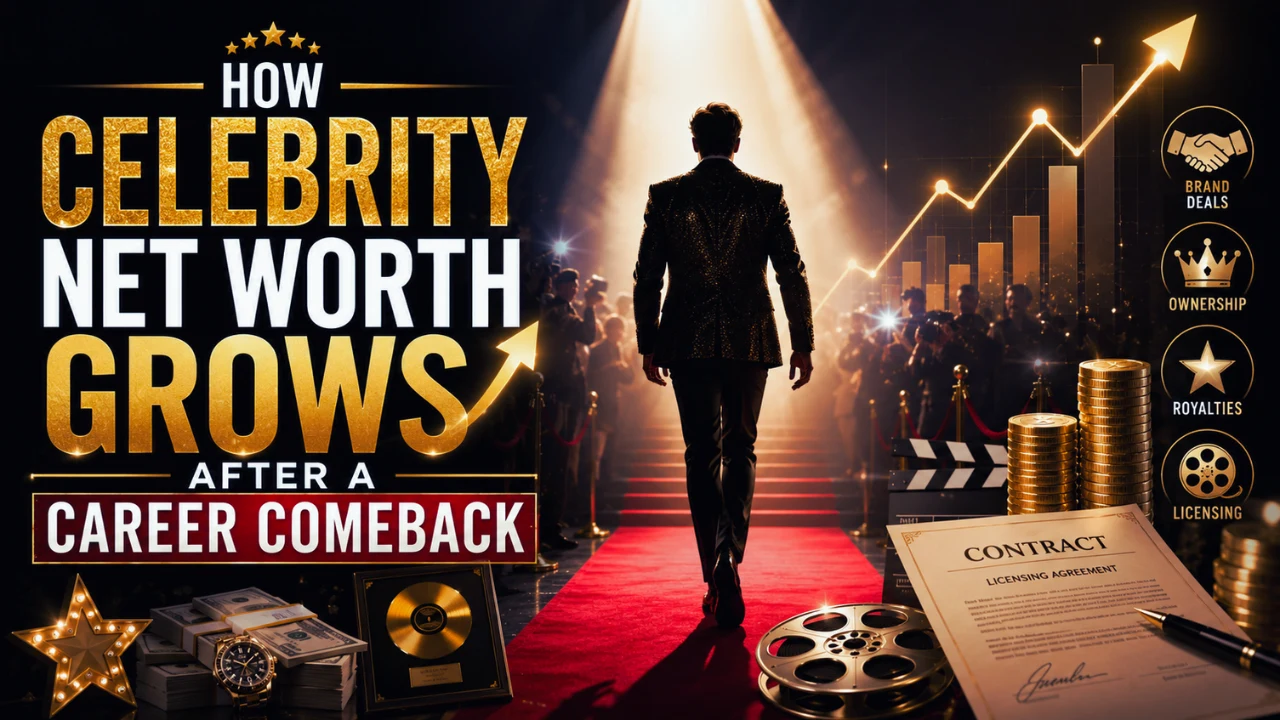
This article explains how celebrity net worth grows after a career comeback, especially when renewed fame turns into better contracts, ownership deals, licensing income, and stronger brand value. It also shows why traditional net worth estimates often miss private investments, royalties, taxes, management costs, and deal structures.
A celebrity comeback is not just a feel-good headline. It can become a financial reset.
When an actor wins back Hollywood’s attention, a musician finds a new generation of fans, or a former tabloid figure reclaims public respect, the money story changes fast. New offers arrive. Old work gets rewatched. Brands call again. Streaming platforms, publishers, producers, and investors suddenly see value where the market had gone quiet.
That is why the question of how celebrity net worth grows after a career comeback is bigger than one paycheck. The real wealth shift often happens through leverage. A comeback can raise salary, but it can also revive brand equity, open ownership deals, improve royalty streams, and create business opportunities that were not available during the quiet years.
Exact celebrity wealth is hard to verify. Public net worth estimates are usually based on incomplete data, and private deals rarely reveal the full picture. Still, the pattern is clear: in modern entertainment, a comeback can turn attention into assets.
Why This Celebrity Wealth Trend Matters Now?
The entertainment business has become more fragmented, but also more flexible. A comeback no longer depends only on landing a studio movie or a hit album. A celebrity can return through a prestige film, a streaming series, a documentary, a podcast, a memoir, a viral clip, a beauty brand, or a smart investment.
That matters because attention now travels across platforms. A single comeback role can drive interviews, social media growth, streaming demand, fashion coverage, brand partnerships, and renewed interest in past work.
Brendan Fraser’s Oscar win for The Whale became a major comeback story after years of reduced visibility. At the same time, Ke Huy Quan’s Oscar-winning return after decades away from the limelight showed how awards can reopen the industry’s door. Both stories were emotionally powerful, but they also reveal a business truth: prestige can restore market confidence.
A comeback also creates scarcity. If audiences believe a celebrity has been overlooked, underestimated, or unfairly forgotten, their return can feel like an event. Studios, brands, and platforms understand that emotional momentum has commercial value.
How Celebrity Net Worth Grows After a Career Comeback
A comeback usually creates wealth in layers. The first layer is obvious: new acting roles, touring income, publishing deals, hosting fees, or endorsement deals. The second layer is more powerful: ownership, backend participation, licensing, royalties, and business ventures.
That second layer is where celebrity wealth can expand beyond salary.
A performer who once accepted flat fees may return with more leverage. A musician with revived demand may negotiate better touring terms. A star with renewed public trust may launch or relaunch a brand. A producer-actor may use comeback momentum to build a production company rather than take another role.
The comeback does not guarantee wealth. It creates negotiating power. What happens next depends on management, timing, deal structure, audience loyalty, and the celebrity’s ability to turn fame into repeatable revenue.
The Business Model Behind the Money
Celebrity comeback wealth usually comes from several revenue streams working together.
| Wealth Driver | How It Works | Why It Matters |
|---|---|---|
| Salary | Upfront payment for acting, music, hosting, writing, or appearances | Creates immediate income |
| Royalties | Ongoing payments from music, books, merchandise, or creative works | Can support long-term earnings |
| Residuals | Payments from reuse, reruns, streaming, or distribution | Keeps older work financially active |
| Licensing Deals | Paid use of name, image, likeness, or brand identity | Allows income without operating every part of the business |
| Equity Deals | Ownership stake in a company or product | Can grow if the company succeeds |
| Brand Deals | Paid endorsements and partnerships | Converts audience trust into marketing value |
| Business Ventures | Celebrity-backed products, restaurants, production companies, or consumer brands | Builds wealth outside traditional entertainment income |
SAG-AFTRA describes residuals as payments connected to reuse across areas such as free TV, cable, pay cable, video/DVD, New Media, and theatrical productions. Its 2023 TV and theatrical contract also added a streaming success payment structure for certain high-budget streaming productions, showing how residual income is still being renegotiated for the streaming era.
Salary Versus Ownership
Salary is clean and immediate. A star performs the job, gets paid, and moves on.
Ownership is messier, but it can be much more valuable. Equity deals, backend points, licensing agreements, and production ownership can continue to pay after the original project is finished.
Robert Downey Jr. is often used as a Hollywood example of how a revived career can become financially powerful when a star has the leverage to negotiate beyond base salary. Forbes reported that his Avengers: Endgame compensation included a major backend component tied to the film’s success, which helped push his earnings far beyond a standard acting fee.
That is the difference. A comeback role can pay well. A comeback role with ownership economics can reshape a career’s financial ceiling.
Brand Equity and Audience Trust
Brand equity is the value attached to a celebrity’s name, image, story, credibility, and relationship with their audience.
After a comeback, that value can rise because the public narrative changes. The celebrity is no longer seen only through old failures, typecasting, scandal, or career slowdown. They become resilient, relevant, and marketable again.
Pamela Anderson’s recent career reset shows how narrative control can matter. Her Netflix documentary, memoir, Broadway work, and critically noticed role in The Last Showgirl helped shift public conversation from old tabloid framing toward authorship, performance, and reinvention.
That kind of shift can make a celebrity more attractive to premium brands, publishers, streamers, and filmmakers. It does not automatically create massive wealth, but it improves the quality of opportunities.
Why Traditional Net Worth Estimates Often Miss the Full Picture?
Celebrity net worth estimates are popular because readers want a simple number. The problem is that celebrity wealth rarely works like a simple bank balance.
Public estimates may miss private investments, undisclosed equity, family trusts, debt, legal costs, taxes, manager commissions, agent fees, lifestyle expenses, real estate loans, and business losses. They may also overvalue a celebrity’s company based on headlines rather than actual liquidity.
A celebrity may be “worth” a large amount on paper because of equity in a brand, but that value might not become cash unless the company sells, raises funding, pays dividends, or goes public. Another celebrity may have modest public visibility but steady royalty income, real estate holdings, or production revenue that is not obvious to outsiders.
This is why comeback wealth should be viewed as a range of assets and income streams, not a single magic number.
Examples That Show How This Works
Ryan Reynolds is not a simple career comeback case, but he is a useful example of how celebrity attention becomes more valuable when connected to ownership and marketing. Diageo announced a deal to acquire Aviation American Gin and Davos Brands for up to $610 million. In comparison, T-Mobile announced a deal to acquire Mint Mobile’s parent company for up to $1.35 billion, with Reynolds continuing in a creative role at Mint. Those announcements show how celebrity participation can be tied to brand storytelling, equity value, and acquisition interest.
Beauty is another clear example of celebrity wealth moving beyond entertainment income. Coty announced a $600 million deal to acquire a 51 percent stake in Kylie Jenner’s beauty business in 2019. Whatever debates followed around valuation and sales, the structure showed why ownership can matter more than a sponsored post.
Rihanna’s Fenty Beauty story also shows the power of celebrity entrepreneurship when brand credibility, product-market fit, and distribution align. Forbes estimated that much of her billionaire status came from Fenty Beauty rather than music alone, which underlines how modern celebrity wealth can shift from performance income to business ownership.
For comeback celebrities, the lesson is not “launch a brand and get rich.” It is more specific: renewed relevance creates a window. The celebrities who benefit most use that window to negotiate better economics.
The Risks Behind Celebrity Business Ventures
Not every comeback becomes a wealth engine. Fame can open doors, but it cannot fix weak operations.
Celebrity brands can fail because the product is average, the pricing is wrong, the market is crowded, or the audience does not trust the fit. Restaurants can struggle with margins and management. Fashion lines can burn cash. Tequila, beauty, wellness, and skincare brands face competition from both legacy companies and influencer-led startups.
Even major celebrity-backed ventures can pause or pivot. LVMH and Rihanna suspended the Fenty fashion line in 2021 while focusing on other parts of the Fenty ecosystem, a reminder that celebrity heat does not remove business risk.
There is also an image risk. A comeback depends on public goodwill. A bad partnership, a poor product, a legal issue, or overexposure can quickly weaken the story. Fans may cheer the return, but they still expect quality.
What does this reveal about modern celebrity wealth?
The old celebrity money model was easier to understand. Actors made salaries. Musicians sold albums and toured. Athletes earned contracts. TV stars collected syndication checks.
That model still exists, but it is no longer the whole story.
Modern celebrity wealth is shaped by ownership, intellectual property, streaming rights, residual income, equity deals, licensing, private investments, and direct audience relationships. A comeback can increase all those opportunities by refreshing public attention and industry confidence at the same time.
The biggest financial gains often come when celebrities stop being only talent for hire and become owners, partners, producers, licensors, investors, or founders.
Conclusion
A career comeback can boost celebrity net worth by changing the market’s perception of value. The celebrity is not just working again. They are newly relevant, emotionally compelling, and commercially useful.
But the real money depends on structure. Salary creates income. Royalties and residuals create continuity. Licensing creates reach. Equity creates upside. Ownership creates the possibility of wealth that outlives a role, a tour, or a headline.
That is why the smartest comeback stories are not only about applause. They are about leverage. In the modern entertainment business, the second act can be financially powerful when renewed fame is converted into assets.
FAQs
Why do celebrity net worth estimates change after a comeback?
Celebrity net worth estimates can change because comeback momentum may lead to new salaries, brand deals, royalties, business ventures, and ownership opportunities. These numbers are usually estimates, not verified personal financial statements.
How do celebrities make money outside of their salary?
Celebrities can earn money through royalties, residuals, licensing deals, endorsement deals, equity stakes, production companies, real estate, publishing, touring, merchandise, and private investments.
What is brand equity in celebrity wealth?
Brand equity is the financial value of a celebrity’s public image, audience trust, cultural relevance, and name recognition. A comeback can increase brand equity by making the celebrity feel relevant and marketable again.
Why do some celebrity brands fail?
Celebrity brands can fail because of weak products, poor timing, bad management, overpricing, audience fatigue, legal issues, or a mismatch between the celebrity’s image and the product category.
Do celebrities make more from ownership than endorsements?
Sometimes, yes. Endorsements usually pay a fixed fee, while ownership can grow if the business becomes more valuable. But ownership also carries more risk and does not guarantee profit.
For more sharp breakdowns of celebrity wealth, Hollywood money, business ownership, and entertainment industry income, explore our latest net worth analysis and celebrity business stories.
Table of Contents