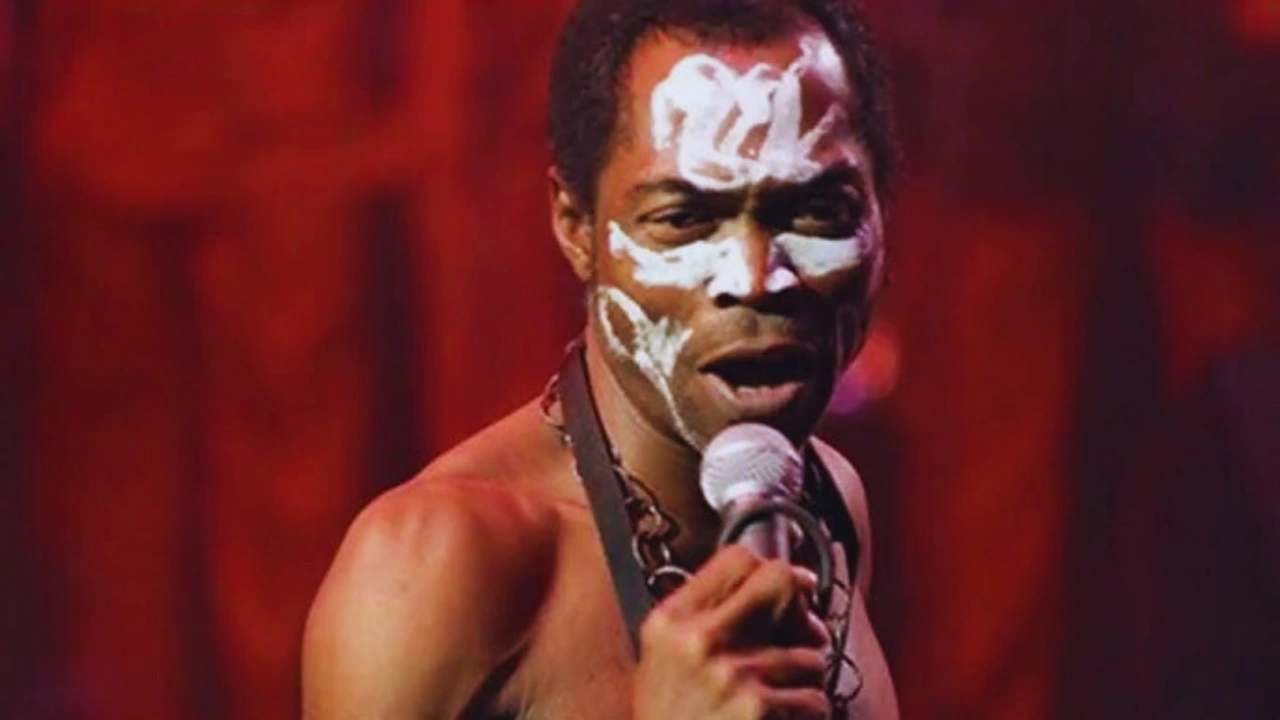
Fela Kuti Net Worth 2026: The Legendary Musician Who Changed African Music Forever
Fela Kuti was a strong voice for the people and more than just a musician. He was born in Nigeria and spoke out against unfair leadership, corruption, and injustice through song. His songs were loud, audacious, and profound. The fact that he defied the government at a time when doing so was risky made him a hero to many. He coined the term “Afrobeat” to describe his distinctive musical style, which combined jazz, funk, and African rhythms. He led a passionate, courageous, and challenging life.
The tale of Fela Kuti is one of brilliance and defiance. He educated as well as entertained his audiences. He inspired millions of people in Africa and around the world with his stirring songs and upbeat live performances. He remains an inspiration to many artists and activists today. His legacy endures in music halls, cultural festivals, and the hearts of people who value justice and freedom.
Who is Fela Kuti?
One of Africa’s most significant cultural figures was the Nigerian musician, songwriter, and political activist Fela Kuti. On October 15, 1938, Olufela Olusegun Oludotun Ransome-Kuti was born in Abeokuta, Nigeria. Later on, he decided that “Ransome” was a slave name and removed it from his name. Fela strongly believed in African identity and pride. He publicly denounced Nigeria’s military leaders and advocated for improved human rights and governance through his music.
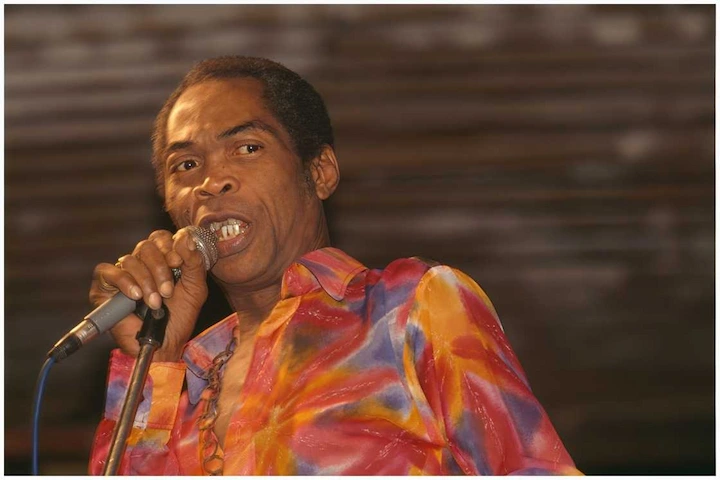
His most well-known contribution is Afrobeat, a potent fusion of jazz, highlife, funk, and traditional African music. His songs were frequently lengthy—they occasionally lasted more than 20 minutes—and packed with incisive social and political commentary. Fela had no fear. Because of his vocal opinions, he was arrested, attacked, and even violently attacked. He never remained silent, though. He is regarded as a legend today for having permanently altered African music.
Fela Kuti’s Early Life and Education Qualifications
Born in Abeokuta, Nigeria, Fela Kuti came from a well-educated and well-respected family. His father served as a church preacher and school principal, while his mother, Funmilayo Ransome-Kuti, was a fervent advocate for women’s rights. Fela’s upbringing in a busy, well-educated family influenced his ideas early on. He gained the ability to challenge authority and defend his moral convictions.
Fela’s parents wanted him to pursue medicine, so he went to London in 1958. His love of music, however, outweighed his curiosity about medicine. He chose to attend Trinity College of Music in London rather than pursue a career as a doctor. He studied music there, honing his composition and trumpeting abilities. During this period, he founded Koola Lobitos, his first band.
He heard jazz and other world music forms while he was a student in London. John Coltrane and Miles Davis were among the musicians he admired. These factors influenced the Afrobeat sound he would later develop. He later learned about the Black Power movement on a trip to the United States in the late 1960s. This event profoundly altered his political beliefs, shifting the focus of his music to African pride and freedom.
Fela Kuti’s Personal Life and Relationships
Like his music, Fela Kuti’s personal life was audacious and distinctive. He supported living freely and in accordance with his own principles. In a single ceremony in 1978, he wed 27 ladies. Many of these women were in his band, danced, or sang. Fela justified his decision by claiming that he wanted to shield the women from rumors and gossip, even though this rare incident stunned many.
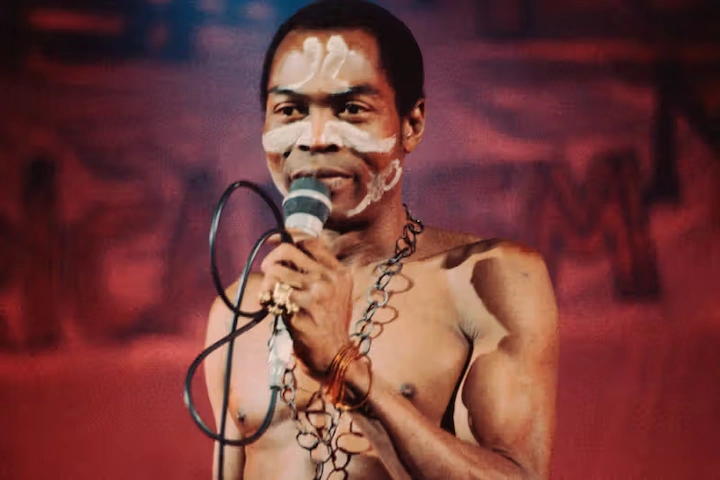
Although he eventually separated from some of his spouses, he maintained relationships with many of them. Fela proclaimed the Kalakuta Republic, a Lagos commune he dubbed his home, to be separate from the Nigerian government. It served as both his residence and a hub for political and musical thought. Femi Kuti and Seun Kuti, his sons, were among his many children who went on to become Afrobeat musicians.
Fela loved his family and neighborhood despite leading a contentious life. Although his relationships were frequently complicated, they reflected his deep respect for African customs and freedom of speech.
Fela Kuti’s Physical Appearance
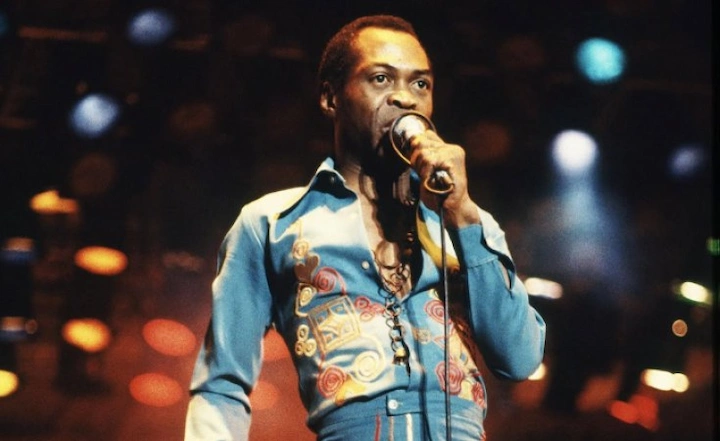
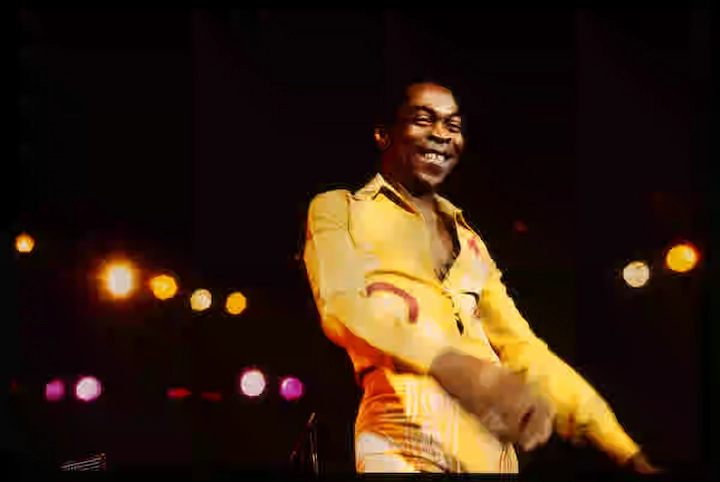
Fela Kuti exuded strength and authority. He was tall and slender, with well-defined features and intensely expressive eyes. In order to represent independence and pride in his African identity, he frequently wore vibrant African attire, occasionally going naked on stage. Although his hairdo evolved, he frequently wore a striking Afro. He danced and played the saxophone passionately, moving with energy. His look was as bold, colorful, and memorable as his personality.
Fela Kuti’s Professional Career
Afrobeat’s Ascent
With his group Koola Lobitos, Fela Kuti started his professional career in the 1960s. His music, however, took a different turn following his trip to the US. By fusing jazz, funk, and strong political messages with African rhythms, he produced Afrobeat. Africa ’70 was the band’s later name. Their dynamic performances drew sizable audiences in Nigeria and elsewhere.
Using Music to Promote Political Activism
Fela fought against injustice with his music. Songs such as “Zombie” were critical of the Nigerian military. In addition to becoming extremely popular, the song infuriated the government. Soldiers attacked his Kalakuta Republic in 1977, causing property damage and numerous injuries. Fela persisted in releasing daring songs and speaking out against corruption despite these attacks. Despite his several arrests, he persisted.
Worldwide Impact and Heritage
Fela put out over 50 albums over the years. Africa, Europe, and America all heard his song. His bravery and inventiveness won him praise from artists around the world. He passed away in 1997, but his effect endures. Broadway even made a musical called “Fela!” to honor his life and contributions. Afrobeat is still growing today, and many contemporary musicians attribute their success to Fela.
Fela Kuti Net Worth
When Fela Kuti passed away in 2024, his estimated net worth was between $1 and $5 million. It is crucial to remember, nevertheless, that Fela was not concerned with money. His band, community, and political activities accounted for a large portion of his income. Through CD sales, streaming, and his sons’ performances, his music continues to bring in money. Even though he may not have had much money, his cultural and artistic contributions are invaluable.
| Category | Details |
|---|---|
| Estimated Net Worth | $1–5 Million (At time of death) |
| Income Sources | Music sales, performances |
| Wealth Focus | More focused on activism than money |
| Legacy Income | Continued earnings through streaming and family performances |
Fela Kuti Social Media Presence
Fela Kuti’s death in 1997 occurred long before social media became popular. As a result, he lacked personal accounts on social media platforms such as Twitter and Instagram. Today, nevertheless, his legacy is quite active on the internet. He shares his songs, quotes, and historical performances on official pages run by his family and admirers.
Femi and Seun Kuti, his kids, also use social media to spread the word about his legacy. A new generation is still learning about and appreciating his potent message through digital streaming services and online communities.
| Category | Details |
|---|---|
| Personal Social Media | None (Passed away before the social media era) |
| Online Presence | Managed by family and fan pages |
| Legacy Promotion | Through sons and official tribute pages |
| Streaming Platforms | Widely available globally |
Fela Kuti Interesting Facts
- One of the pioneers of Afrobeat music was Fela Kuti.
- He adopted the last name Anikulapo, which translates to “one who carries death in his bag,” instead of Ransome.
- In a single day, he married 27 women.
- He established the Kalakuta Republic as a commune.
- He had more than 200 arrests.
- His mother was a well-known advocate for women’s rights.
- In 1979, he entered the Nigerian presidential race.
- A military assault on his house was sparked by his song “Zombie.”
- He was a multi-instrumentalist who played the trumpet and saxophone.
- His life inspired a Broadway musical.
Fela Kuti Social Media Presence
Fela Kuti loved reading books on politics, African history, and culture, in addition to performing music and activism. He enjoyed exchanging ideas with his friends and supporters at his Lagos club, The Shrine. Fela loved fashion as well, and he frequently created his own theatrical costumes.
He thoroughly researched local customs and strongly believed in African traditions. He also loved to dance and frequently made exuberant moves at concerts. Fela saw life as an art form in and of itself, and he gave his all to everything he accomplished.
Final Words
Fela Kuti lived a brave, imaginative, and deeply religious life. Even if stating the truth put him at risk, he did not hesitate to do so. He provided Africa a strong musical identity that resonated with people all around the world through Afrobeat. His songs conveyed themes of pride, justice, and independence. His voice got louder despite numerous attempts to silence him.
Fela Kuti remains a symbol of artistic independence and resistance today. Clubs, festivals, and residences all around the world continue to play his music. Activists respect his courage, and young musicians study his style. Fela demonstrated that music has the power to inspire action and alter perceptions, as well as provide entertainment. For many generations to come, his legacy will endure.
Table of Contents