Why Background Music Can Make an Ordinary Scene Feel Unforgettable
Imagine watching a suspenseful movie scene where a character slowly walks toward a closed door. The lighting is dim, the room is silent, and the camera follows every cautious movement. Now imagine the same scene with a low, unsettling musical tone gradually building in the background. The visuals haven’t changed, but the experience feels completely different.
That’s the power of background music in movies. A carefully selected soundtrack can transform an ordinary moment into something emotional, frightening, exciting, or unforgettable.
While audiences often remember the actors and dialogue, music plays an equally important role in shaping how a story feels.
Music Tells the Audience What to Feel Before Anything Happens
Film music often communicates emotions before characters speak. A gentle piano melody can make a simple conversation feel intimate, while deep orchestral tones can suggest that something troubling is about to happen.
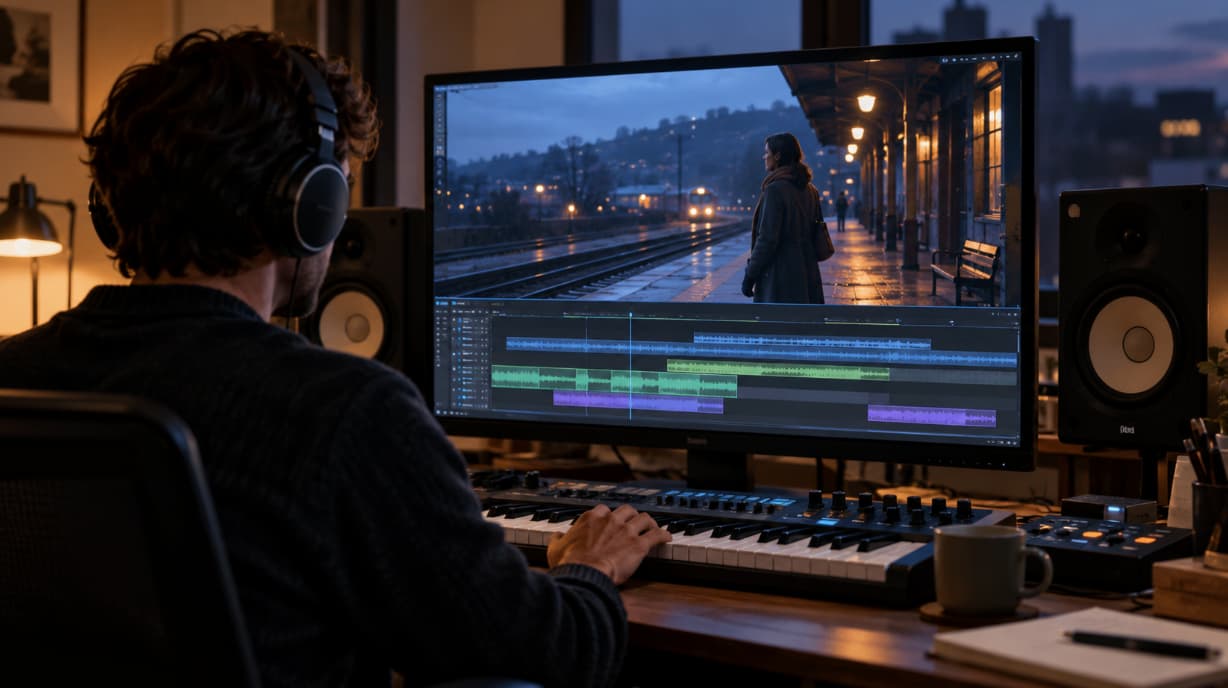
This emotional guidance is particularly important when a scene contains little dialogue. Consider a character standing alone at a train station.
Without music, the moment might appear ordinary. Add a melancholic string arrangement, and the audience may interpret the scene as a farewell. Replace that arrangement with bright, upbeat music, and the same visuals could suggest excitement about a new beginning.
The music doesn’t change what viewers see. It influences how they interpret it.
This is one reason filmmakers spend considerable time selecting or composing music that supports the story’s emotional direction.
Suspense Often Depends on Restraint
Horror and thriller movies demonstrate how powerful background music can be.
However, effective suspense doesn’t always require loud orchestral arrangements or dramatic sound effects. Sometimes, a quiet musical texture creates more tension than an intense soundtrack.
Low-frequency drones, distant metallic sounds, and gradually shifting tones can make viewers feel uneasy without revealing exactly why. The audience begins anticipating danger, even when nothing threatening is visible.
A sudden musical change can then heighten the impact of an unexpected event. Filmmakers also use silence strategically. Removing the soundtrack immediately before an important moment can make viewers pay closer attention to footsteps, breathing, or environmental sounds.
The contrast between music and silence creates tension that visuals alone may not achieve.
Comedy Uses Music Differently
Music is just as important in comedy, although its purpose often changes.
Instead of creating fear or sadness, a soundtrack can emphasize timing, exaggerate a character’s behavior, or introduce an unexpected contrast.
Imagine a character confidently preparing for an important presentation.
A grand orchestral arrangement might make the preparation seem heroic. If the character immediately trips over a chair, the sudden interruption of that music can make the moment funnier. Comedies frequently use musical contrast to create humor.
An overly dramatic soundtrack accompanying a minor inconvenience can turn an ordinary situation into an amusing exaggeration. However, music can also weaken a joke when it becomes too obvious.
Good comedic timing often depends on knowing when to introduce a musical cue and when to let the dialogue or physical performance speak for itself.
Documentary Music Creates Atmosphere Without Taking Over
Documentaries present a different challenge.
Music needs to support the subject without distracting from interviews, narration, or factual information. A nature documentary might use expansive orchestral arrangements to emphasize the scale of landscape.
A historical documentary could rely on restrained instrumental music to establish a reflective atmosphere.
Meanwhile, a technology documentary may benefit from subtle electronic textures. The key is maintaining balance. Music should help viewers connect with the subject while allowing the information to remain clear. Documentary filmmakers must also consider how music influences interpretation.
An unnecessarily ominous soundtrack can make a neutral situation appear suspicious, while overly sentimental music may push viewers toward an emotional response that the evidence does not support.
Thoughtful music selection is therefore both a creative and editorial decision.
Why Smaller Productions Need Access to Different Musical Styles
Major film studios often work with composers who develop original scores for individual productions.
Independent filmmakers, documentary creators, and small production teams may not have the same resources.
Yet they still need music that matches different scenes, emotions, and storytelling styles. A single short film might require a warm acoustic introduction, tense ambient music during a conflict, and a hopeful instrumental arrangement for its ending.
Music libraries can help filmmakers explore these different sounds without commissioning an entirely original score for every sequence.
For example, Viralnoise’s royalty free music plans offer music and sound effects that creators can consider for audiovisual productions, subject to the applicable licensing terms.
The creative challenge remains the same regardless of production budget: choosing music that fits the scene rather than simply filling empty space.
A carefully selected instrumental track can be more effective than an elaborate composition that competes with the action.
The Power of Recurring Musical Themes
Some of cinema’s most memorable soundtracks use recurring musical ideas.
A short melody associated with a character, relationship, or location can become meaningful through repetition.
This technique is often called a leitmotif.
When the audience hears the melody again, it can recall an earlier event or emotional connection without requiring additional dialogue. A theme introduced during a happy moment might return in a slower, more restrained arrangement after the story takes a tragic turn.
Although the melody remains recognizable, its emotional meaning changes.
Recurring themes also help connect scenes that take place in different locations or periods.
They create a sense of musical continuity that supports the overall narrative.
Independent filmmakers can apply the same principle on a smaller scale by using consistent musical textures or recurring instrumental elements.
When Silence Becomes Part of the Soundtrack
One of the most effective decisions a filmmaker can make is to remove the music entirely.
Constant background music can become tiring, particularly when every emotional moment is accompanied by an obvious musical cue. Silence allows audiences to focus on the natural sounds within a scene.
A quiet conversation, the ticking of a clock, or the sound of rain against a window can sometimes communicate more than a full orchestral arrangement. Silence also creates contrast.
When music returns after a quiet sequence, it may feel more significant because the audience has experienced its absence.
Understanding when not to use music is therefore an important part of soundtrack design.
How the Right Music Strengthens Visual Storytelling
Memorable movie scenes rarely depend on visuals alone.
Music influences pacing, builds anticipation, reinforces emotions, and helps audiences connect with characters.
From suspenseful thrillers to lighthearted comedies and thoughtful documentaries, every genre uses sound differently. The most effective soundtrack isn’t necessarily the loudest or most complicated. It’s the one that supports the story without distracting from it.
Whether filmmakers use an original score or carefully selected licensed tracks, music should serve a clear creative purpose. When sound and visuals work together, even a simple scene can leave a lasting impression.

Table of Contents