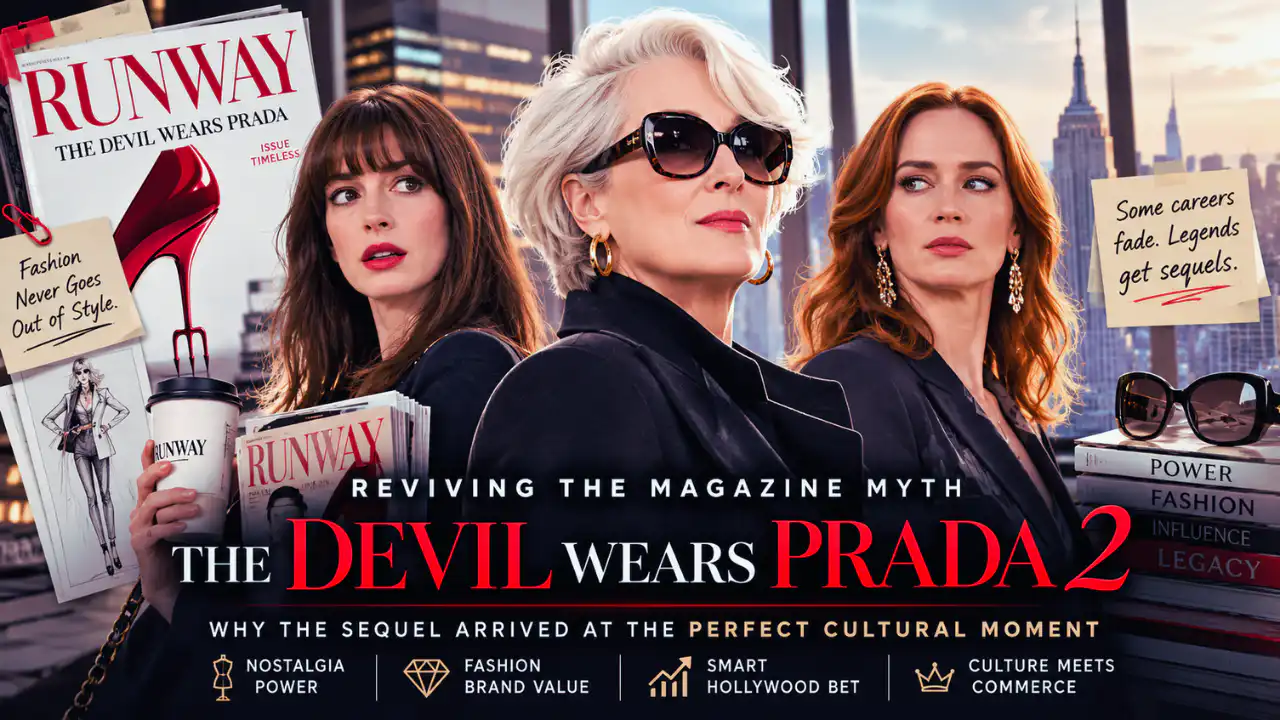
Reviving the Magazine Myth and The Devil Wears Prada 2
Nearly two decades ago, The Devil Wears Prada transformed fashion magazines into modern mythology. It presented publishing as glamorous, intimidating, and culturally powerful at a time when glossy magazines still shaped trends around the world.
Today, the media landscape looks very different. Print circulation has declined, influencers command audiences once reserved for editors, and streaming platforms have rewritten entertainment economics. Yet that shift is exactly why Reviving the Magazine Myth has become such a compelling idea.
The arrival of The Devil Wears Prada 2 is not simply another sequel. It is a calculated bet on nostalgia, luxury branding, and a renewed public fascination with fashion, media, and celebrity culture. Hollywood is increasingly discovering that audiences are not just buying tickets. They are buying access to familiar worlds that still carry cultural weight.
Why This Celebrity Wealth Trend Matters Now?
Hollywood has entered an era where intellectual property often matters more than originality. Sequels, reboots, and legacy franchises dominate studio strategy because established brands reduce risk.
Recent successes across film and television have shown that audiences remain deeply attached to recognizable cultural touchstones. At the same time, fashion content is thriving across social platforms. Luxury campaigns routinely feature actors, while celebrities increasingly function as media brands themselves.
The Devil Wears Prada sits at the intersection of all three trends:
- Nostalgia marketing
- Luxury fashion branding
- Entertainment business expansion
Its return arrives during a period when younger audiences romanticize industries they never experienced firsthand. For many Gen Z viewers, magazine publishing carries the same mystique that old Hollywood carried for millennials.
The irony is difficult to miss. The original film captured the height of magazine influence. The sequel arrives after magazines lost much of that influence, making the fantasy even more appealing.
The Business Model Behind the Money
Studios do not revive beloved properties purely for artistic reasons. Sequels are financial assets.
A recognizable title creates advantages across marketing, licensing deals, streaming rights negotiations, international distribution, and merchandise opportunities. Publicly available industry reporting has repeatedly shown that established franchises often attract stronger brand partnerships than entirely new projects.
Fashion brands also benefit.
Luxury houses gain visibility whenever audiences associate high fashion with aspirational storytelling. Even if specific partnerships are not publicly disclosed, fashion-focused films regularly generate significant media coverage that extends far beyond the box office.
Salary Versus Ownership
Actors are typically compensated through a combination of upfront salaries and, in some cases, backend participation agreements.
Ownership remains the more valuable asset over time.
An actor receiving a salary earns income once. A producer or rights holder with participation in licensing, streaming revenue, or future exploitation of intellectual property may benefit for years.
This distinction explains why modern celebrity wealth is increasingly tied to ownership structures rather than paycheques alone.
Brand Equity and Audience Trust
Brand equity is one of Hollywood’s most valuable currencies.
Meryl Streep’s association with Miranda Priestly, Anne Hathaway’s career evolution, and Emily Blunt’s continued prominence have all strengthened the franchise’s cultural relevance. Their names carry audience trust built over decades.
That trust creates measurable business value:
| Wealth Driver | How It Works | Why It Matters |
|---|---|---|
| Salary | Upfront payment for performances | Generates immediate income |
| Royalties | Payments tied to usage agreements | Supports long-term earnings |
| Licensing | Rights granted for brand or IP use | Extends commercial life |
| Residual Income | Compensation from reuse and distribution | Adds recurring revenue streams |
| Brand Deals | Partnerships linked to celebrity visibility | Converts fame into marketing value |
| Ownership | Stakes in businesses or intellectual property | Creates potential long-term wealth |
Audiences are not just returning for a story. They are returning for the emotional value attached to familiar characters.
Why Traditional Net Worth Estimates Often Miss the Full Picture?
Celebrity net worth estimates remain popular, but they rarely tell the whole story.
Public databases often rely on reported salaries, publicly disclosed transactions, and historical earnings. They generally cannot account for:
- Private investments
- Undisclosed equity deals
- Real estate holdings
- Taxes and management fees
- Licensing agreements
- Residual structures
- Estate planning arrangements
This matters because celebrity wealth increasingly exists outside traditional entertainment income.
Industry observers frequently note that actors, producers, and executives build wealth through diversified portfolios rather than single projects. A film sequel may generate direct compensation, but it can also increase speaking opportunities, endorsement deals, and future business ventures.
In many cases, cultural relevance itself becomes an appreciating asset.
That Shows How This Works
Hollywood has repeatedly demonstrated the commercial value of nostalgia.
Top Gun: Maverick revitalized a decades-old franchise while strengthening the public profile of Tom Cruise.
Beetlejuice Beetlejuice leveraged audience familiarity to create renewed interest in legacy talent and established intellectual property.
Similarly, the continued expansion of the Barbie ecosystem demonstrated how entertainment projects can evolve into larger cultural and commercial events.
The Devil Wears Prada 2 appears positioned to benefit from similar dynamics. Its value extends beyond ticket sales. It can generate media coverage, fashion discussions, streaming engagement, and renewed interest in the original film.
That ecosystem effect is where Hollywood increasingly finds its biggest returns.
The Risks Behind Celebrity Business Ventures
Not every sequel succeeds.
Audience nostalgia has limits. If a project feels disconnected from contemporary culture, viewers often reject it quickly.
Fashion-focused entertainment faces additional challenges:
- Changing audience tastes
- Franchise fatigue
- Overreliance on nostalgia
- High production and marketing costs
- Competition from streaming releases
- Difficulty recreating original chemistry
Celebrity brands encounter similar issues. Public recognition creates opportunity, but it does not guarantee commercial success.
History is filled with fashion labels, restaurants, beauty companies, and media ventures launched by celebrities that failed because timing, management, or product quality fell short.
Hollywood’s biggest risk may be assuming nostalgia alone is enough.
What This Reveals About Modern Celebrity Wealth?
Modern celebrity wealth looks very different from what it did twenty years ago.
Actors increasingly pursue producer credits. Media personalities launch businesses. Musicians build investment portfolios. Influencers negotiate equity deals instead of traditional endorsements.
Entertainment economics now revolve around four major pillars:
- Ownership.
- Intellectual property.
- Distribution.
- Brand leverage.
The Devil Wears Prada 2 reflects all four.
The film is a reminder that cultural relevance remains monetizable long after a project leaves theatres. A beloved franchise can continue generating value through licensing, streaming rights, merchandise opportunities, and renewed audience engagement.
That is why the magazine myth still matters.
Not because magazines dominate culture today, but because audiences continue to believe in the worlds they created.
Conclusion
The Devil Wears Prada 2 arrives at a fascinating intersection of nostalgia, fashion, and entertainment economics. It speaks to audiences who remember the original film and introduces younger viewers to an era they know mostly through social media clips and cultural references.
More importantly, it highlights a larger shift in Hollywood. Celebrity wealth is increasingly shaped by ownership, intellectual property, and cultural longevity rather than a single payday.
If the sequel succeeds, it will not simply revive a beloved story. It will reinforce a lesson the entertainment industry keeps learning: the right cultural moment can be just as valuable as the project itself.
FAQs
Why is The Devil Wears Prada 2 generating so much interest?
The sequel combines nostalgia, fashion culture, and a recognizable brand at a time when audiences continue to embrace legacy entertainment properties.
How do celebrities make money from film franchises?
Celebrities may earn through salaries, residuals, backend agreements, licensing arrangements, and related endorsement opportunities, depending on publicly disclosed deal structures.
Why do celebrity net worth estimates vary?
Most estimates rely on publicly available information and often exclude private investments, taxes, debt obligations, and undisclosed business interests.
What is brand equity in entertainment?
Brand equity refers to the commercial value attached to a celebrity, franchise, or intellectual property based on audience recognition and trust.
Why are Hollywood studios making more sequels?
Sequels typically carry lower marketing risk because audiences are already familiar with the underlying intellectual property and characters.
Want more deep dives into celebrity wealth, Hollywood money, and the business behind entertainment? Explore our latest analyses on franchise economics, celebrity brands, and the financial power of cultural nostalgia.
Table of Contents